
Israel Supports U.S.-Iran Strike Suspension While Excluding Lebanon from Ceasefire
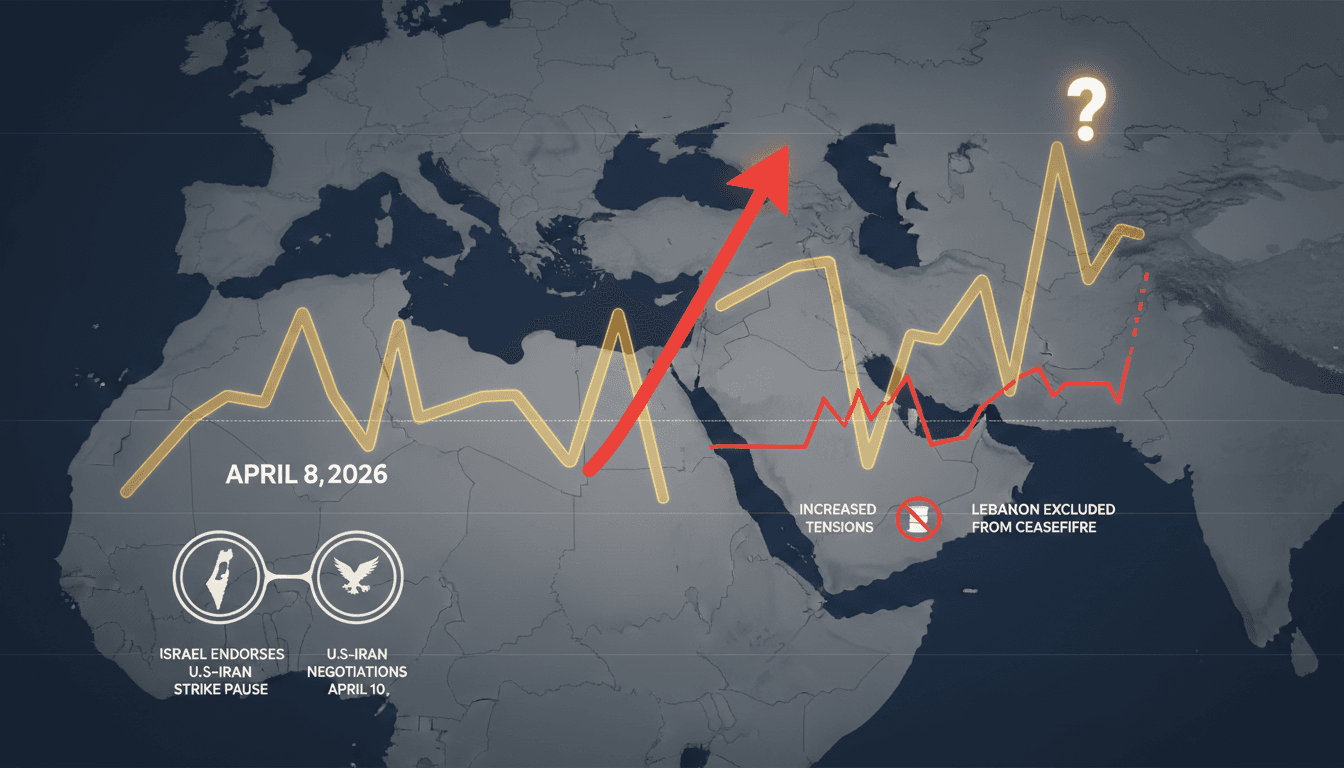
Here's what it means for you.
The geopolitical landscape is shifting, impacting oil prices and market stability, which could affect your investments and daily costs.
Why it matters
This endorsement of a ceasefire could stabilize oil prices temporarily but risks escalating tensions in the region, affecting global markets.
What happened (in 30 seconds)
- Israel endorsed U.S. President Trump's two-week pause on strikes against Iran while explicitly excluding Lebanon from the truce.
- Iran's response included threats to withdraw from negotiations if Israeli strikes continue, complicating the fragile ceasefire.
- Ongoing operations against Hezbollah in Lebanon have resulted in significant casualties and displacement, raising humanitarian concerns.
The context you actually need
- The 2026 Iran War began with U.S.-Israeli airstrikes on Iranian military targets, leading to retaliatory actions from Hezbollah and escalating violence in the region.
- Lebanon is facing a humanitarian crisis, with over 1.2 million civilians displaced due to Israeli offensives, further complicating the regional dynamics.
- Oil prices surged following the closure of the Strait of Hormuz, a critical shipping route, which has significant implications for global energy markets and economic stability.
What's really happening
The recent endorsement of a two-week strike suspension by Israeli Prime Minister Benjamin Netanyahu is a strategic maneuver amid escalating tensions in the Middle East. The ceasefire, proposed by U.S. President Donald Trump, is contingent upon Iran reopening the Strait of Hormuz and ceasing attacks on U.S. and Israeli interests. However, Netanyahu's explicit exclusion of Lebanon from this truce indicates a continued Israeli focus on Hezbollah, which has been actively engaged in military operations against Israel since the onset of the conflict.
The backdrop of this situation is the ongoing 2026 Iran War, which began with coordinated U.S.-Israeli airstrikes targeting Iranian military infrastructure. This initial aggression prompted Hezbollah to retaliate, resulting in significant casualties and displacement in Lebanon. As of now, Israeli operations have reportedly killed at least 1,500 individuals and displaced over 1.2 million people, exacerbating an already dire humanitarian situation.
Iran's reaction to the ceasefire has been one of skepticism. The Iranian government has accused Israel of continuing its strikes, which they claim undermines the truce. Iran's Foreign Minister has warned that if the U.S. does not halt Israeli actions, the risk of renewed conflict looms large. This creates a precarious balance, where any misstep could lead to a full-scale resurgence of hostilities.
The geopolitical implications extend beyond military engagements. The closure of the Strait of Hormuz by Iran has already led to a spike in oil prices, impacting global markets. The recent announcement of the ceasefire has provided temporary relief, with Brent crude prices falling below $95 per barrel, a 13% decrease. This drop has positively influenced stock markets, particularly in the UAE, where the Dubai index has seen its largest gains in six years.
However, the situation remains fragile. The U.S.-Iran negotiations scheduled for April 10 in Islamabad could either pave the way for a more stable resolution or further entrench existing divisions. The ongoing Israeli strikes against Hezbollah complicate these discussions, as both sides remain entrenched in their positions.
In summary, while the endorsement of a ceasefire may offer a momentary reprieve, the underlying tensions and military operations in Lebanon suggest that the region remains on a knife's edge, with significant implications for global markets and energy prices.
Who feels it first (and how)
- Investors in oil and energy sectors will experience immediate impacts from fluctuations in oil prices.
- Residents of Lebanon are facing a humanitarian crisis, with many displaced and in need of aid.
- UAE businesses and consumers may benefit from lower oil prices, but remain vulnerable to regional instability affecting trade and shipping costs.
What to watch next
- Iran's military actions: Continued strikes against Israel or Hezbollah could lead to a breakdown of the ceasefire, impacting regional stability.
- U.S.-Iran negotiations: The outcome of talks in Islamabad will be crucial in determining the future of the ceasefire and broader diplomatic relations.
- Oil price movements: Watch for fluctuations in oil prices as geopolitical tensions evolve, which will directly affect global markets and economic conditions.
The ceasefire excludes Lebanon, and Israeli operations against Hezbollah continue.
Tensions will persist, with potential for renewed conflict if military actions do not cease.
The long-term impact of the ceasefire on regional stability and global oil markets remains uncertain.
Frequently Asked Questions
- Why it matters?
- This endorsement of a ceasefire could stabilize oil prices temporarily but risks escalating tensions in the region, affecting global markets.
- What happened (in 30 seconds)?
- Israel endorsed U.S. President Trump's two-week pause on strikes against Iran while explicitly excluding Lebanon from the truce. Iran's response included threats to withdraw from negotiations if Israeli strikes continue, complicating the fragile ceasefire. Ongoing operations against Hezbollah in Lebanon have resulted in significant casualties and displacement, raising humanitarian concerns.
- What's really happening?
- The recent endorsement of a two-week strike suspension by Israeli Prime Minister Benjamin Netanyahu is a strategic maneuver amid escalating tensions in the Middle East. The ceasefire, proposed by U.S. President Donald Trump, is contingent upon Iran reopening the Strait of Hormuz and ceasing attacks on U.S. and Israeli interests. However, Netanyahu's explicit exclusion of Lebanon from this truce indicates a continued Israeli focus on Hezbollah, which has been actively engaged in military operatio
- Who feels it first (and how)?
- Investors in oil and energy sectors will experience immediate impacts from fluctuations in oil prices. Residents of Lebanon are facing a humanitarian crisis, with many displaced and in need of aid. UAE businesses and consumers may benefit from lower oil prices, but remain vulnerable to regional instability affecting trade and shipping costs.
- What to watch next?
- Iran's military actions: Continued strikes against Israel or Hezbollah could lead to a breakdown of the ceasefire, impacting regional stability. U.S.-Iran negotiations: The outcome of talks in Islamabad will be crucial in determining the future of the ceasefire and broader diplomatic relations. Oil price movements: Watch for fluctuations in oil prices as geopolitical tensions evolve, which will directly affect global markets and economic conditions.
Oil, metals, and agriculture: supply/demand headlines, OPEC chatter, inventories, and price action.
"Solid tape for energy and metals traders tracking macro and micro catalysts."
— A47 Editor
Israel backs Trump’s two-week pause on Iran strikes, says Lebanon excluded
Israel has expressed support for former President Donald Trump's decision to implement a two-week pause on military strikes against Iran, clarifying that this ceasefire does not extend to Lebanon. This development comes amid ongoing diplomatic negoti...
Regional and international reporting focused on Middle Eastern politics, diplomacy, and economics.
"Asharq Al-Awsat is a Saudi-owned international newspaper reflecting mainstream Gulf political perspectives."
— A47 Editor
Israel Backs Trump's 2-week Pause on Iran Strikes, Says Lebanon Excluded
Israel has expressed support for former President Trump's two-week pause on military strikes against Iran, while clarifying that Lebanon is not included in this ceasefire arrangement. This development comes amid escalating tensions in the region, par...
Regional coverage and analysis focused on politics, diplomacy, and business across the Middle East.
"Al-Monitor is known for analytical reporting on Middle East politics and policy developments."
— A47 Editor
Netanyahu backs Iran ceasefire, says Lebanon not included, Israeli media says
Israeli Prime Minister Benjamin Netanyahu expressed support for U.S. President Donald Trump's decision to implement a two-week ceasefire with Iran, clarifying that this ceasefire does not extend to Lebanon. This statement comes amid ongoing military ...