
US Consumer Price Index Hits 3.3 Percent Amid Iran Conflict Energy Disruptions
Here's what it means for you.
Rising inflation rates may impact your purchasing power and increase costs for everyday goods and services.
Why it matters
The surge in inflation reflects broader economic instability tied to geopolitical tensions, which can affect global markets and consumer behavior.
What happened (in 30 seconds)
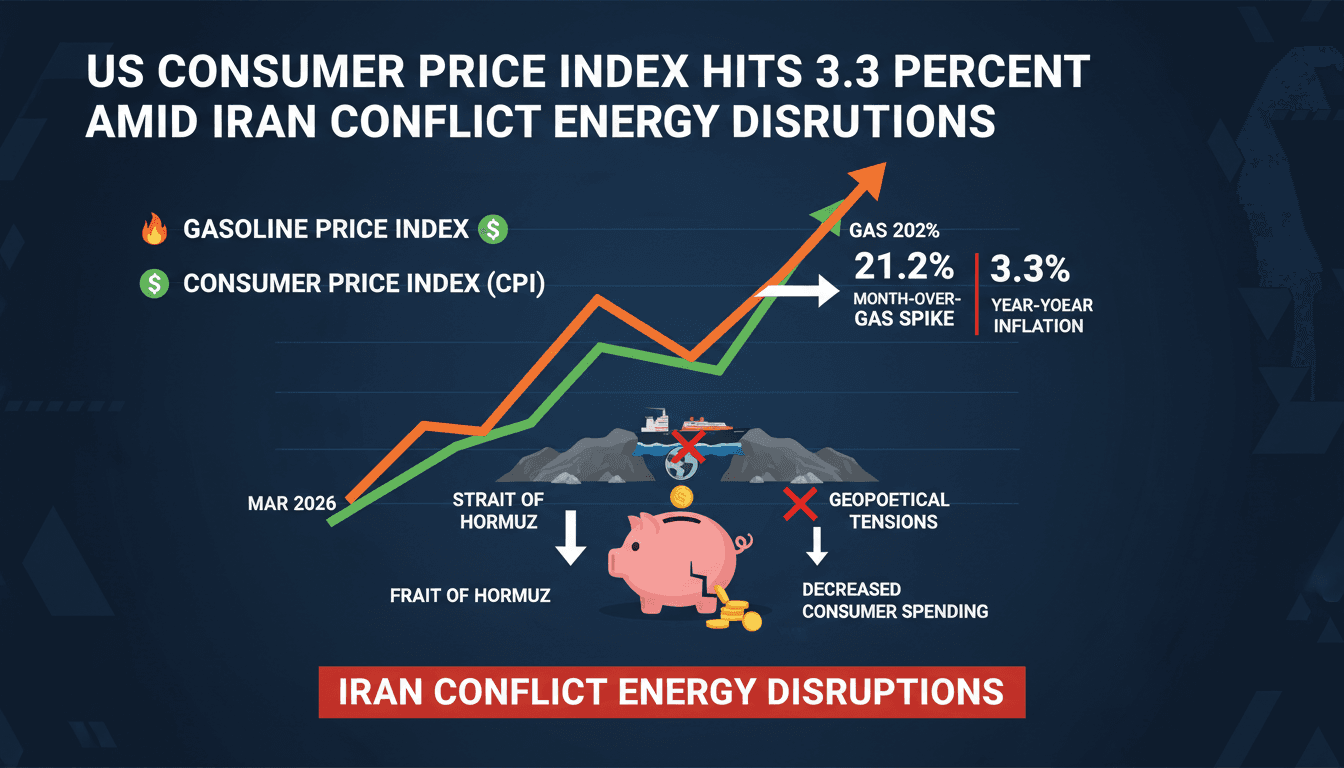
- Inflation surged to 3.3% year-over-year in March 2026, driven by a 21.2% spike in gasoline prices.
- Gasoline prices reached an average of $4.15 per gallon, the highest increase since 1967, due to disruptions in the Strait of Hormuz.
- A fragile ceasefire was negotiated around April 8, 2026, but compliance remains uncertain, impacting energy supply and prices.
The context you actually need
- Geopolitical tensions escalated with US and Israeli airstrikes on Iran on February 28, 2026, leading to Iran's blockade of the Strait of Hormuz.
- The blockade disrupted approximately 20% of global oil and gas shipments, exacerbating existing inflationary pressures from previous global crises.
- The Federal Reserve has struggled to meet its 2% inflation target for five years, facing ongoing shocks from the COVID-19 pandemic and geopolitical conflicts.
What's really happening
The recent spike in inflation in the United States, reaching 3.3% year-over-year in March 2026, is primarily attributed to significant disruptions in the energy sector caused by the ongoing conflict between the US, Israel, and Iran. Following airstrikes on Iranian targets on February 28, 2026, Iran retaliated by blockading the Strait of Hormuz, a critical chokepoint for global oil transit. This blockade has resulted in a staggering 21.2% month-over-month increase in gasoline prices, pushing the average price to $4.15 per gallon, the highest jump since 1967.
This inflationary pressure is not isolated; it is part of a complex web of economic factors that have been building over several years. The Federal Reserve has been targeting a 2% inflation rate, a goal that has remained unmet for five consecutive years due to various shocks, including the COVID-19 pandemic and the Ukraine war. The current geopolitical crisis has further complicated the landscape, leading to fears of prolonged energy supply issues and rising costs across multiple sectors.
As the conflict continues, the economic implications extend beyond just fuel prices. Economists have warned that the rising costs of gasoline will likely translate into higher prices for food, travel, and shipping, disproportionately affecting lower-income households. The Federal Reserve is closely monitoring these developments, but immediate rate adjustments are not anticipated, leaving many consumers vulnerable to the ongoing inflationary pressures.
The Trump administration has characterized the energy disruptions as temporary, emphasizing the importance of peace talks, which are currently underway. However, the uncertainty surrounding compliance with the ceasefire agreement and the potential for further escalations in the conflict raises questions about the stability of oil prices and the broader economy.
Who feels it first (and how)
- Lower-income households: More vulnerable to rising costs of essentials like food and transportation.
- Commuters and travelers: Directly impacted by soaring gasoline prices, affecting daily budgets.
- Businesses reliant on shipping: Higher transportation costs could lead to increased prices for goods and services.
- Investors in energy markets: Volatility in oil prices can impact stock market performance and investment strategies.
What to watch next
- Ceasefire compliance: Monitoring adherence to the fragile ceasefire will be crucial in determining future energy supply stability.
- Federal Reserve actions: Any shifts in monetary policy in response to inflation trends could signal broader economic adjustments.
- Global oil prices: Fluctuations in oil prices will continue to impact inflation and consumer costs, making it essential to track market responses.
Inflation has risen to 3.3% year-over-year, driven by energy price spikes.
Continued volatility in oil prices as geopolitical tensions persist.
The long-term impact of the conflict on global supply chains and consumer prices.
Frequently Asked Questions
- Why it matters?
- The surge in inflation reflects broader economic instability tied to geopolitical tensions, which can affect global markets and consumer behavior.
- What happened (in 30 seconds)?
- Inflation surged to 3.3% year-over-year in March 2026, driven by a 21.2% spike in gasoline prices. Gasoline prices reached an average of $4.15 per gallon, the highest increase since 1967, due to disruptions in the Strait of Hormuz. A fragile ceasefire was negotiated around April 8, 2026, but compliance remains uncertain, impacting energy supply and prices.
- What's really happening?
- The recent spike in inflation in the United States, reaching 3.3% year-over-year in March 2026, is primarily attributed to significant disruptions in the energy sector caused by the ongoing conflict between the US, Israel, and Iran. Following airstrikes on Iranian targets on February 28, 2026, Iran retaliated by blockading the Strait of Hormuz, a critical chokepoint for global oil transit. This blockade has resulted in a staggering 21.2% month-over-month increase in gasoline prices, pushing the
- Who feels it first (and how)?
- Lower-income households: More vulnerable to rising costs of essentials like food and transportation. Commuters and travelers: Directly impacted by soaring gasoline prices, affecting daily budgets. Businesses reliant on shipping: Higher transportation costs could lead to increased prices for goods and services. Investors in energy markets: Volatility in oil prices can impact stock market performance and investment strategies.
- What to watch next?
- Ceasefire compliance: Monitoring adherence to the fragile ceasefire will be crucial in determining future energy supply stability. Federal Reserve actions: Any shifts in monetary policy in response to inflation trends could signal broader economic adjustments. Global oil prices: Fluctuations in oil prices will continue to impact inflation and consumer costs, making it essential to track market responses.
Regional and international reporting focused on Middle Eastern politics, diplomacy, and economics.
"Asharq Al-Awsat is a Saudi-owned international newspaper reflecting mainstream Gulf political perspectives."
— A47 Editor
US Inflation Surges 3.3% as Iran War Impact Bites
US inflation has surged by 3.3%, driven largely by the economic fallout from the ongoing war in Iran, which has disrupted supply chains and increased energy prices. This inflationary pressure reflects the broader economic instability linked to geopol...
UAE-based English-language newspaper covering regional politics, economics, and global affairs.
"The National reflects Emirati policy perspectives while maintaining international editorial standards."
— A47 Editor
US inflation surged to 3.3% in March on Iran war energy shock
US inflation surged to 3.3% in March 2026, primarily driven by the ongoing conflict with Iran, which has disrupted global energy supplies and caused gasoline prices to rise by 21.2%, exceeding $4 per gallon.
UK and international business news, economics, and corporate coverage.
"The Guardian’s business section covers finance and markets with a progressive editorial tone."
— A47 Editor
US inflation soars in March as war on Iran drives economy into uncertainty
US inflation surged by 3.3% in March, driven by rising consumer prices amid the ongoing conflict involving Iran and Israel, marking the largest increase in nearly two years. This inflation spike reflects the economic uncertainty stemming from the war...
News from the United States including domestic politics, society, and culture.
"The Guardian is known for its progressive editorial stance and in-depth analysis, often advocating for social justice, environmental issues, and liberal values."
— A47 Editor
US inflation soars in March as war on Iran drives economy into uncertainty
US inflation surged by 3.3% in March, driven by rising consumer prices amid the ongoing conflict involving Iran and Israel, marking the largest increase in nearly two years. This inflation spike reflects the economic uncertainty stemming from the war...
International coverage from The Guardian's global desks.
"The Guardian is known for its progressive editorial stance and in-depth analysis."
— A47 Editor
US inflation soars in March as war on Iran drives economy into uncertainty
US inflation surged by 3.3% in March, driven by rising consumer prices amid the ongoing conflict involving Iran, which has disrupted oil supplies and heightened economic uncertainty. This increase marks the largest inflation spike in nearly two years...
English-language news from Qatar covering domestic and regional affairs.
"Gulf Times reflects Qatari perspectives on regional developments."
— A47 Editor
Record surge in gasoline prices fuels US consumer inflation in March
In March, U.S. consumer prices experienced their largest increase in nearly four years, primarily driven by a record surge in gasoline and diesel prices due to escalating tensions from the ongoing conflict with Iran. This spike in fuel costs has sign...