
Euro Area Inflation Rate Rises to 2.6% Amid Energy Price Surge
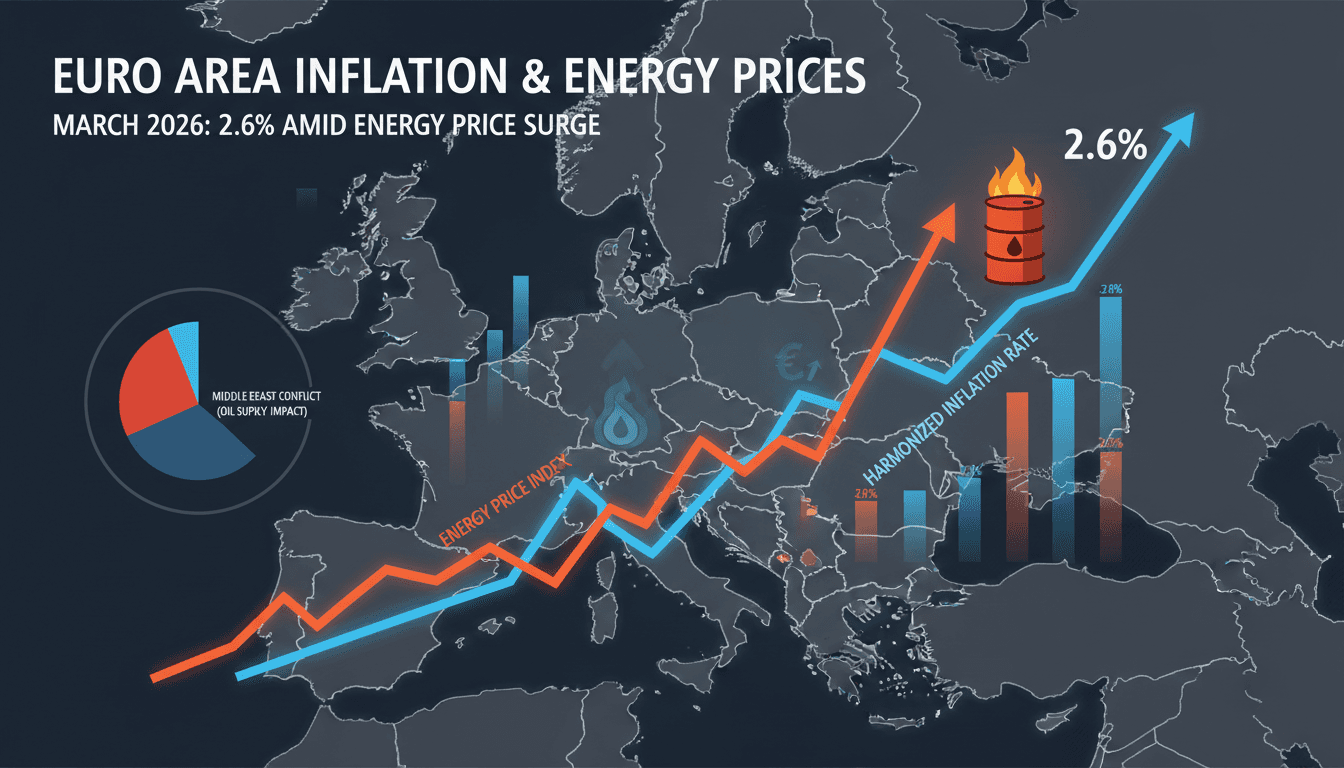
Here's what it means for you.
Rising inflation in the Euro area could lead to increased costs for imported goods and services, impacting your purchasing power.
Why it matters
Inflation trends in the Euro area can influence global markets and economic stability, affecting trade and investment decisions worldwide.
What happened (in 30 seconds)
- Inflation increased: The Euro area annual HICP inflation rate rose to 2.6% in March 2026, up from 1.9% in February.
- Energy prices surged: A significant factor was the jump in energy prices from -3.1% to +5.1%, driven by geopolitical tensions in the Middle East.
- Core inflation remains stable: Core inflation, excluding energy, stood at 2.3%, indicating underlying price stability despite energy volatility.
The context you actually need
- Recent trends: Euro area inflation had been declining towards the European Central Bank's (ECB) target of 2%, reaching 1.7% in January 2026.
- Geopolitical impact: The escalation of conflict in the Middle East, particularly involving Iran, disrupted oil supplies and raised global energy costs.
- Economic projections: The ECB's March 2026 projections anticipated an average inflation rate of 2.6% for the year, reflecting these external pressures.
What's really happening
The recent rise in inflation within the Euro area is primarily attributed to external shocks in energy prices, which have a cascading effect on the overall economy. The annual Harmonised Index of Consumer Prices (HICP) inflation rate climbed to 2.6% in March 2026, surpassing initial estimates and reflecting a significant shift from the previous months' downward trend. This increase is largely driven by a dramatic surge in energy prices, which jumped from -3.1% to +5.1% due to geopolitical tensions in the Middle East. The conflict has disrupted oil supplies, leading to elevated global energy costs that ripple through various sectors.
The ECB's core inflation rate, which excludes volatile energy prices, remained at 2.3%, suggesting that while energy costs are fluctuating, other sectors are maintaining relative price stability. However, the overall inflation rate's increase indicates that consumers are likely to feel the pinch in their daily expenses, particularly in energy-dependent sectors such as transportation and utilities.
The ECB's response to this inflationary pressure has been cautious. In their March 2026 meeting, they maintained policy rates, indicating a reluctance to tighten monetary policy too quickly amid rising inflation. This decision reflects a balancing act between controlling inflation and supporting economic growth, especially as the Euro area continues to recover from the pandemic's economic impacts.
Moreover, the inflationary pressures are not uniform across the Eurozone. Variations exist among member states, with inflation rates ranging from 1.0% in Denmark to 9.0% in Romania. This disparity highlights the differing economic conditions and responses to inflationary pressures across the region.
As energy prices remain volatile due to ongoing geopolitical tensions, the Euro area faces a challenging economic landscape. The ECB's projections for an average inflation rate of 2.6% for 2026 suggest that this trend may persist, influencing consumer behavior and business planning across the region.
Who feels it first (and how)
- Consumers: Higher energy prices directly affect household budgets, leading to increased costs for utilities and transportation.
- Businesses: Companies reliant on energy-intensive processes may face rising operational costs, potentially leading to higher prices for goods and services.
- Importers: Businesses importing goods from the Euro area may experience increased costs, impacting pricing strategies and profit margins.
- Low-income households: Vulnerable populations may struggle more with rising costs, as a larger portion of their income is spent on essential goods and services.
What to watch next
- Energy price trends: Monitoring fluctuations in global energy prices will be crucial, as they directly impact inflation rates and consumer costs.
- ECB policy decisions: Future ECB meetings will provide insights into how monetary policy may adapt in response to ongoing inflationary pressures.
- Consumer spending patterns: Changes in consumer behavior in response to rising prices could signal broader economic shifts, influencing market dynamics.
The Euro area inflation rate is confirmed at 2.6% for March 2026.
Energy prices will remain volatile due to geopolitical tensions, influencing inflation rates.
The long-term impact of sustained inflation on consumer behavior and economic growth remains uncertain.
Frequently Asked Questions
- Why it matters?
- Inflation trends in the Euro area can influence global markets and economic stability, affecting trade and investment decisions worldwide.
- What happened (in 30 seconds)?
- Inflation increased: The Euro area annual HICP inflation rate rose to 2.6% in March 2026, up from 1.9% in February. Energy prices surged: A significant factor was the jump in energy prices from -3.1% to +5.1%, driven by geopolitical tensions in the Middle East. Core inflation remains stable: Core inflation, excluding energy, stood at 2.3%, indicating underlying price stability despite energy volatility.
- What's really happening?
- The recent rise in inflation within the Euro area is primarily attributed to external shocks in energy prices, which have a cascading effect on the overall economy. The annual Harmonised Index of Consumer Prices (HICP) inflation rate climbed to 2.6% in March 2026, surpassing initial estimates and reflecting a significant shift from the previous months' downward trend. This increase is largely driven by a dramatic surge in energy prices, which jumped from -3.1% to +5.1% due to geopolitical tensio
- Who feels it first (and how)?
- Consumers: Higher energy prices directly affect household budgets, leading to increased costs for utilities and transportation. Businesses: Companies reliant on energy-intensive processes may face rising operational costs, potentially leading to higher prices for goods and services. Importers: Businesses importing goods from the Euro area may experience increased costs, impacting pricing strategies and profit margins. Low-income households: Vulnerable populations may struggle more with rising co
- What to watch next?
- Energy price trends: Monitoring fluctuations in global energy prices will be crucial, as they directly impact inflation rates and consumer costs. ECB policy decisions: Future ECB meetings will provide insights into how monetary policy may adapt in response to ongoing inflationary pressures. Consumer spending patterns: Changes in consumer behavior in response to rising prices could signal broader economic shifts, influencing market dynamics.
Arabic-language UAE newspaper coverage focused on domestic affairs, public institutions, business, society, and regional developments.
"Al Khaleej coverage generally reflects a mainstream UAE editorial lens with strong attention to public affairs, institutions, and regional developments."
— A47 Editor
2.6 % التضخم السنوي في منطقة اليورو
The Eurozone recorded an annual inflation rate of 2.6% in March 2026, indicating a rise compared to previous months. This increase reflects ongoing economic trends and consumer price changes within the region.
Social/economic commentary and analysis relevant to business and markets.
"WSJ blends data-driven economic insight with commentary on policy and society."
— A47 Editor
Eurozone Inflation for March Revised Higher on Sharper Energy Prices
Eurozone inflation for March has been revised upward to 2.6%, the highest level since July 2024, primarily driven by sharper energy prices linked to the ongoing conflict in Iran. This increase reflects a more severe impact from rising energy costs th...
Pan-Arab news coverage spanning politics, business, sports, and regional affairs.
"Asharq Al-Awsat reflects a broad Arab editorial perspective with strong attention to regional geopolitics."
— A47 Editor
«تضخم اليورو» يقفز إلى 2.6 % في بيانات مُعدّلة وسط تداعيات الحرب
The inflation rate in the Eurozone surged to 2.6% in March, driven by rising energy prices as a consequence of the ongoing conflict in the Middle East, according to revised data.
Arabic-language digital news outlet covering UAE, regional, and international developments with broad general-news coverage.
"Al Ain News coverage typically blends UAE-focused reporting with wider Arab regional and international news."
— A47 Editor
التضخم يقفز في اليورو.. 2.6% خلال مارس
The inflation rate in the Eurozone surged to 2.6% in March, driven by rising energy prices attributed to the ongoing Iran conflict, according to data released by the European Statistical Agency on Thursday.
Global markets, investing, and macroeconomics from a premier financial newsroom.
"Bloomberg is respected for in-depth financial reporting and data-driven analysis."
— A47 Editor
Euro-Zone Inflation Was Faster Than Thought in March at 2.6%
Euro-zone inflation for March has been revised upward to 2.6%, indicating stronger price pressures than previously reported, largely influenced by the ongoing conflict in Iran.