
United States to Board Iranian-Linked Vessels Amid Strained Ceasefire
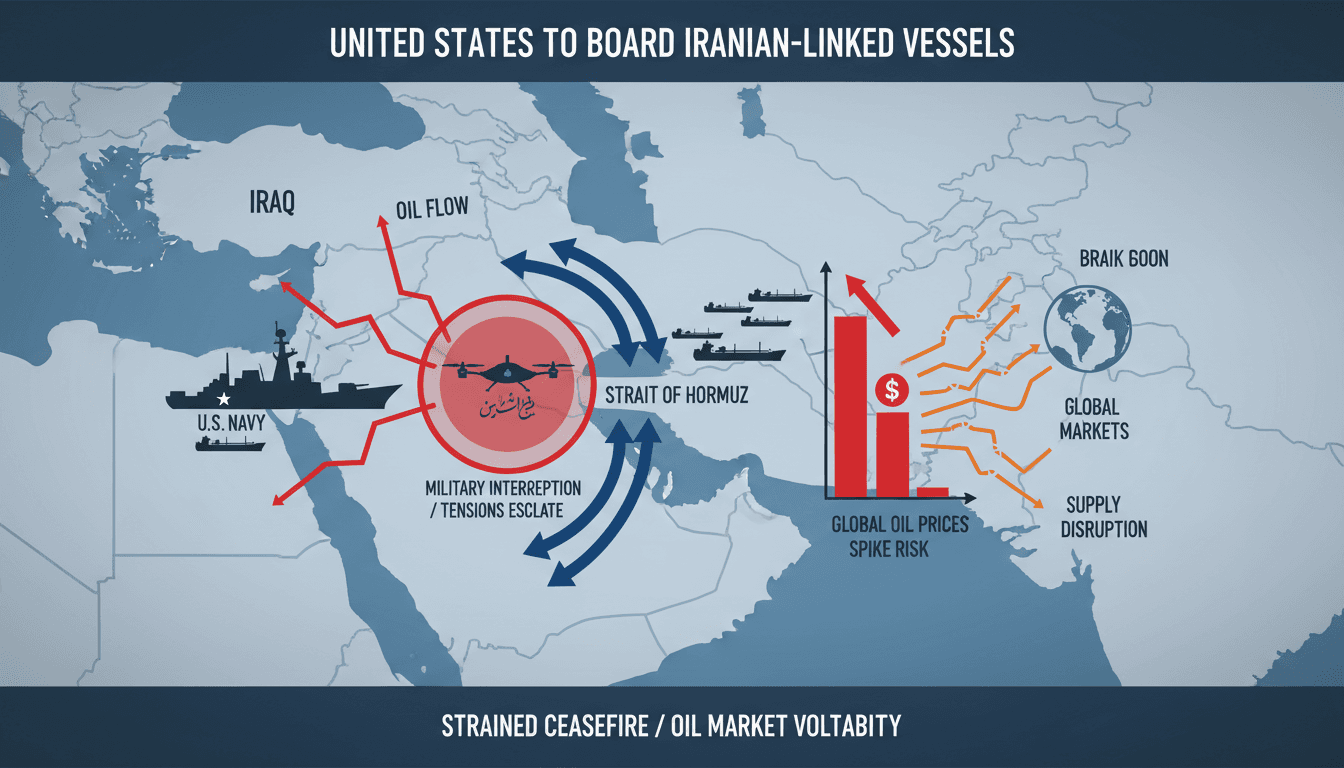
Here's what it means for you.
If you rely on global oil markets, the U.S.-Iran tensions could impact fuel prices and economic stability.
Why it matters
The Strait of Hormuz is a critical chokepoint for global oil shipments, with approximately 20% of the world's oil transiting through it.
What happened (in 30 seconds)
- On April 18, 2026, the U.S. military announced preparations to board and seize Iranian-linked vessels in international waters.
- Iranian forces have fired on commercial vessels, prompting around 20 ships to turn back, while the U.S. has seized at least one Iranian-flagged vessel.
- Tensions are escalating amid a strained ceasefire, with the U.S. aiming to increase economic pressure on Iran regarding its nuclear program.
The context you actually need
- U.S.-Iran tensions have intensified following a temporary ceasefire agreement earlier in April 2026, amid stalled nuclear negotiations.
- The U.S. initiated a naval blockade of Iranian ports to enforce economic sanctions and compel Tehran to abandon uranium enrichment.
- Iran has responded by reimposing restrictions on the Strait of Hormuz, accusing the U.S. of violating international law and threatening further escalation.
What's really happening
The current standoff in the Strait of Hormuz is a culmination of escalating U.S.-Iran tensions, primarily driven by the U.S. desire to curb Iran's nuclear ambitions and secure safe passage for global oil shipments. The U.S. military's blockade of Iranian ports, initiated on April 13, 2026, aimed to enforce economic sanctions and deter Iran from continuing its uranium enrichment activities. This blockade has already turned back 23 vessels, demonstrating the U.S.'s commitment to exerting pressure on Iran.
In retaliation, Iran has declared strict control over the Strait of Hormuz, a vital maritime route for oil transport. The Iranian military's aggressive actions, including firing on commercial vessels, have prompted significant disruptions, forcing around 20 ships to reverse course. This escalation is not merely a tactical maneuver; it reflects Iran's broader strategy to assert its influence in the region and challenge U.S. dominance.
The U.S. has responded by preparing to board and seize Iranian-linked vessels worldwide, including those in the so-called "dark fleet" that evades sanctions. This marks a significant escalation in U.S. military involvement in the region and indicates a shift towards more aggressive enforcement of sanctions. The seizure of an Iranian-flagged cargo ship on April 19–20 is a clear signal of the U.S.'s intent to maintain control over maritime routes and ensure the flow of oil remains uninterrupted.
The implications of these actions extend beyond immediate military confrontations. The U.S. is leveraging its naval power to influence Iran's nuclear negotiations, hoping to secure concessions that would lead to a more stable geopolitical environment. However, this strategy carries risks, as Iran has threatened to escalate its military responses, potentially targeting critical infrastructure in Saudi Arabia and the UAE.
As oil prices remain volatile, exceeding $90 per barrel due to these disruptions, the economic ramifications are felt globally. Countries reliant on oil imports, including those in the Gulf region, are particularly vulnerable to price fluctuations, which can lead to increased costs for consumers and businesses alike.
Who feels it first (and how)
- Oil consumers: Higher fuel prices and increased utility bills due to oil price volatility.
- Shipping companies: Increased operational risks and potential rerouting costs due to heightened military activity.
- Regional economies: Countries like the UAE may face economic strain from rising oil prices and disruptions in trade.
What to watch next
- Oil price fluctuations: Continued volatility in oil prices could impact global markets and consumer costs.
- Diplomatic negotiations: Watch for developments in U.S.-Iran negotiations, particularly regarding nuclear concessions and sanctions relief.
- Military actions: Monitor any further U.S. military operations in the region, which could escalate tensions and impact shipping routes.
The U.S. has seized at least one Iranian-flagged vessel and is preparing for further actions.
Oil prices will remain volatile as tensions persist in the Strait of Hormuz.
The long-term impact of these military actions on U.S.-Iran relations and regional stability.
Frequently Asked Questions
- Why it matters?
- The Strait of Hormuz is a critical chokepoint for global oil shipments, with approximately 20% of the world's oil transiting through it.
- What happened (in 30 seconds)?
- On April 18, 2026, the U.S. military announced preparations to board and seize Iranian-linked vessels in international waters. Iranian forces have fired on commercial vessels, prompting around 20 ships to turn back, while the U.S. has seized at least one Iranian-flagged vessel. Tensions are escalating amid a strained ceasefire, with the U.S. aiming to increase economic pressure on Iran regarding its nuclear program.
- What's really happening?
- The current standoff in the Strait of Hormuz is a culmination of escalating U.S.-Iran tensions, primarily driven by the U.S. desire to curb Iran's nuclear ambitions and secure safe passage for global oil shipments. The U.S. military's blockade of Iranian ports, initiated on April 13, 2026, aimed to enforce economic sanctions and deter Iran from continuing its uranium enrichment activities. This blockade has already turned back 23 vessels, demonstrating the U.S.'s commitment to exerting pressure
- Who feels it first (and how)?
- Oil consumers: Higher fuel prices and increased utility bills due to oil price volatility. Shipping companies: Increased operational risks and potential rerouting costs due to heightened military activity. Regional economies: Countries like the UAE may face economic strain from rising oil prices and disruptions in trade.
- What to watch next?
- Oil price fluctuations: Continued volatility in oil prices could impact global markets and consumer costs. Diplomatic negotiations: Watch for developments in U.S.-Iran negotiations, particularly regarding nuclear concessions and sanctions relief. Military actions: Monitor any further U.S. military operations in the region, which could escalate tensions and impact shipping routes.
Macro commentary, policy analysis, growth/inflation themes, and global outlooks.
"Contextual macro coverage that complements day-to-day market headlines."
— A47 Editor
U.S. considers plan to board Iranian ships as ceasefire teeters
The U.S. is contemplating a plan to board Iranian ships as tensions escalate and a ceasefire in the region appears to be faltering. This decision comes amid conflicting reports regarding the status of the Strait of Hormuz, which is crucial for global...
English-language reporting on Saudi politics, policy, and society.
"Saudi Gazette reflects mainstream Saudi institutional perspectives."
— A47 Editor
Tanker fired upon near Hormuz as tensions rise
A tanker was reportedly fired upon by two gunboats associated with the Islamic Revolutionary Guard Corps (IRGC) in the waters between Iran and Oman, specifically near the Strait of Hormuz. The UK Maritime Trade Operations confirmed that the tanker’s ...
UAE-based English-language newspaper covering regional politics, economics, and global affairs.
"The National reflects Emirati policy perspectives while maintaining international editorial standards."
— A47 Editor
Iran tightens control over Hormuz as Trump says 'US can't be blackmailed'
Iran has tightened its control over the Strait of Hormuz, declaring it closed again shortly after a brief reopening, which has forced numerous commercial vessels to abandon their navigation attempts. This closure is attributed to ongoing tensions ste...
Comprehensive coverage of Middle Eastern and global issues.
"Al Jazeera is a prominent voice from the Global South, especially the Middle East, with an emphasis on underreported stories."
— A47 Editor
Gunfire reported by vessel in Strait of Hormuz
Gunfire was reported by a maritime agency, indicating that a tanker was fired upon by gunboats in the Strait of Hormuz, a crucial maritime route for global oil shipments. This incident highlights the ongoing volatility in the region, exacerbated by r...
Breaking news, politics, business, and entertainment from the U.S. and around the world.
"The New York Post is a tabloid-format newspaper known for its sensationalist headlines and conservative-leaning editorial tone."
— A47 Editor
Iran fires on tanker near Oman after re-closing Strait of Hormuz
Iran's Islamic Revolutionary Guard Corps (IRGC) fired upon a tanker approximately 20 nautical miles northeast of Oman, as reported by the vessel's master. This incident occurred around 1 p.m. local time and was described as unprovoked, highlighting o...