
Global Oil Prices Rise Over 2% Amid Doubts on US-Iran Ceasefire Stability
Here's what it means for you.
If you're in the energy sector or rely on fuel for your business, the recent volatility in oil prices could significantly impact your operating costs.
Why it matters
The fragile ceasefire between the US and Iran is raising concerns about oil supply stability, which directly affects global markets and consumer prices.
What happened (in 30 seconds)
- Oil prices surged: Brent crude rose over 2% to $96.77 per barrel, while WTI increased nearly 3% to $97.23.
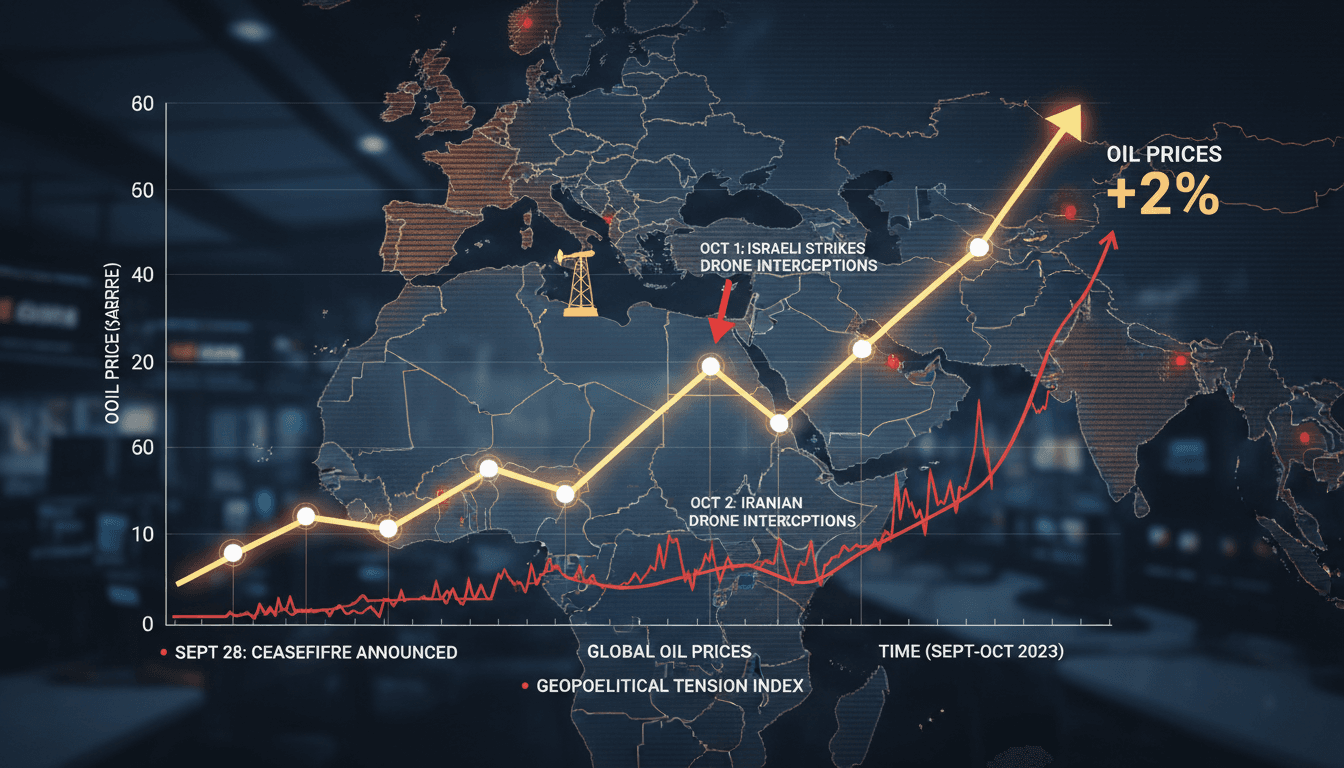
- Ceasefire questioned: The two-week truce announced on April 8 faced immediate challenges, including Israeli strikes and Iranian drone interceptions.
- Market volatility: Stock markets reacted negatively, with declines in major indices across Asia and Europe.
The context you actually need
- Escalating tensions: The US-Iran conflict has previously disrupted the Strait of Hormuz, a critical oil shipping route, leading to significant supply shortages.
- Price fluctuations: Brent crude had surged nearly 51% since late February due to military actions and blockades, peaking above $116 before the ceasefire announcement.
- Immediate aftermath: Following the ceasefire, oil prices initially plummeted by 13.29% but rebounded as markets reacted to ongoing hostilities.
What's really happening
The recent spike in oil prices is rooted in a complex interplay of geopolitical tensions and market reactions. The US and Iran's conditional ceasefire, intended to stabilize the region and reopen the vital Strait of Hormuz, has been met with skepticism. This skepticism is fueled by immediate violations, such as Israeli military actions in Lebanon and Iranian drone interceptions by UAE and Kuwaiti forces. These developments suggest that the ceasefire may not hold, which in turn raises fears of renewed conflict and further disruptions to oil supply.
The Strait of Hormuz is a crucial chokepoint for global oil transportation, with approximately 20% of the world's oil passing through it. Any instability in this region can lead to significant price fluctuations, as seen in the recent surge in Brent and WTI prices. The market's reaction to the ceasefire announcement illustrates how quickly investor sentiment can shift based on geopolitical developments.
Moreover, the underlying economic principles of supply and demand are at play. With the potential for renewed hostilities, investors are bracing for supply shortages, which historically lead to price increases. The recent price rebound indicates that traders are pricing in the risk of further disruptions, despite the temporary ceasefire.
Additionally, the broader implications of this situation extend beyond just oil prices. The volatility in energy markets can have ripple effects across various sectors, influencing everything from transportation costs to consumer prices. Businesses that rely heavily on fuel will likely face increased operational costs, which could lead to higher prices for consumers.
In the context of the UAE, where residents are already experiencing elevated fuel costs, the situation is particularly pressing. The local economy is sensitive to fluctuations in oil prices, and any sustained increase could strain household budgets and impact consumer spending.
Who feels it first (and how)
- Energy sector professionals: Increased operational costs and price volatility directly affect profitability.
- Consumers: Higher fuel prices can lead to increased transportation and living costs.
- Investors: Market fluctuations can impact investment strategies and portfolio valuations.
- Local businesses in Dubai: Elevated fuel costs may lead to increased prices for goods and services.
What to watch next
- Geopolitical developments: Monitor any further escalations or violations of the ceasefire, as these will directly impact oil supply and prices.
- Market reactions: Watch for shifts in stock indices and energy futures, which can indicate investor sentiment regarding the stability of the ceasefire.
- Consumer price trends: Keep an eye on how rising oil prices affect consumer goods and services, particularly in regions heavily reliant on oil imports.
Oil prices are sensitive to geopolitical tensions, particularly in the Middle East.
Continued volatility in oil prices as markets react to ongoing conflicts and ceasefire developments.
The long-term sustainability of the ceasefire and its impact on global oil supply.
Frequently Asked Questions
- Why it matters?
- The fragile ceasefire between the US and Iran is raising concerns about oil supply stability, which directly affects global markets and consumer prices.
- What happened (in 30 seconds)?
- Oil prices surged: Brent crude rose over 2% to $96.77 per barrel, while WTI increased nearly 3% to $97.23. Ceasefire questioned: The two-week truce announced on April 8 faced immediate challenges, including Israeli strikes and Iranian drone interceptions. Market volatility: Stock markets reacted negatively, with declines in major indices across Asia and Europe.
- What's really happening?
- The recent spike in oil prices is rooted in a complex interplay of geopolitical tensions and market reactions. The US and Iran's conditional ceasefire, intended to stabilize the region and reopen the vital Strait of Hormuz, has been met with skepticism. This skepticism is fueled by immediate violations, such as Israeli military actions in Lebanon and Iranian drone interceptions by UAE and Kuwaiti forces. These developments suggest that the ceasefire may not hold, which in turn raises fears of re
- Who feels it first (and how)?
- Energy sector professionals: Increased operational costs and price volatility directly affect profitability. Consumers: Higher fuel prices can lead to increased transportation and living costs. Investors: Market fluctuations can impact investment strategies and portfolio valuations. Local businesses in Dubai: Elevated fuel costs may lead to increased prices for goods and services.
- What to watch next?
- Geopolitical developments: Monitor any further escalations or violations of the ceasefire, as these will directly impact oil supply and prices. Market reactions: Watch for shifts in stock indices and energy futures, which can indicate investor sentiment regarding the stability of the ceasefire. Consumer price trends: Keep an eye on how rising oil prices affect consumer goods and services, particularly in regions heavily reliant on oil imports.
Markets desk coverage, trading insights, and investor updates.
"WSJ’s markets reporting provides in-depth analysis and context for investors."
— A47 Editor
Crude Futures End Volatile Session Higher
Oil futures ended a volatile trading session higher, buoyed by a fragile truce between the U.S. and Iran, despite ongoing tensions that threaten the stability of the Strait of Hormuz. Israel's decision to engage in negotiations with Lebanon has somew...
UK and international business news, economics, and corporate coverage.
"The Guardian’s business section covers finance and markets with a progressive editorial tone."
— A47 Editor
Strait of Hormuz not open, Abu Dhabi’s oil chief says as crude prices rise
Sultan Al Jaber, CEO of the Abu Dhabi National Oil Company, stated that the Strait of Hormuz remains “not open” despite a recent US-Iran ceasefire, contributing to rising Brent crude prices nearing $100 a barrel.
News and current affairs from across Europe.
"The Guardian is known for its progressive editorial stance and in-depth analysis."
— A47 Editor
Strait of Hormuz not open, Abu Dhabi’s oil chief says as crude prices rise
Sultan Al Jaber, CEO of the Abu Dhabi National Oil Company, stated that the Strait of Hormuz remains “not open” despite a recent US-Iran ceasefire, contributing to rising Brent crude prices nearing $100 a barrel.
Corporate news, economic trends, and markets with UK and global scope.
"BBC News is widely regarded as reputable and impartial, with a public service mandate."
— A47 Editor
Petrol and diesel prices rise again as concerns grow over ceasefire
Petrol and diesel prices have risen again, prompting warnings from motoring groups that drivers should not expect a significant decrease in costs in the near future. This increase is attributed to ongoing geopolitical tensions, particularly involving...
International coverage of politics, culture, and current affairs.
"BBC News is widely regarded as a reputable international news organization, known for its impartial tone and public service mandate."
— A47 Editor
Petrol and diesel prices rise again as concerns grow over ceasefire
Petrol and diesel prices have risen again, prompting warnings from motoring groups that drivers should not expect a significant decrease in costs in the near future. This increase is attributed to ongoing geopolitical tensions, particularly involving...
Regional and international reporting focused on Middle Eastern politics, diplomacy, and economics.
"Asharq Al-Awsat is a Saudi-owned international newspaper reflecting mainstream Gulf political perspectives."
— A47 Editor
Oil Prices Rise again and Asian Stocks Retreat on the Fragile Iran Ceasefire
Oil prices have risen again, with West Texas Intermediate (WTI) reaching $104 per barrel, following the announcement of a U.S. blockade on Iranian ports after failed peace talks between the U.S. and Iran. This blockade, effective Monday, has heighten...
Global markets, investing, and macroeconomics from a premier financial newsroom.
"Bloomberg is respected for in-depth financial reporting and data-driven analysis."
— A47 Editor
Oil Rises as Strait of Hormuz Remains Blocked
Oil prices have rebounded following their largest single-day drop since April 2020, as the Strait of Hormuz remains blocked due to ongoing tensions in the Middle East, particularly following Israeli attacks on Lebanon. This situation has raised conce...