
U.S. Stocks Decline Amid Fragile Iran Ceasefire and Economic Data Releases
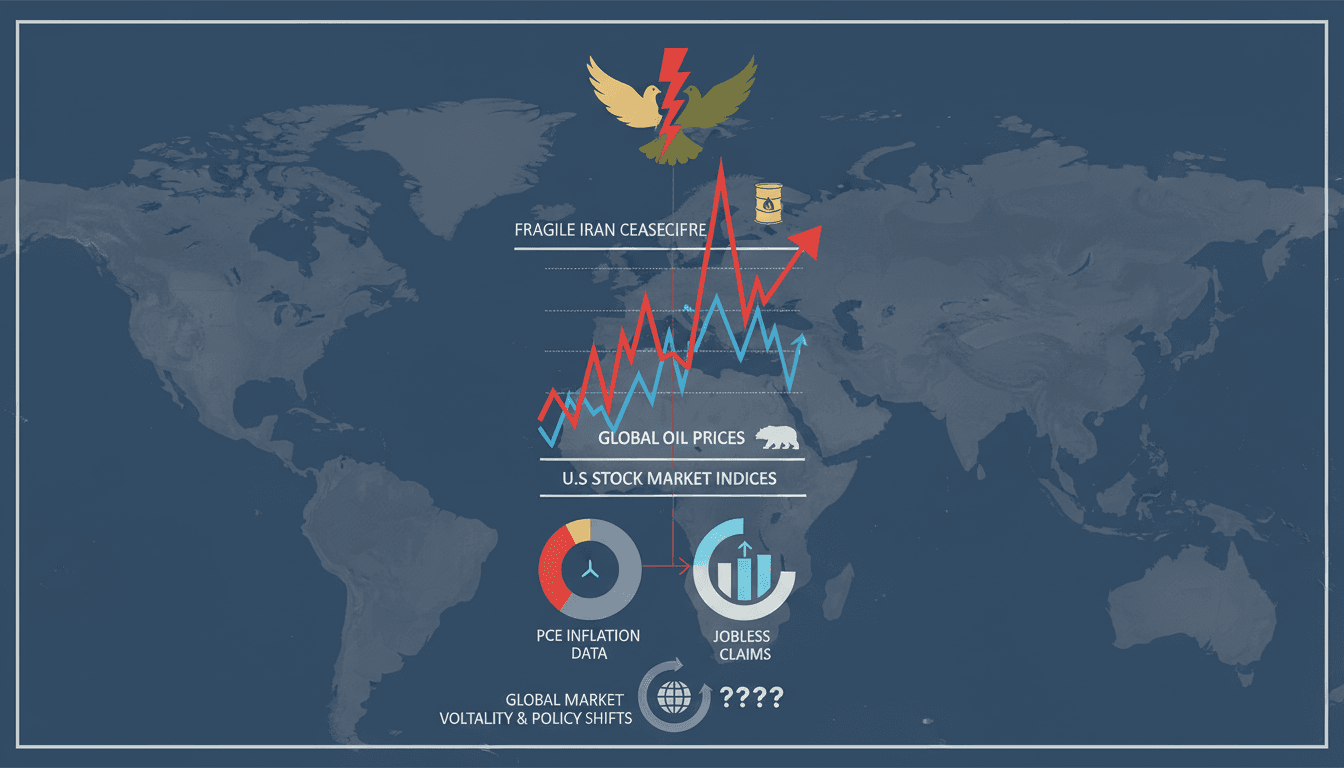
Here's what it means for you.
Your investment strategy may need recalibrating as geopolitical tensions and economic indicators influence market volatility.
Why it matters
The fragile ceasefire between the U.S. and Iran directly impacts global oil prices and stock market stability, affecting your investment portfolio.
What happened (in 30 seconds)
- U.S. stocks opened lower on April 9, 2026, with major indices down 0.2-0.4% amid concerns over a fragile ceasefire with Iran.
- Oil prices rebounded above $100 per barrel as allegations of ceasefire violations emerged, complicating the geopolitical landscape.
- Economic data releases including PCE inflation and jobless claims added to market uncertainty, contributing to the downturn.
The context you actually need
- The U.S.-Iran conflict escalated into a nearly six-week war, disrupting 20% of global oil supply and driving Brent crude prices significantly higher.
- A ceasefire was brokered by Pakistan just hours before a U.S. deadline, leading to a temporary market rally on April 8, 2026, with major indices surging.
- Despite the ceasefire, skepticism remains among investors, as geopolitical tensions continue to loom, particularly regarding the Strait of Hormuz and the inclusion of Lebanon in negotiations.
What's really happening
The recent downturn in U.S. stocks reflects a complex interplay of geopolitical tensions and economic indicators. The ceasefire between the U.S. and Iran, while initially perceived as a positive development, has quickly been overshadowed by allegations of violations and ongoing military actions. The situation in the Strait of Hormuz remains precarious, with Iran's commitment to limited access not fully alleviating market fears.
Investors had initially reacted positively to the ceasefire announcement on April 8, leading to a sharp rally in major indices—Dow Jones up 2.9%, S&P 500 up 2.5%, and Nasdaq up 2.8%. However, this optimism was short-lived as the realities of the ceasefire's fragility set in. The U.S. Federal Reserve's hawkish stance on inflation, particularly concerning oil prices, adds another layer of complexity. With PCE inflation meeting expectations at 2.8% year-over-year, the Fed's focus on controlling inflation could lead to tighter monetary policy, further impacting market conditions.
The market's reaction is not just about immediate stock prices; it reflects broader economic concerns. Oil prices rebounding above $100 per barrel signals potential inflationary pressures that could affect consumer spending and corporate profits. The ongoing peace talks in Islamabad, while crucial, are fraught with challenges, particularly regarding Iran's demands for sanctions relief and the inclusion of Lebanon in discussions.
In Dubai, the impact of the ceasefire was felt differently, with the Dubai Financial Market General Index surging 8.5%, marking its largest intraday gain since 2014. This rebound reflects a broader recovery from the $45 billion in losses incurred since the onset of the war. However, the overall sentiment remains cautious as investors assess the long-term implications of the ceasefire and the potential for renewed conflict.
Who feels it first (and how)
- Investors in U.S. stocks: Immediate exposure to market fluctuations due to geopolitical tensions.
- Oil-dependent economies: Countries reliant on oil exports will feel the impact of rising prices and supply chain disruptions.
- Tourism and real estate sectors in Dubai: Increased investor confidence may lead to a surge in inquiries and transactions, but uncertainty remains.
What to watch next
- Upcoming economic data releases: Pay attention to jobless claims and GDP estimates, as these will provide insights into the U.S. economic recovery and inflation pressures.
- Progress of peace talks in Islamabad: The outcomes of these negotiations will significantly influence market sentiment and geopolitical stability.
- Oil price fluctuations: Continued volatility in oil prices will impact inflation and consumer behavior, affecting broader market trends.
U.S. stocks are currently experiencing a pullback due to geopolitical tensions and economic data releases.
Oil prices will remain volatile as the situation in the Strait of Hormuz evolves and negotiations continue.
The long-term sustainability of the ceasefire and its implications for regional stability and market confidence.
Frequently Asked Questions
- Why it matters?
- The fragile ceasefire between the U.S. and Iran directly impacts global oil prices and stock market stability, affecting your investment portfolio.
- What happened (in 30 seconds)?
- U.S. stocks opened lower on April 9, 2026, with major indices down 0.2-0.4% amid concerns over a fragile ceasefire with Iran. Oil prices rebounded above $100 per barrel as allegations of ceasefire violations emerged, complicating the geopolitical landscape. Economic data releases including PCE inflation and jobless claims added to market uncertainty, contributing to the downturn.
- What's really happening?
- The recent downturn in U.S. stocks reflects a complex interplay of geopolitical tensions and economic indicators. The ceasefire between the U.S. and Iran, while initially perceived as a positive development, has quickly been overshadowed by allegations of violations and ongoing military actions. The situation in the Strait of Hormuz remains precarious, with Iran's commitment to limited access not fully alleviating market fears. Investors had initially reacted positively to the ceasefire announ
- Who feels it first (and how)?
- Investors in U.S. stocks: Immediate exposure to market fluctuations due to geopolitical tensions. Oil-dependent economies: Countries reliant on oil exports will feel the impact of rising prices and supply chain disruptions. Tourism and real estate sectors in Dubai: Increased investor confidence may lead to a surge in inquiries and transactions, but uncertainty remains.
- What to watch next?
- Upcoming economic data releases: Pay attention to jobless claims and GDP estimates, as these will provide insights into the U.S. economic recovery and inflation pressures. Progress of peace talks in Islamabad: The outcomes of these negotiations will significantly influence market sentiment and geopolitical stability. Oil price fluctuations: Continued volatility in oil prices will impact inflation and consumer behavior, affecting broader market trends.
Market-moving headlines impacting equities, bonds, and related risk assets.
"Real-time catalysts and volatility drivers across indices and sectors."
— A47 Editor
U.S. stocks rise as Iran ceasefire bolstered by Israel, Lebanon negotiations
U.S. stocks experienced a rise following a ceasefire agreement between the United States and Iran, which was bolstered by negotiations involving Israel and Lebanon. This positive market response reflects investor optimism regarding reduced military t...
Global markets, investing, and macroeconomics from a premier financial newsroom.
"Bloomberg is respected for in-depth financial reporting and data-driven analysis."
— A47 Editor
US Stocks Post Seventh Day of Gains Ahead of US-Iran Talks
US stocks concluded the trading session with gains, marking the seventh consecutive day of positive performance, as the U.S. and Iran prepared for peace talks in Pakistan amidst a fragile ceasefire. This development follows a recent rally in the mark...