
Vercel Security Breach Exposes OAuth Vulnerabilities in Supply Chain
Here's what it means for you.
If you rely on cloud-based services, this incident underscores the importance of scrutinizing third-party tools and their permissions.
Why it matters
This breach highlights critical vulnerabilities in OAuth governance and the risks posed by unvetted third-party applications.
What happened (in 30 seconds)
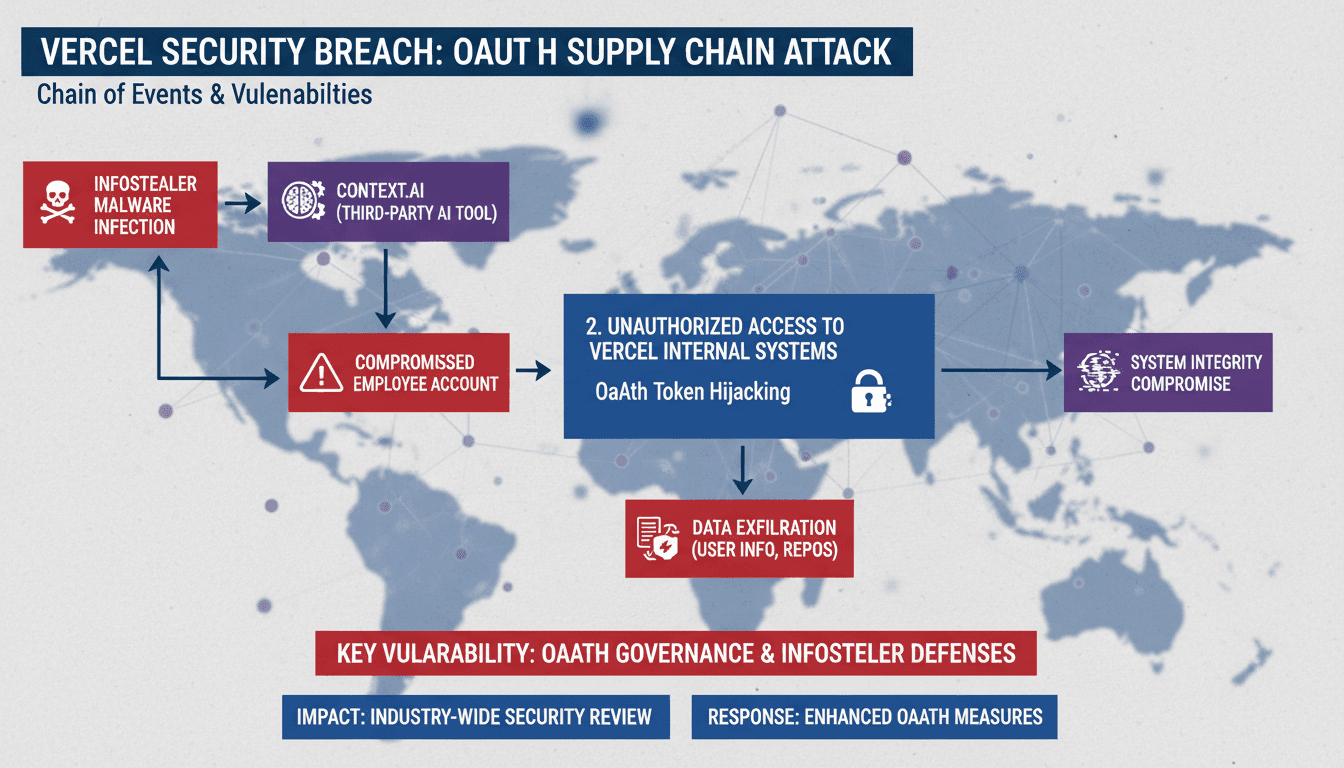
- Attackers exploited a compromised third-party AI tool, Context.ai, to hijack a Vercel employee's Google Workspace account.
- Unauthorized access to internal systems allowed attackers to extract non-sensitive environment variables from Vercel's platform.
- Vercel disclosed the incident on April 19, 2026, revealing deficiencies in OAuth oversight and shadow IT management.
The context you actually need
- Infostealer malware like Lumma Stealer is increasingly targeting developer credentials, often through gaming cheats.
- OAuth permissions can inadvertently grant broad access, especially when using unvetted AI tools, creating multi-hop supply chain vulnerabilities.
- Non-sensitive environment variables stored in plaintext can facilitate privilege escalation, making them attractive targets for attackers.
What's really happening
In February 2026, a Context.ai employee fell victim to Lumma Stealer malware, which compromised their corporate credentials, including access to Google Workspace. This incident set off a chain reaction that would ultimately affect Vercel. A Vercel employee, unaware of the risks, installed the Context.ai Chrome extension and authorized it with full OAuth scopes using their corporate Google Workspace account. This seemingly innocuous action opened the door for attackers.
By March 2026, Context.ai detected unauthorized access to its AWS environment and engaged CrowdStrike for an investigation. Google intervened by removing the compromised extension on March 27, but the damage was already done. Attackers leveraged the stolen OAuth token to access the Vercel employee's Workspace, allowing them to pivot into Vercel's internal environments and extract plaintext non-sensitive environment variables.
Vercel identified the intrusion on April 19, 2026, and promptly published an initial bulletin. They confirmed that the exposure was limited to a subset of customers and that no npm package compromises occurred. However, the incident raised alarms about OAuth auditing and the need for better third-party risk management. Subsequent updates revealed additional prior independent compromises, and a persona linked to ShinyHunters claimed to sell data on BreachForums, although this was assessed as likely inauthentic.
The aftermath saw Vercel engaging Mandiant and law enforcement, notifying affected customers for credential rotations, and deploying enhancements to their security protocols. These included default 'sensitive' classification for new environment variables, improved dashboards, and recommendations for multi-factor authentication (MFA). Collaborations with GitHub, Microsoft, npm, and Socket were established to confirm supply chain integrity. However, the secondary market valuation of Vercel declined by 13%, dropping to $8.1 billion, reflecting investor concerns over security vulnerabilities.
This incident serves as a stark reminder of the escalating threats posed by infostealer malware and the critical need for organizations to tighten their OAuth governance and shadow IT oversight.
Who feels it first (and how)
- Developers: Increased scrutiny on the tools they use and the permissions they grant.
- Security teams: Heightened pressure to audit OAuth permissions and manage third-party risks effectively.
- Investors: Concerns over company valuations and the potential for future breaches impacting market confidence.
- Customers: Potential disruptions in service and the need for credential rotations.
What to watch next
- OAuth auditing improvements: Watch for companies enhancing their OAuth governance frameworks to prevent similar incidents.
- Regulatory responses: Keep an eye on potential regulatory changes aimed at tightening security protocols for third-party applications.
- Market reactions: Monitor how investor sentiment shifts in response to security incidents and the effectiveness of mitigations deployed by affected companies.
The breach was initiated through a compromised third-party tool and involved unauthorized access to Vercel's internal systems.
Organizations will increase their focus on OAuth governance and third-party risk management in the wake of this incident.
The long-term impact on Vercel's market position and customer trust remains to be seen.
Frequently Asked Questions
- Why it matters?
- This breach highlights critical vulnerabilities in OAuth governance and the risks posed by unvetted third-party applications.
- What happened (in 30 seconds)?
- Attackers exploited a compromised third-party AI tool, Context.ai, to hijack a Vercel employee's Google Workspace account. Unauthorized access to internal systems allowed attackers to extract non-sensitive environment variables from Vercel's platform. Vercel disclosed the incident on April 19, 2026, revealing deficiencies in OAuth oversight and shadow IT management.
- What's really happening?
- In February 2026, a Context.ai employee fell victim to Lumma Stealer malware, which compromised their corporate credentials, including access to Google Workspace. This incident set off a chain reaction that would ultimately affect Vercel. A Vercel employee, unaware of the risks, installed the Context.ai Chrome extension and authorized it with full OAuth scopes using their corporate Google Workspace account. This seemingly innocuous action opened the door for attackers. By March 2026, Context.ai
- Who feels it first (and how)?
- Developers: Increased scrutiny on the tools they use and the permissions they grant. Security teams: Heightened pressure to audit OAuth permissions and manage third-party risks effectively. Investors: Concerns over company valuations and the potential for future breaches impacting market confidence. Customers: Potential disruptions in service and the need for credential rotations.
- What to watch next?
- OAuth auditing improvements: Watch for companies enhancing their OAuth governance frameworks to prevent similar incidents. Regulatory responses: Keep an eye on potential regulatory changes aimed at tightening security protocols for third-party applications. Market reactions: Monitor how investor sentiment shifts in response to security incidents and the effectiveness of mitigations deployed by affected companies.
Focuses on transformative tech, AI, gaming, and startup innovation.
"VentureBeat is respected for its in-depth reporting on AI, startups, and disruptive technologies in Silicon Valley and beyond."
— A47 Editor
Vercel breach exposes the OAuth gap most security teams cannot detect, scope or contain
Vercel confirmed a security breach that allowed unauthorized access to its internal systems, stemming from an employee's use of an AI tool linked to an infostealer. This incident exposed a previously unreviewed OAuth grant, raising significant concer...
Tech startup news, programming trends, and discussions shared by the developer community.
"Hacker News is a community-driven source highlighting influential tech discussions, startup launches, and programming insights."
— A47 Editor
The Vercel breach: OAuth attack exposes risk in platform environment variables
Vercel has confirmed a significant security breach that exposed vulnerabilities in its internal systems, primarily due to an OAuth attack linked to an employee's use of an AI tool. This incident has raised alarms regarding the security of platform en...
Startup news with frequent AI coverage.
"Covers launches, funding, and product updates in AI."
— A47 Editor
App host Vercel says it was hacked and customer data stolen
Vercel has reported a security breach that resulted in the theft of customer data, attributing the incident to a prior hack at Context AI. This breach allowed hackers to gain access to a Vercel employee's account, facilitating the data theft.
Consumer tech news, reviews, and buying guides for gadgets and electronics.
"TechRadar is known for comprehensive buying advice, hardware reviews, and consumer tech news targeted at mainstream audiences."
— A47 Editor
'We've identified a security incident': Vercel breach confirmed after hackers claim stolen data for sale online
Vercel has confirmed a security breach involving the theft of non-sensitive data, with hackers claiming to sell the stolen information online. The company has already notified affected customers about the incident.
Biting coverage of AI/ML software and vendors.
"Known for skeptical, incisive reporting on enterprise tech."
— A47 Editor
Next.js developer Vercel warns of customer credential compromise
Vercel, the developer behind the Next.js framework, has reported a significant data breach that compromised customer credentials, attributing the incident to a security failure linked to Context.ai. The breach involved unauthorized access to internal...
Real-time updates, analysis, and reports on the blockchain and cryptocurrency sectors.
"Crypto News delivers real-time updates, analysis, and reports on the blockchain and cryptocurrency sectors."
— A47 Editor
Vercel breach linked to AI tool, credentials compromised
Vercel has confirmed a limited breach that exposed some user credentials after an attacker accessed internal systems through a compromised AI tool account. This incident raises concerns about the security of sensitive information within the company's...
Covers blockchain, cryptocurrency news, project analysis, and market insights.
"Cointelegraph is a leading crypto-focused media outlet known for timely news, analysis, and educational content related to blockchain and digital assets."
— A47 Editor
Cloud hosting firm Vercel confirms ‘limited’ hack of user info
Vercel has confirmed a limited hack that compromised user information after a member of a hacking forum attempted to sell the company's data for $2 million. This breach raises significant concerns regarding the security of sensitive user credentials.