
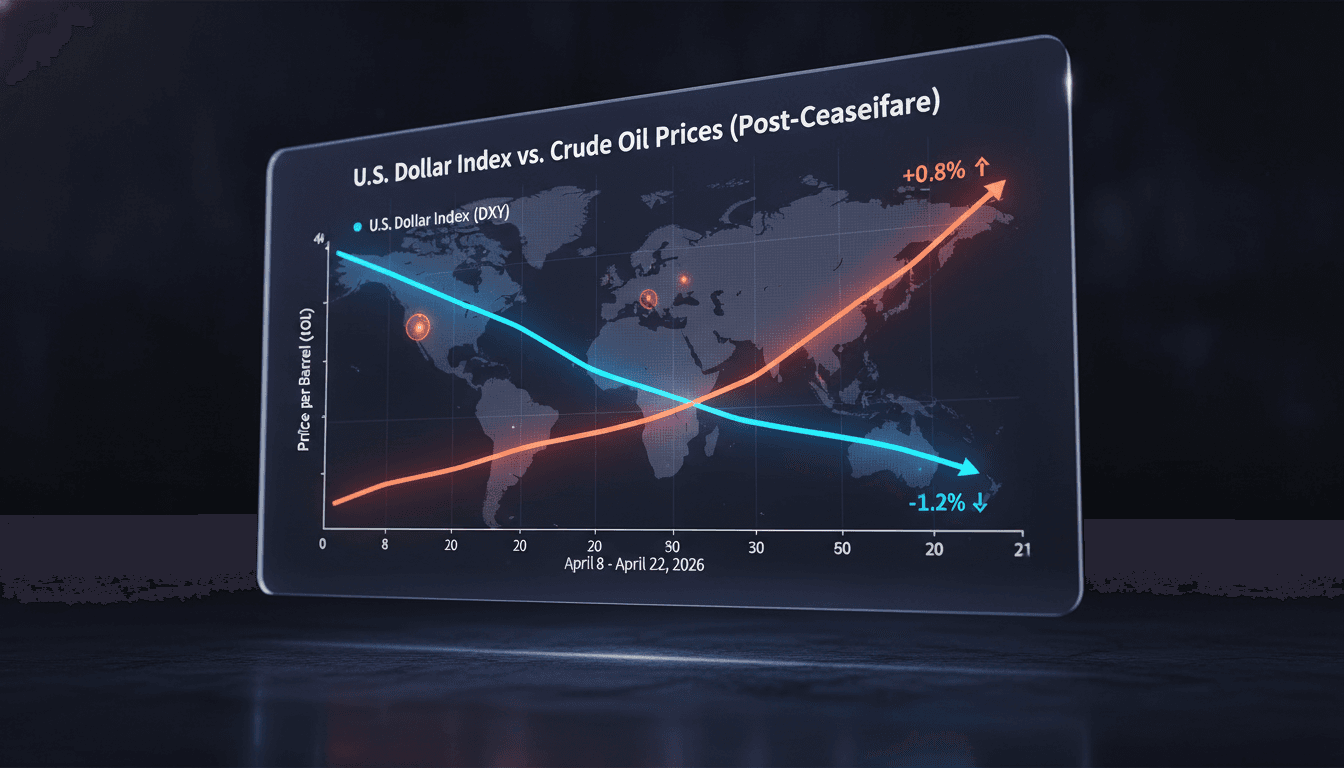
U.S. Dollar Index Drops 1.2% After U.S.-Iran Ceasefire Agreement
Here's what it means for you.
The recent ceasefire between the U.S. and Iran could reshape currency markets and influence global economic stability.
Why it matters
The ceasefire reduces geopolitical risks, impacting the U.S. dollar's status as a safe haven and affecting global asset prices.
What happened (in 30 seconds)
- The U.S. and Iran announced a two-week ceasefire on April 8, 2026, allowing safe passage through the Strait of Hormuz.
- The U.S. dollar index fell 1.2% immediately following the announcement, while risk-sensitive currencies like the Australian dollar rallied.
- Global markets advanced as oil prices dropped significantly, easing volatility and boosting investor confidence.
The context you actually need
- Tensions had escalated in March 2026, with Iranian threats to critical infrastructure and rising oil prices above $100 per barrel.
- President Trump set a deadline for Iran to comply with demands regarding the Strait of Hormuz, leading to heightened global risk aversion.
- The ceasefire agreement marks a significant shift in U.S.-Iran relations, with potential long-term implications for oil markets and international trade.
What's really happening
The ceasefire between the U.S. and Iran represents a pivotal moment in a long-standing conflict that has significant implications for global markets. The announcement came just hours before a self-imposed deadline set by President Trump, who had threatened escalated military action if Iran did not comply with U.S. demands regarding the Strait of Hormuz. The agreement allows for safe passage through this critical shipping route, which is vital for global oil transport and trade.
As a result of the ceasefire, the ICE U.S. Dollar Index saw a notable decline of 1.2%, reflecting a shift in investor sentiment. The dollar's status as a safe haven has been challenged by the easing of geopolitical tensions, leading to a sell-off in the currency as investors sought riskier assets. The Australian dollar, for instance, rose over 1% against the greenback, indicating a broader market rally as risk appetite returned.
This shift is not merely a reaction to the ceasefire; it signals a potential return to pre-conflict economic conditions. Analysts at Scotiabank and UniCredit have pointed out that the dollar's decline is linked to waning demand for safe-haven assets, as investors recalibrate their expectations in light of reduced geopolitical risks. The immediate aftermath saw global equities rally sharply, with oil futures dropping significantly below $100 per barrel, which could have further implications for oil-reliant economies.
Moreover, the reopening of the Strait of Hormuz under Iranian management is expected to benefit shipping operations, particularly for the UAE's Jebel Ali Port. This development could lead to reduced logistics costs for businesses and residents in the region, although the short-term economic boost may be tempered by the recent plunge in oil prices.
In essence, the ceasefire has triggered a chain reaction in financial markets, shifting the balance of power and influencing currency valuations. The implications of this agreement extend beyond immediate market reactions, potentially reshaping long-term economic relationships and trade dynamics in the region.
Who feels it first (and how)
- Currency traders: Immediate impact on trading strategies and currency valuations.
- Shipping companies: Assessing the feasibility of transit through the Strait of Hormuz for trapped vessels.
- Oil-dependent economies: Fluctuations in oil prices affect household budgets and inflation rates.
- Investors in risk-sensitive assets: Increased confidence may lead to higher investments in equities and commodities.
What to watch next
- U.S. dollar performance: Monitor how the dollar reacts to ongoing geopolitical developments and market sentiment.
- Oil price trends: Watch for fluctuations in oil prices as the ceasefire impacts supply routes and global demand.
- Geopolitical developments: Keep an eye on any further negotiations or escalations between the U.S. and Iran that could affect market stability.
The U.S. dollar index declined by 1.2% following the ceasefire announcement.
Continued pressure on the dollar if de-escalation holds and risk appetite increases.
The long-term sustainability of the ceasefire and its impact on regional stability.
Frequently Asked Questions
- Why it matters?
- The ceasefire reduces geopolitical risks, impacting the U.S. dollar's status as a safe haven and affecting global asset prices.
- What happened (in 30 seconds)?
- The U.S. and Iran announced a two-week ceasefire on April 8, 2026, allowing safe passage through the Strait of Hormuz. The U.S. dollar index fell 1.2% immediately following the announcement, while risk-sensitive currencies like the Australian dollar rallied. Global markets advanced as oil prices dropped significantly, easing volatility and boosting investor confidence.
- What's really happening?
- The ceasefire between the U.S. and Iran represents a pivotal moment in a long-standing conflict that has significant implications for global markets. The announcement came just hours before a self-imposed deadline set by President Trump, who had threatened escalated military action if Iran did not comply with U.S. demands regarding the Strait of Hormuz. The agreement allows for safe passage through this critical shipping route, which is vital for global oil transport and trade. As a result of t
- Who feels it first (and how)?
- Currency traders: Immediate impact on trading strategies and currency valuations. Shipping companies: Assessing the feasibility of transit through the Strait of Hormuz for trapped vessels. Oil-dependent economies: Fluctuations in oil prices affect household budgets and inflation rates. Investors in risk-sensitive assets: Increased confidence may lead to higher investments in equities and commodities.
- What to watch next?
- U.S. dollar performance: Monitor how the dollar reacts to ongoing geopolitical developments and market sentiment. Oil price trends: Watch for fluctuations in oil prices as the ceasefire impacts supply routes and global demand. Geopolitical developments: Keep an eye on any further negotiations or escalations between the U.S. and Iran that could affect market stability.
Markets desk coverage, trading insights, and investor updates.
"WSJ’s markets reporting provides in-depth analysis and context for investors."
— A47 Editor
The WSJ Dollar Index Falls 0.67% to 95.82
The WSJ Dollar Index has decreased by 0.67%, reaching a value of 95.82, marking its third consecutive day of decline. This downturn reflects ongoing volatility in the currency market, influenced by various economic factors and geopolitical tensions.
Currency market headlines, FX rates, central-bank chatter, and macro drivers moving major pairs.
"Investing.com’s forex stream is useful for fast updates across USD, EUR, JPY, GBP and emerging-market FX."
— A47 Editor
Dollar heads for worst day since April after U.S. and Iran agree to ceasefire
The U.S. dollar is on track for its worst day since April, following the announcement of a ceasefire agreement between the United States and Iran. This two-week truce aims to ease military tensions in the region, which has led to fluctuations in fina...