
US Department of Energy Loans 8.48 Million Barrels from Strategic Petroleum Reserve Amid Iran War
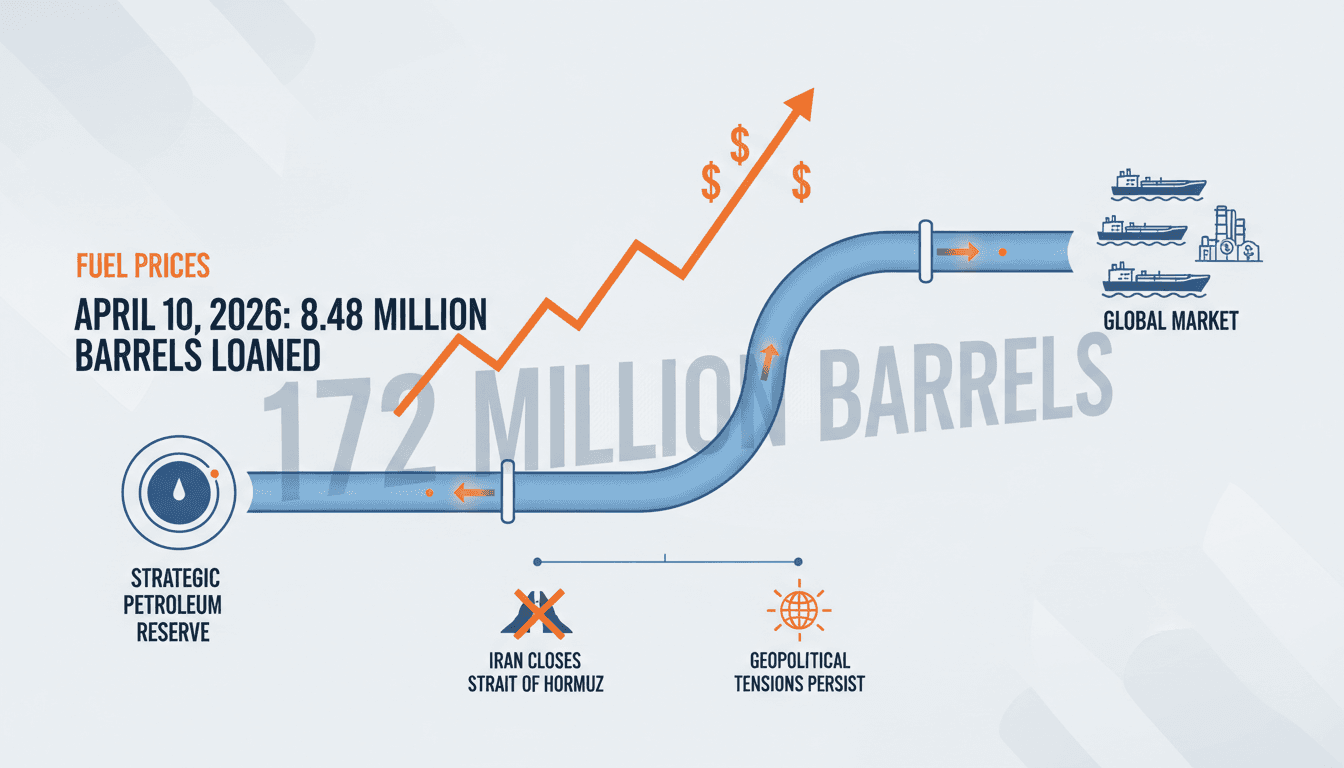
Here's what it means for you.
If you rely on global oil markets, this emergency release could impact fuel prices and availability in your region.
Why it matters
This strategic move aims to stabilize oil prices amid significant supply disruptions, affecting economies worldwide.
What happened (in 30 seconds)
- On April 10, 2026, the U.S. Department of Energy awarded contracts to loan 8.48 million barrels from the Strategic Petroleum Reserve (SPR).
- This is the second emergency exchange amid ongoing disruptions caused by the Iran war, which has affected global oil flows.
- The U.S. is part of a larger effort, coordinating with the International Energy Agency to release a total of 400 million barrels to mitigate rising fuel prices.
The context you actually need
- The Iran war began in late February 2026, following U.S.-Israeli strikes, leading to the closure of the Strait of Hormuz and a historic supply shock affecting 20 million barrels per day.
- The International Energy Agency (IEA) approved a record 400 million barrel release from member stockpiles, with the U.S. committing 172 million barrels via SPR exchanges.
- Fuel prices have surged globally, with Dubai experiencing a 33% increase in April 2026, as Brent crude prices exceeded $106 per barrel.
What's really happening
The release of 8.48 million barrels from the U.S. Strategic Petroleum Reserve (SPR) is a calculated response to a volatile global oil market, primarily driven by the ongoing Iran war. This conflict has severely disrupted oil flows through the Strait of Hormuz, a critical chokepoint for global oil transportation. The U.S. Department of Energy's (DOE) decision to loan oil from the SPR is part of a broader strategy to stabilize prices and ensure market liquidity during a time of crisis.
The SPR, which serves as an emergency stockpile, is currently at its lowest inventory level since the mid-1980s, with just 413.3 million barrels available. This amount is equivalent to slightly over four days of global oil demand, highlighting the urgency of the situation. The DOE's approach involves not only releasing oil but also requiring repayment with a premium, ensuring that the financial burden does not fall on taxpayers.
The broader context includes the International Energy Agency's (IEA) unprecedented decision to release 400 million barrels from member countries' stockpiles. The U.S. has committed to providing 172 million barrels through a series of exchanges, with the first round in March yielding 45.2 million barrels. This rapid response indicates a recognition of the potential for prolonged supply disruptions and the need for immediate market relief.
Despite these interventions, global oil prices have remained elevated, consistently exceeding $100 per barrel. Analysts warn that while these releases provide temporary stabilization, they may not be sufficient to fully offset the impacts of the ongoing conflict. The market's reaction has been mixed, with weak bid uptake in prior rounds signaling uncertainty among traders about the effectiveness of these measures.
In Dubai, the effects have been particularly pronounced, with residents facing significant fuel price hikes. The UAE government has activated alternative supply routes and implemented consumer protection measures to mitigate the impact on citizens. This situation underscores the interconnectedness of global oil markets and the ripple effects that geopolitical events can have on local economies.
Who feels it first (and how)
- Consumers in Dubai: Experiencing significant fuel price increases, impacting daily expenses.
- Oil traders and companies: Facing uncertainty in bidding and pricing strategies amid fluctuating market conditions.
- Global economies: Countries reliant on oil imports are likely to see increased costs and potential inflationary pressures.
What to watch next
- Market reactions: Monitor how oil prices respond in the coming weeks, particularly if additional SPR releases occur.
- Geopolitical developments: Keep an eye on the Iran war's progression and any new sanctions or military actions that could further disrupt oil supplies.
- Consumer price adjustments: Watch for changes in fuel prices in various regions, particularly in oil-dependent economies.
The U.S. has released 8.48 million barrels from the SPR to stabilize oil prices.
Global oil prices will remain volatile as the Iran war continues and supply disruptions persist.
The long-term effectiveness of SPR releases in mitigating price increases and ensuring market stability.
Frequently Asked Questions
- Why it matters?
- This strategic move aims to stabilize oil prices amid significant supply disruptions, affecting economies worldwide.
- What happened (in 30 seconds)?
- On April 10, 2026, the U.S. Department of Energy awarded contracts to loan 8.48 million barrels from the Strategic Petroleum Reserve (SPR). This is the second emergency exchange amid ongoing disruptions caused by the Iran war, which has affected global oil flows. The U.S. is part of a larger effort, coordinating with the International Energy Agency to release a total of 400 million barrels to mitigate rising fuel prices.
- What's really happening?
- The release of 8.48 million barrels from the U.S. Strategic Petroleum Reserve (SPR) is a calculated response to a volatile global oil market, primarily driven by the ongoing Iran war. This conflict has severely disrupted oil flows through the Strait of Hormuz, a critical chokepoint for global oil transportation. The U.S. Department of Energy's (DOE) decision to loan oil from the SPR is part of a broader strategy to stabilize prices and ensure market liquidity during a time of crisis. The SPR, w
- Who feels it first (and how)?
- Consumers in Dubai: Experiencing significant fuel price increases, impacting daily expenses. Oil traders and companies: Facing uncertainty in bidding and pricing strategies amid fluctuating market conditions. Global economies: Countries reliant on oil imports are likely to see increased costs and potential inflationary pressures.
- What to watch next?
- Market reactions: Monitor how oil prices respond in the coming weeks, particularly if additional SPR releases occur. Geopolitical developments: Keep an eye on the Iran war's progression and any new sanctions or military actions that could further disrupt oil supplies. Consumer price adjustments: Watch for changes in fuel prices in various regions, particularly in oil-dependent economies.
English-language news from Qatar covering domestic and regional affairs.
"Gulf Times reflects Qatari perspectives on regional developments."
— A47 Editor
US advances second oil reserve release amid Middle East conflict
The US Department of Energy has announced the loan of 8.48 million barrels of crude oil from the Strategic Petroleum Reserve (SPR) to four companies, marking the second round of releases aimed at alleviating fuel supply pressures amid ongoing conflic...
Sports reporting with a focus on Saudi and regional competitions.
"Okaz sports coverage is broad and audience-friendly, with strong attention to Saudi teams and leagues."
— A47 Editor
للحد من أسعار الوقود.. أمريكا تسحب الدفعة الثانية من احتياطي النفط الإستراتيجي
The U.S. Department of Energy has loaned 8.48 million barrels of crude oil from the Strategic Petroleum Reserve to four oil companies as part of the second tranche of efforts by President Donald Trump’s administration to curb rising fuel prices amid ...