
Trump Considers Seizing Iranian Oil Assets for Leverage Against China Amid Ongoing Conflict
Here's what it means for you.
If you're in the energy sector or rely on global oil prices, the potential U.S. seizure of Iranian oil assets could significantly impact your costs and market dynamics.
Why it matters
This strategy could reshape global energy markets and U.S.-China relations amid escalating geopolitical tensions.
What happened (in 30 seconds)
- On April 6, 2026, President Trump discussed seizing Iran's oil sector to gain leverage over China during a White House meeting.
- Iran's closure of the Strait of Hormuz has already driven global oil prices above $110 per barrel, stranding significant oil exports.
- U.S. officials referenced historical precedents to justify this strategy, including American crude exports and involvement in Venezuelan oil production.
The context you actually need
- The U.S.-Iran conflict escalated in early March 2026, leading to military actions and the closure of critical shipping lanes.
- Iran's oil exports are crucial for China, which imported 1.4 million barrels per day in 2025, making up over 80% of Iran's shipments.
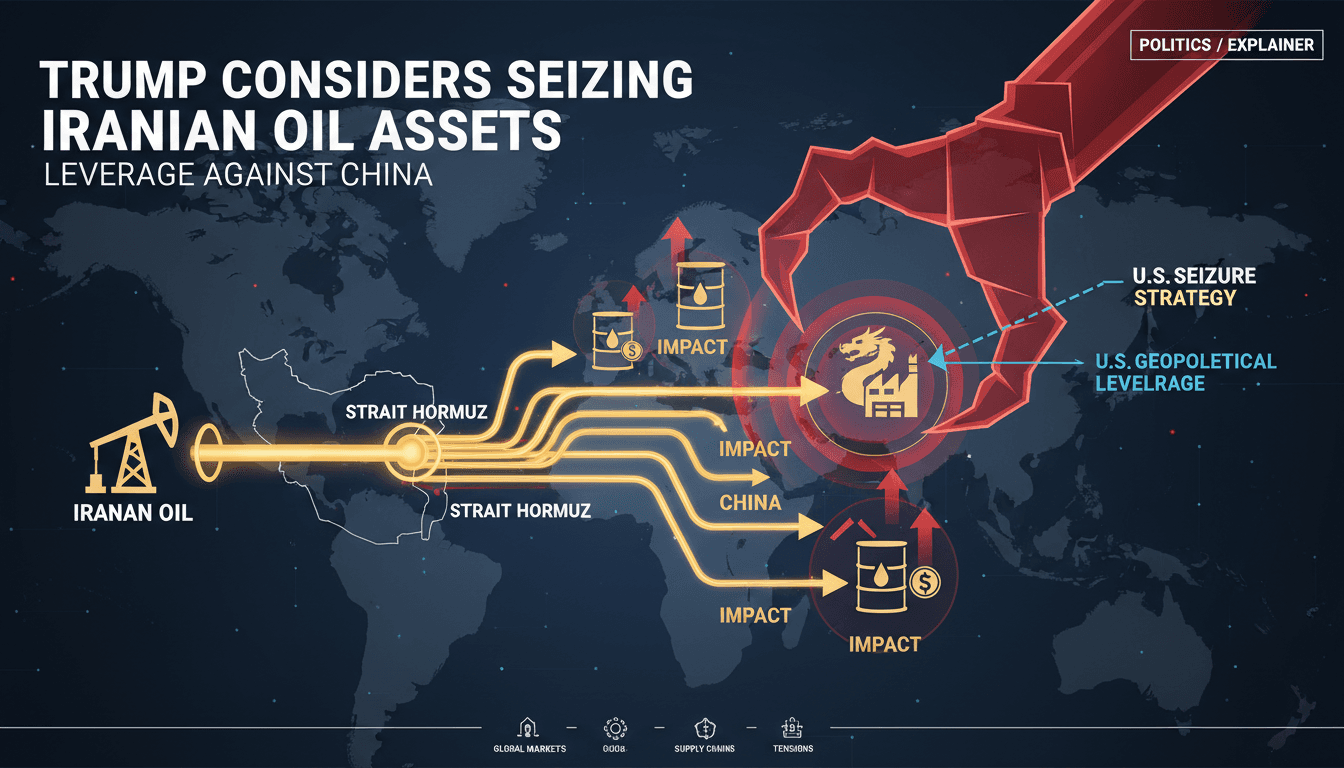
- Seizing assets like Kharg Island, Iran's main oil export terminal, could disrupt oil flows and serve as a bargaining chip against Tehran and China.
What's really happening
The discussions surrounding the potential seizure of Iranian oil assets are rooted in the ongoing U.S.-Iran conflict, which intensified in early March 2026. Following Iranian actions that prompted U.S. and Israeli military responses, Iran's closure of the Strait of Hormuz halted tanker traffic, significantly affecting global oil supply. This strategic chokepoint is critical, as it facilitates the passage of approximately one-fifth of the world's seaborne crude oil.
As oil prices surged above $110 per barrel, Trump and his administration began to explore options for leveraging this crisis to gain strategic advantages, particularly against China, which is Iran's primary oil customer. In 2025, China imported around 1.4 million barrels per day of Iranian crude, accounting for over 80% of Iran's oil exports and 13% of China's total crude imports. The U.S. sees an opportunity to disrupt these flows and potentially gain control over vital resources.
Trump's assertion that "taking the oil" is feasible reflects a broader strategy of using energy resources as a tool of geopolitical power. Historical precedents, such as the U.S. involvement in Venezuelan oil production and the expansion of American crude exports, have been cited to support this approach. The idea is that controlling oil assets not only provides immediate economic benefits but also enhances bargaining power in negotiations with both Tehran and major importers like China.
However, this strategy is fraught with risks. Military operations to seize Iranian oil infrastructure, such as Kharg Island, could provoke further escalation and retaliation from Iran. The presence of mines and drones in the area adds to the operational hazards for U.S. forces. Moreover, the legal ramifications of such actions could lead to international condemnation and complicate diplomatic relations.
The implications of this strategy extend beyond immediate military concerns. If the U.S. successfully seizes Iranian oil assets, it could alter the balance of power in the region and influence global oil markets, potentially leading to higher prices and increased volatility. Additionally, this move could strain U.S.-China relations, as Beijing may respond with economic or military countermeasures to protect its energy interests.
Who feels it first (and how)
- Energy sector professionals: Fluctuations in oil prices will directly impact costs and profitability.
- Consumers: Rising fuel prices could lead to increased costs for goods and services.
- Investors: Market volatility may affect stock prices in energy and related sectors.
- Geopolitical analysts: Heightened tensions will require closer monitoring of U.S.-Iran and U.S.-China relations.
What to watch next
- Oil price movements: Monitor how global oil benchmarks respond to developments in the U.S.-Iran conflict, as prices could remain volatile.
- U.S. military actions: Any escalation in military operations could signal a shift in strategy and impact regional stability.
- China's response: Watch for potential economic or military counteractions from China as it seeks to protect its energy interests.
The U.S.-Iran conflict has escalated, affecting global oil supply and prices.
The U.S. will continue to explore aggressive strategies to leverage oil assets for geopolitical advantage.
The long-term consequences of these actions on U.S.-China relations and regional stability remain uncertain.
Frequently Asked Questions
- Why it matters?
- This strategy could reshape global energy markets and U.S.-China relations amid escalating geopolitical tensions.
- What happened (in 30 seconds)?
- On April 6, 2026, President Trump discussed seizing Iran's oil sector to gain leverage over China during a White House meeting. Iran's closure of the Strait of Hormuz has already driven global oil prices above $110 per barrel, stranding significant oil exports. U.S. officials referenced historical precedents to justify this strategy, including American crude exports and involvement in Venezuelan oil production.
- What's really happening?
- The discussions surrounding the potential seizure of Iranian oil assets are rooted in the ongoing U.S.-Iran conflict, which intensified in early March 2026. Following Iranian actions that prompted U.S. and Israeli military responses, Iran's closure of the Strait of Hormuz halted tanker traffic, significantly affecting global oil supply. This strategic chokepoint is critical, as it facilitates the passage of approximately one-fifth of the world's seaborne crude oil. As oil prices surged above $1
- Who feels it first (and how)?
- Energy sector professionals: Fluctuations in oil prices will directly impact costs and profitability. Consumers: Rising fuel prices could lead to increased costs for goods and services. Investors: Market volatility may affect stock prices in energy and related sectors. Geopolitical analysts: Heightened tensions will require closer monitoring of U.S.-Iran and U.S.-China relations.
- What to watch next?
- Oil price movements: Monitor how global oil benchmarks respond to developments in the U.S.-Iran conflict, as prices could remain volatile. U.S. military actions: Any escalation in military operations could signal a shift in strategy and impact regional stability. China's response: Watch for potential economic or military counteractions from China as it seeks to protect its energy interests.
Global business headlines with AI angles.
"General business outlet that frequently covers AI."
— A47 Editor
Trump Weighs Seizing Iranian Oil To Gain Leverage Over China Amid Escalating Middle East Conflict
President Donald Trump has proposed the controversial idea of the United States seizing control of Iran's oil sector as a strategy to gain leverage over China amid escalating tensions in the Middle East. This suggestion follows a series of military a...
Pan-Arab news coverage spanning politics, business, sports, and regional affairs.
"Asharq Al-Awsat reflects a broad Arab editorial perspective with strong attention to regional geopolitics."
— A47 Editor
تقرير: ترمب يلوّح بورقة نفط إيران لتعزيز نفوذ واشنطن أمام الصين
Former President Donald Trump has suggested leveraging Iran's oil resources to enhance U.S. influence and exert pressure on China, amidst significant political and legal risks. This proposal reflects ongoing geopolitical tensions and the strategic im...