
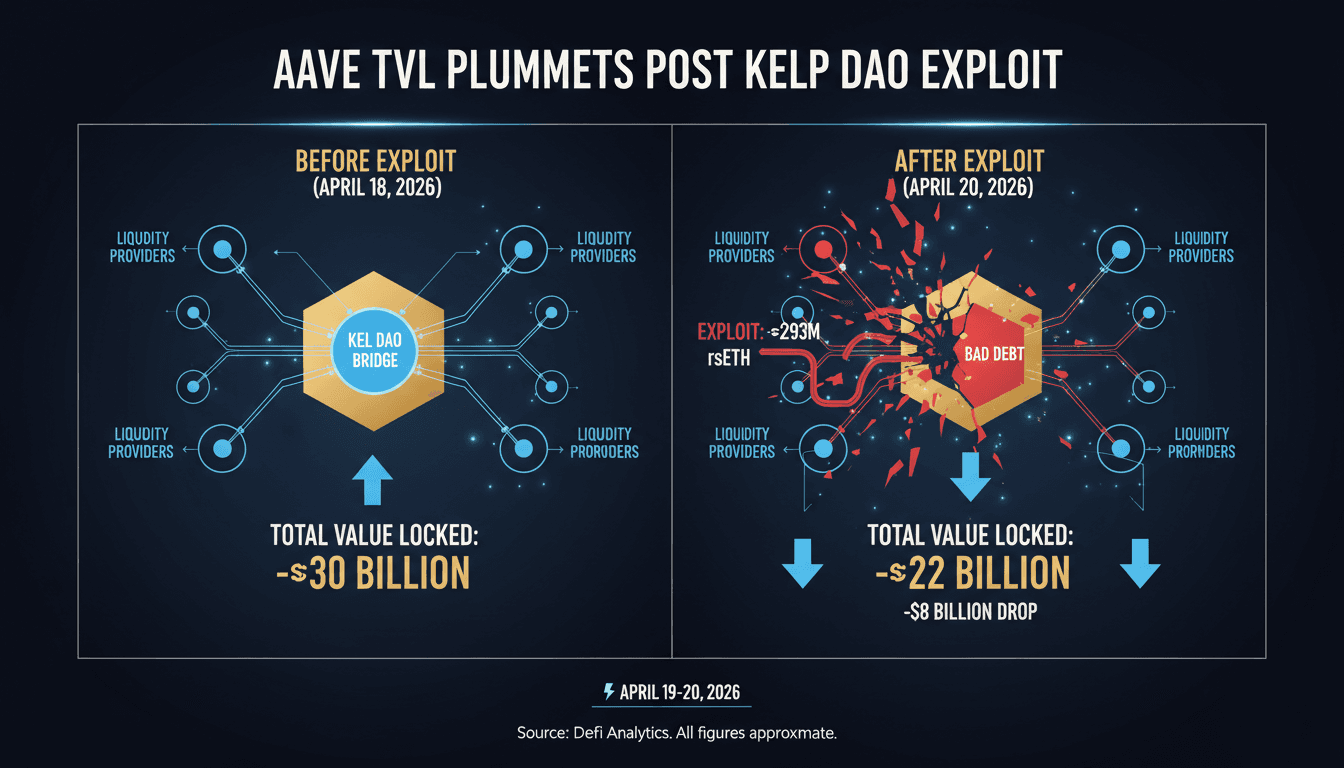
Aave's Total Value Locked Drops by Nearly $8 Billion After Kelp DAO Exploit
Why it matters
The Kelp DAO hack reveals critical vulnerabilities in cross-chain bridges, impacting the stability of decentralized finance (DeFi) ecosystems.
What happened (in 30 seconds)
- Aave's total value locked (TVL) fell by nearly $8 billion following a $293 million exploit of Kelp DAO's bridge.
- Hackers drained 116,500 rsETH tokens, using them as collateral to borrow approximately $195 million in wrapped Ether from Aave.
- Mass withdrawals ensued, with $431 million pulled from MEXC and $392 million from Abraxas Capital, leading to a liquidity crisis.
The context you actually need
- Kelp DAO is a liquid restaking protocol that issues rsETH tokens and operates across multiple Layer 2 networks via LayerZero's bridge.
- Aave, the largest DeFi lending protocol, had recently implemented an "Umbrella" model for bad debt protection but faced challenges after parting ways with its risk provider.
- The exploit highlighted systemic risks in DeFi, particularly as restaking activities increase, raising concerns about the security of cross-chain transactions.
What's really happening
On April 18, 2026, an attacker executed a sophisticated exploit on Kelp DAO's LayerZero-powered bridge, minting and draining 116,500 unbacked rsETH tokens valued at $293 million. This exploit was executed through a single function call, showcasing the vulnerabilities inherent in cross-chain bridges. The attacker then supplied the drained rsETH to Aave v3 as collateral, borrowing approximately $195 million in wrapped Ether (wETH). This action created a significant liquidity issue as the rsETH token subsequently depegged, leading to bad debt on Aave.
As a result, Aave's total value locked (TVL) plummeted from $26.4 billion to $18.6 billion within a matter of days, according to DeFiLlama data. Major outflows included $431 million from MEXC and $392 million from Abraxas Capital, indicating a loss of confidence among users. In response, Aave froze the rsETH markets on both v3 and v4, as well as wETH reserves across multiple networks, including Ethereum and Arbitrum. This drastic measure was part of Aave's strategy to manage the fallout from the exploit and protect its remaining liquidity.
The incident also triggered a sector-wide crisis, with the total value locked in DeFi dropping over $13 billion in just two days. AAVE token prices fell nearly 20%, reflecting the market's reaction to the exploit and the subsequent liquidity crisis. The Aave DAO had previously approved the deployment of v4 on the mainnet, but the exploit raised questions about the robustness of its risk management strategies.
In the aftermath, protocols like Curve Finance and Ethena paused their LayerZero integrations, highlighting the broader implications of the exploit on the DeFi ecosystem. The incident serves as a stark reminder of the interconnected risks present in decentralized finance, particularly as the sector continues to evolve and expand.
Who feels it first (and how)
- DeFi Users: Individuals who have invested in Aave or used its services are directly impacted by the liquidity crisis and potential losses.
- Investors in Kelp DAO: Those holding rsETH tokens face significant devaluation and uncertainty regarding their investments.
- Liquidity Providers: Entities providing liquidity to Aave and other DeFi protocols may experience reduced returns and increased risk exposure.
What to watch next
- Regulatory Responses: Watch for potential regulatory scrutiny on cross-chain bridges and DeFi protocols as authorities assess the implications of such exploits.
- Market Recovery Indicators: Monitor Aave's recovery efforts and user confidence as they implement new safeguards and liquidity measures.
- Security Enhancements: Keep an eye on how DeFi protocols adapt their security measures in response to this incident, particularly regarding cross-chain vulnerabilities.
Aave's TVL dropped by nearly $8 billion due to the Kelp DAO exploit.
Other DeFi protocols will reassess their risk management strategies and security measures in light of this incident.
The long-term impact on user trust and participation in DeFi lending protocols remains uncertain.
Frequently Asked Questions
- Why it matters?
- The Kelp DAO hack reveals critical vulnerabilities in cross-chain bridges, impacting the stability of decentralized finance (DeFi) ecosystems.
- What happened (in 30 seconds)?
- Aave's total value locked (TVL) fell by nearly $8 billion following a $293 million exploit of Kelp DAO's bridge. Hackers drained 116,500 rsETH tokens, using them as collateral to borrow approximately $195 million in wrapped Ether from Aave. Mass withdrawals ensued, with $431 million pulled from MEXC and $392 million from Abraxas Capital, leading to a liquidity crisis.
- What's really happening?
- On April 18, 2026, an attacker executed a sophisticated exploit on Kelp DAO's LayerZero-powered bridge, minting and draining 116,500 unbacked rsETH tokens valued at $293 million. This exploit was executed through a single function call, showcasing the vulnerabilities inherent in cross-chain bridges. The attacker then supplied the drained rsETH to Aave v3 as collateral, borrowing approximately $195 million in wrapped Ether (wETH). This action created a significant liquidity issue as the rsETH tok
- Who feels it first (and how)?
- DeFi Users: Individuals who have invested in Aave or used its services are directly impacted by the liquidity crisis and potential losses. Investors in Kelp DAO: Those holding rsETH tokens face significant devaluation and uncertainty regarding their investments. Liquidity Providers: Entities providing liquidity to Aave and other DeFi protocols may experience reduced returns and increased risk exposure.
- What to watch next?
- Regulatory Responses: Watch for potential regulatory scrutiny on cross-chain bridges and DeFi protocols as authorities assess the implications of such exploits. Market Recovery Indicators: Monitor Aave's recovery efforts and user confidence as they implement new safeguards and liquidity measures. Security Enhancements: Keep an eye on how DeFi protocols adapt their security measures in response to this incident, particularly regarding cross-chain vulnerabilities.
Covers blockchain, cryptocurrency news, project analysis, and market insights.
"Cointelegraph is a leading crypto-focused media outlet known for timely news, analysis, and educational content related to blockchain and digital assets."
— A47 Editor
Aave's TVL tanks $8B a day after $293M Kelp DAO hack
Aave's total value locked (TVL) has plummeted by $8 billion following a significant hack of Kelp DAO, which drained approximately $293 million from its reserves. The Aave token has also seen a nearly 20% drop in value, falling to $89.5 within 24 hour...
Research, news, and analysis on blockchain startups, DeFi, and regulations.
"Crypto Briefing provides research, news, and analysis on blockchain startups, DeFi, and crypto regulations with investor-focused coverage."
— A47 Editor
AAVE TVL drops to $17B after KelpDAO exploit triggers $8.4B withdrawals
The total value locked (TVL) in AAVE has dropped to $17 billion following a significant exploit of KelpDAO, which triggered approximately $8.4 billion in withdrawals. This incident underscores vulnerabilities in cross-chain security and has led to th...
Covers Bitcoin plus altcoin news, market updates, and educational resources.
"Bitcoin.com provides news, market data, and guides focused on Bitcoin and the wider crypto industry."
— A47 Editor
DeFi Lender Aave Battles Withdrawal Crisis After KelpDAO rsETH Exploit
Aave, a decentralized finance (DeFi) lender, is currently facing a withdrawal crisis following a significant exploit of KelpDAO's rsETH, which resulted in a loss of approximately $292 million. This breach has led Aave to suspend its rsETH markets and...