
UN General Assembly Declares Transatlantic Slave Trade as Gravest Crime Against Humanity
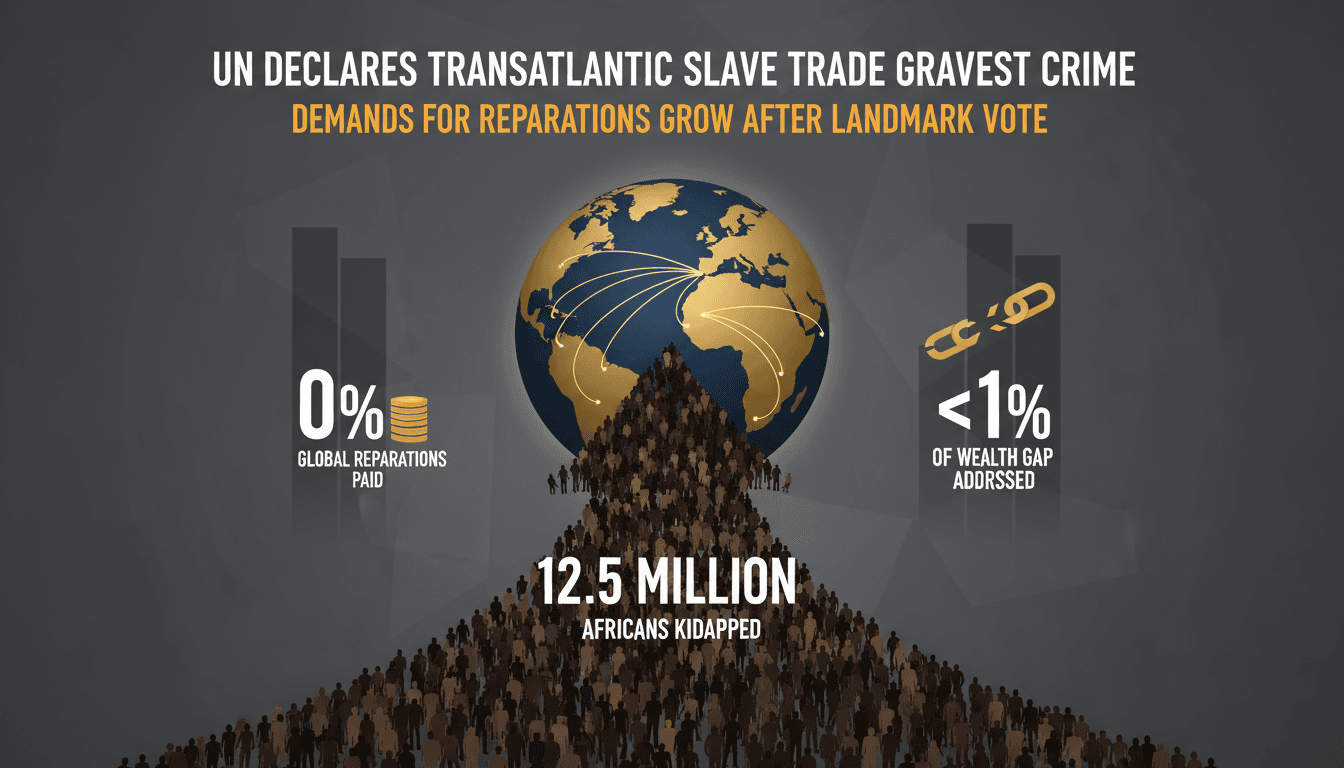
Here's what it means for you.
This resolution could influence corporate social responsibility and diversity initiatives as businesses navigate historical injustices.
What happened
The United Nations General Assembly adopted resolution A/80/L.48, declaring the transatlantic slave trade the 'gravest crime against humanity'.
The Context
- Historical significance: Ghana led the resolution, reflecting ongoing demands for reparatory justice from African and Caribbean nations.
- Voting dynamics: The resolution passed with 123 votes in favor, while the US, Israel, and Argentina opposed it, indicating geopolitical divides on historical accountability.
- Calls for action: It emphasizes reparations, including apologies and compensation, to address the lasting impacts of racial inequality.
The Number
Africans were captured and forcibly transported to the Americas during the transatlantic slave trade (1500-1800). This staggering figure underscores the historical depth of racial injustices that continue to resonate today.
Takeaway
Expect continued discussions on reparatory measures and their implications for international relations and corporate policies.
English-language reporting on Saudi politics, policy, and society.
"Saudi Gazette reflects mainstream Saudi institutional perspectives."
— A47 Editor
UN votes to describe transatlantic slave trade as 'gravest crime against humanity'
The UN General Assembly has voted to classify the transatlantic slave trade as the 'gravest crime against humanity' and has called for reparations to address historical injustices. This landmark resolution, proposed by Ghana's President John Dramani ...
Policy, elections, and government reporting.
"NPR is an American public media organization known for thoughtful reporting and a slightly left-leaning editorial tone."
— A47 Editor
UN calls for reparations to remedy the 'historical wrongs' of trafficking enslaved Africans
The U.N. General Assembly has adopted a resolution declaring the trafficking of enslaved Africans as the gravest crime against humanity and calling for reparations to address these historical wrongs. This significant step aims to acknowledge and reme...
International stories from NPR’s global desk.
"NPR is an American public media organization known for thoughtful reporting and a slightly left-leaning editorial tone."
— A47 Editor
UN calls for reparations to remedy the 'historical wrongs' of trafficking enslaved Africans
The U.N. General Assembly has adopted a resolution declaring the trafficking of enslaved Africans as the gravest crime against humanity and calling for reparations to address these historical wrongs. This significant step aims to acknowledge and reme...
Corporate leadership, finance, technology, and market trends.
"Fortune covers financial trends, leadership, and innovation with a pragmatic editorial approach."
— A47 Editor
It’s time for slavery reparations, ‘the gravest crime against humanity,’ UN General Assembly says
The UN General Assembly has voted in favor of slavery reparations, labeling slavery as 'the gravest crime against humanity.' The resolution passed with 123 votes in favor, 3 against, and 52 abstentions, highlighting a significant stance on historical...
International coverage from The Guardian's global desks.
"The Guardian is known for its progressive editorial stance and in-depth analysis."
— A47 Editor
UN votes to describe slave trade as ‘gravest crime against humanity’
The United Nations has officially voted to classify the transatlantic chattel slave trade as the 'gravest crime against humanity,' marking a significant step in acknowledging historical injustices. The resolution, which calls for reparations, was sup...