
International Energy Agency Issues Warning of Severe Global Energy Crisis Due to Strait of Hormuz Closure
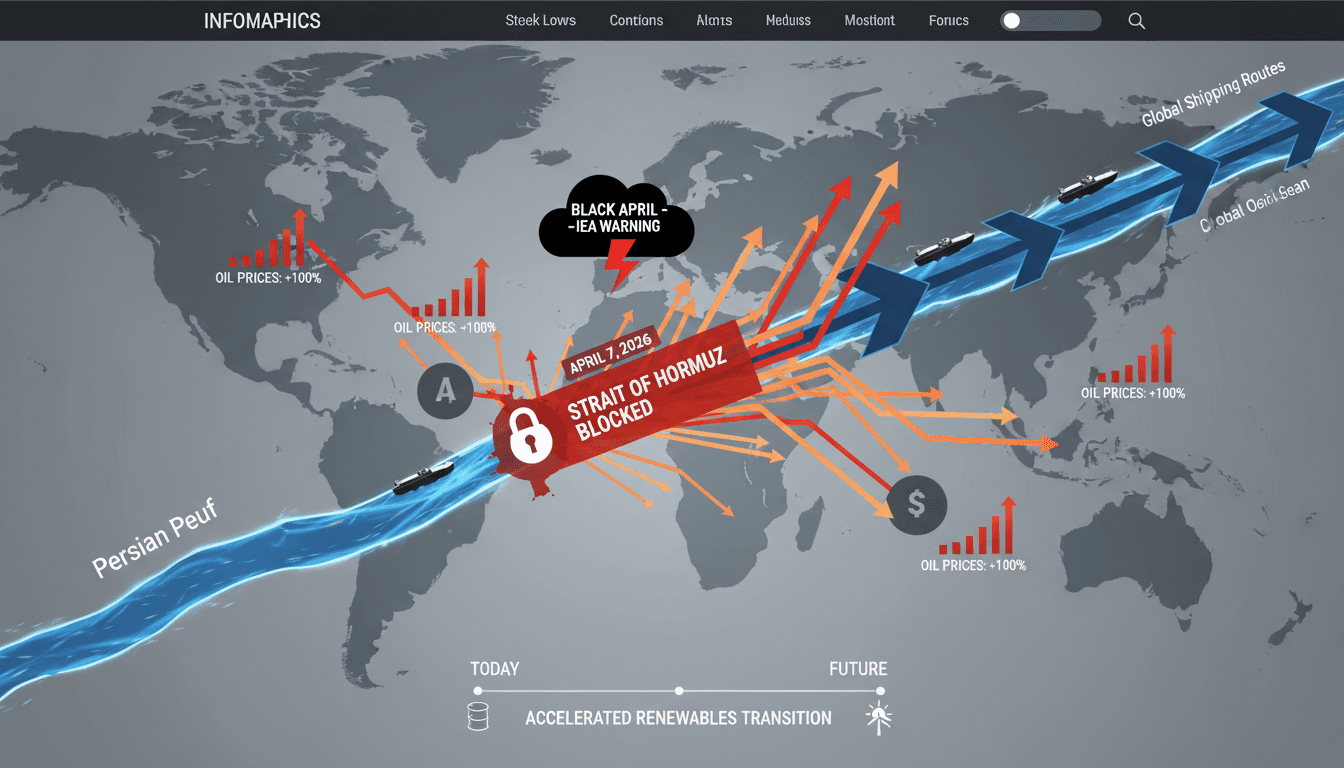
Here's what it means for you.
Rising energy costs are set to impact your daily expenses, from commuting to household bills.
Why it matters
This crisis threatens global energy stability, affecting supply chains and inflation rates worldwide.
What happened (in 30 seconds)
- April 7, 2026: IEA Executive Director Fatih Birol warns of a 'Black April' due to severe energy supply losses.
- February 28, 2026: Iran effectively closes the Strait of Hormuz following U.S.-Israeli strikes, disrupting 20% of global oil flow.
- April 8, 2026: Oil prices exceed $110 per barrel, prompting urgent calls for demand-side measures and stock releases.
The context you actually need
- 20% of global oil consumption flows through the Strait of Hormuz, making its closure a significant threat to energy markets.
- 75 energy infrastructure facilities were attacked, with over one-third severely damaged, exacerbating supply disruptions.
- UAE fuel prices surged by up to 33.3% in April 2026, the largest monthly increase on record, impacting residents' cost of living.
What's really happening
The current energy crisis stems from a complex interplay of geopolitical tensions and market vulnerabilities. Following U.S.-Israeli military actions against Iranian targets, Iran's closure of the Strait of Hormuz has led to a dramatic reduction in oil and gas supplies. This strategic waterway is critical, as it typically facilitates the passage of approximately 20 million barrels of oil daily, accounting for 20% of global consumption. The closure has resulted in immediate supply disruptions, with the International Energy Agency (IEA) reporting that over one-third of the 75 targeted energy facilities have suffered significant damage.
In March 2026, the situation escalated, prompting IEA member countries to release 400 million barrels from strategic reserves to mitigate rising prices, which had already exceeded $100 per barrel. The IEA also issued guidance for demand reduction, indicating the severity of the crisis. By early April, Birol's warnings about a 'Black April' highlighted the potential for doubled energy supply losses compared to March, further stressing the urgency for global energy conservation.
As oil prices surged past $110 per barrel, governments began implementing measures to manage demand. The UAE, for instance, adjusted its fuel prices upward, reflecting the global market's volatility. The crisis has not only immediate implications for energy costs but also longer-term effects on inflation and economic stability. The IMF has raised concerns about inflationary pressures, indicating that the repercussions of this crisis could extend beyond energy markets, impacting consumer prices and economic growth.
The IEA's call for demand-side measures, such as promoting remote work and implementing speed limits, underscores the need for collective action to navigate this crisis. While short-term conservation is critical, Birol also forecasts a potential acceleration in the transition to renewable energy sources as countries seek to reduce reliance on fossil fuels in the long run. This transition, however, will require significant investment and policy support to ensure energy security and sustainability.
Who feels it first (and how)
- Consumers: Higher fuel prices lead to increased transportation and commuting costs.
- Businesses: Rising energy costs impact operational expenses, particularly in energy-intensive industries.
- Governments: Increased inflation and public pressure to manage rising costs could lead to policy changes and economic interventions.
- Global markets: Investors face volatility, affecting stock prices and economic forecasts.
What to watch next
- Oil price trends: Monitoring fluctuations in oil prices will provide insight into the ongoing impact of the crisis on global markets.
- Government policy responses: Watch for new measures aimed at managing energy demand and supporting consumers, which could shape economic recovery.
- Renewable energy investments: Increased investment in renewables may signal a shift in long-term energy strategies as countries respond to the crisis.
The Strait of Hormuz closure has led to significant energy supply disruptions and rising oil prices.
Governments will implement measures to manage energy demand and support consumers amidst rising costs.
The long-term impact on global energy markets and potential shifts towards renewable energy remain uncertain.
Frequently Asked Questions
- Why it matters?
- This crisis threatens global energy stability, affecting supply chains and inflation rates worldwide.
- What happened (in 30 seconds)?
- April 7, 2026: IEA Executive Director Fatih Birol warns of a 'Black April' due to severe energy supply losses. February 28, 2026: Iran effectively closes the Strait of Hormuz following U.S.-Israeli strikes, disrupting 20% of global oil flow. April 8, 2026: Oil prices exceed $110 per barrel, prompting urgent calls for demand-side measures and stock releases.
- What's really happening?
- The current energy crisis stems from a complex interplay of geopolitical tensions and market vulnerabilities. Following U.S.-Israeli military actions against Iranian targets, Iran's closure of the Strait of Hormuz has led to a dramatic reduction in oil and gas supplies. This strategic waterway is critical, as it typically facilitates the passage of approximately 20 million barrels of oil daily, accounting for 20% of global consumption. The closure has resulted in immediate supply disruptions, wi
- Who feels it first (and how)?
- Consumers: Higher fuel prices lead to increased transportation and commuting costs. Businesses: Rising energy costs impact operational expenses, particularly in energy-intensive industries. Governments: Increased inflation and public pressure to manage rising costs could lead to policy changes and economic interventions. Global markets: Investors face volatility, affecting stock prices and economic forecasts.
- What to watch next?
- Oil price trends: Monitoring fluctuations in oil prices will provide insight into the ongoing impact of the crisis on global markets. Government policy responses: Watch for new measures aimed at managing energy demand and supporting consumers, which could shape economic recovery. Renewable energy investments: Increased investment in renewables may signal a shift in long-term energy strategies as countries respond to the crisis.
Arabic-language UAE newspaper coverage focused on domestic affairs, public institutions, business, society, and regional developments.
"Al Khaleej coverage generally reflects a mainstream UAE editorial lens with strong attention to public affairs, institutions, and regional developments."
— A47 Editor
الوكالة الدولية للطاقة تحذّر من دخول العالم في «أبريل أسود»
Fatih Birol, the head of the International Energy Agency, has warned that the ongoing energy crisis linked to the conflict in the Middle East could lead the world into a situation described as 'Black April.' This warning highlights the potential for ...
Jordanian news and regional updates.
"Roya News is a Jordanian outlet focused on breaking news and local affairs."
— A47 Editor
رئيس الوكالة الدولية للطاقة يحذر من نيسان الأسود: العالم يواجه أسوأ أزمة طاقة في التاريخ
Fatih Birol, the head of the International Energy Agency, has warned that the world is facing the worst energy crisis in history, referring to it as a 'black April.' This alarming statement highlights the severity of the current energy situation, whi...
Pan-Arab political news and analysis.
"Al-Quds Al-Arabi is a London-based Arabic newspaper known for political coverage."
— A47 Editor
فاتح بيرول يحذّر من دخول العالم في “أبريل أسود” بسبب أزمة الطاقة المرتبطة بالحرب
Fatih Birol, the head of the International Energy Agency, warned that the ongoing energy crisis linked to the war in the Middle East is the worst the world has ever faced, exacerbated by Iran's effective closure of the vital Strait of Hormuz for glob...