
U.S. Department of Energy Loans 8.48 Million Barrels from Strategic Petroleum Reserve Amid Iran Conflict
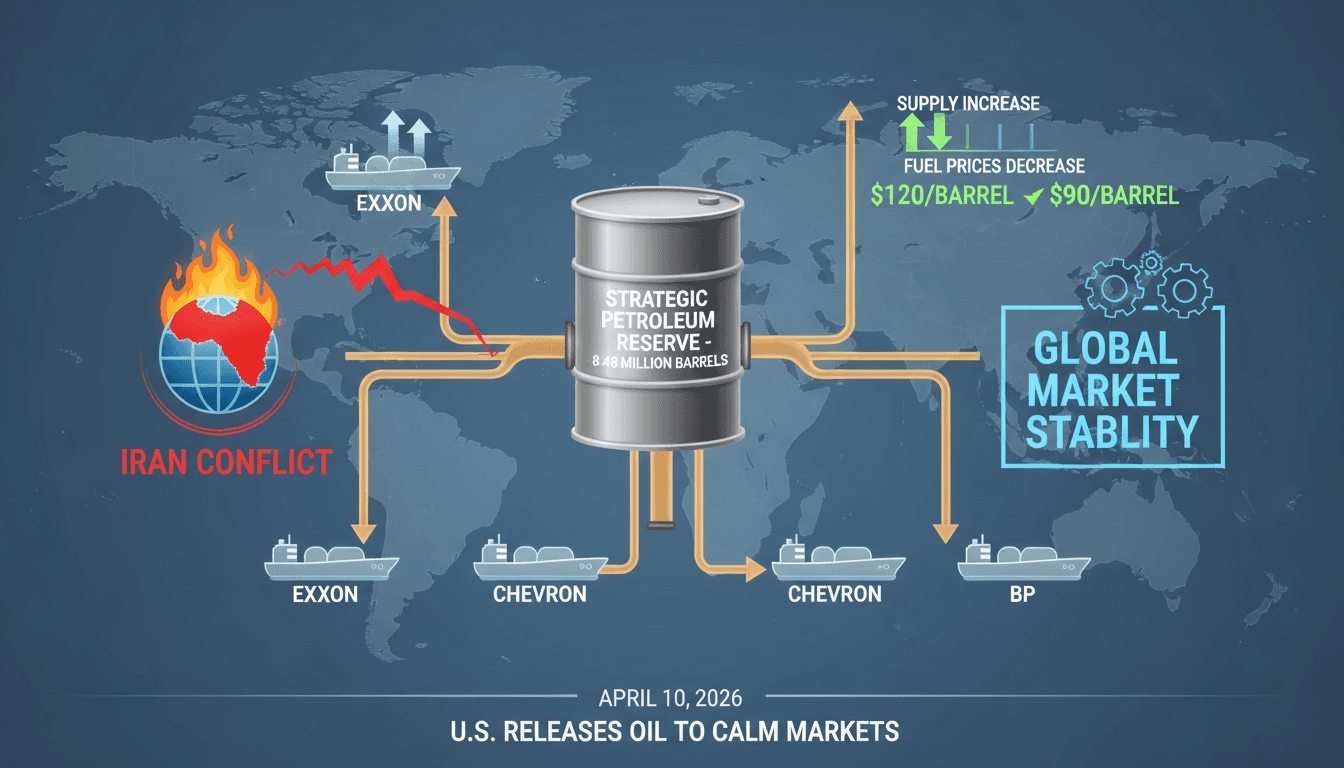
Here's what it means for you.
If you rely on fuel for transportation or energy, the recent U.S. oil loans could help stabilize prices in your region.
Why it matters
This move is part of a broader strategy to mitigate the impact of geopolitical tensions on global oil prices.
What happened (in 30 seconds)
- On April 10, 2026, the U.S. Department of Energy loaned 8.48 million barrels of crude oil from the Strategic Petroleum Reserve to four companies.
- This action responds to supply disruptions caused by the U.S.-Israeli conflict with Iran, which has driven crude prices above $100 per barrel.
- The loans require repayment with a premium, ensuring that the Strategic Petroleum Reserve maintains its inventory levels.
The context you actually need
- The U.S. Strategic Petroleum Reserve (SPR) holds 413.3 million barrels and is designed to stabilize oil markets during crises.
- The ongoing conflict in Iran has severely impacted oil flows through the Strait of Hormuz, a critical passage for global oil shipments.
- This loan is part of a larger commitment of 172 million barrels authorized by President Trump to address the largest oil supply shock in decades.
What's really happening
The recent loan of 8.48 million barrels from the U.S. Strategic Petroleum Reserve (SPR) is a strategic response to escalating tensions in the Middle East, particularly the U.S.-Israeli conflict with Iran. As crude oil prices surged past $100 per barrel, the U.S. government sought to intervene in the market to prevent further economic fallout. This intervention is not merely a reactive measure; it is part of a coordinated effort involving the International Energy Agency (IEA) to release a total of 400 million barrels to stabilize global oil prices.
The SPR, which is a critical resource for the U.S., has been tapped into multiple times in recent months, with the first emergency exchange occurring in March 2026, where 45.2 million barrels were awarded to various companies. The urgency of the situation is underscored by the fact that the SPR's levels are at historic lows, raising concerns about long-term supply security. However, the loans are structured to ensure that the SPR's inventory is replenished through repayments with a premium, effectively maintaining the reserve's integrity while addressing immediate market pressures.
The implications of these loans extend beyond U.S. borders. For countries like the UAE, which has seen a boost in export revenues due to rising oil prices, the U.S. intervention could lead to a stabilization of global prices. This stabilization is crucial for Dubai and Abu Dhabi, where stock markets have already taken a hit, losing $120 billion due to the conflict's impact on oil flows. If the U.S. succeeds in tempering prices, it could alleviate some of the economic strain on consumers and businesses in these regions, while also impacting the broader dynamics of oil trade.
In summary, the U.S. Department of Energy's loan of crude oil is a calculated move to manage a volatile market, ensuring that both domestic and international economic interests are safeguarded amidst geopolitical turmoil. The ongoing situation will require close monitoring as the market reacts to these developments and as further solicitations from the SPR are likely to occur.
Who feels it first (and how)
- Consumers: Higher fuel prices directly affect transportation and energy costs.
- Businesses: Companies relying on oil for operations may face increased expenses, impacting profit margins.
- Investors: Stock market fluctuations in oil-dependent economies can affect investment portfolios.
- Exporters: Countries like the UAE may see changes in revenue due to price stabilization efforts.
What to watch next
- Global oil price trends: Watch for fluctuations in crude oil prices as the market reacts to U.S. SPR loans and geopolitical developments.
- Further SPR solicitations: Additional emergency loans may be announced, influencing supply dynamics and market stability.
- Economic indicators in oil-dependent regions: Monitor economic performance in regions heavily reliant on oil exports, particularly in the Middle East.
The U.S. has loaned 8.48 million barrels from the SPR to stabilize oil prices.
Further SPR loans may be issued as the situation evolves, impacting global oil supply.
The long-term effects on the SPR's inventory levels and overall market stability remain uncertain.
Frequently Asked Questions
- Why it matters?
- This move is part of a broader strategy to mitigate the impact of geopolitical tensions on global oil prices.
- What happened (in 30 seconds)?
- On April 10, 2026, the U.S. Department of Energy loaned 8.48 million barrels of crude oil from the Strategic Petroleum Reserve to four companies. This action responds to supply disruptions caused by the U.S.-Israeli conflict with Iran, which has driven crude prices above $100 per barrel. The loans require repayment with a premium, ensuring that the Strategic Petroleum Reserve maintains its inventory levels.
- What's really happening?
- The recent loan of 8.48 million barrels from the U.S. Strategic Petroleum Reserve (SPR) is a strategic response to escalating tensions in the Middle East, particularly the U.S.-Israeli conflict with Iran. As crude oil prices surged past $100 per barrel, the U.S. government sought to intervene in the market to prevent further economic fallout. This intervention is not merely a reactive measure; it is part of a coordinated effort involving the International Energy Agency (IEA) to release a total o
- Who feels it first (and how)?
- Consumers: Higher fuel prices directly affect transportation and energy costs. Businesses: Companies relying on oil for operations may face increased expenses, impacting profit margins. Investors: Stock market fluctuations in oil-dependent economies can affect investment portfolios. Exporters: Countries like the UAE may see changes in revenue due to price stabilization efforts.
- What to watch next?
- Global oil price trends: Watch for fluctuations in crude oil prices as the market reacts to U.S. SPR loans and geopolitical developments. Further SPR solicitations: Additional emergency loans may be announced, influencing supply dynamics and market stability. Economic indicators in oil-dependent regions: Monitor economic performance in regions heavily reliant on oil exports, particularly in the Middle East.
Arabic-language digital news outlet covering UAE, regional, and international developments with broad general-news coverage.
"Al Ain News coverage typically blends UAE-focused reporting with wider Arab regional and international news."
— A47 Editor
واشنطن تسحب 8.48 مليون برميل من الاحتياطي الاستراتيجي لكبح أسعار النفط
The U.S. Department of Energy announced on Friday that it has loaned 8.48 million barrels of crude oil from the Strategic Petroleum Reserve to four oil companies. This action is part of the second phase of efforts by the Trump administration to curb ...
Pan-Arab news coverage spanning politics, business, sports, and regional affairs.
"Asharq Al-Awsat reflects a broad Arab editorial perspective with strong attention to regional geopolitics."
— A47 Editor
أميركا تسحب ثاني دفعة من احتياطي النفط الاستراتيجي منذ الحرب
The U.S. Department of Energy announced on Friday that it has loaned 8.48 million barrels of crude oil from the Strategic Petroleum Reserve to four oil companies. This marks the second withdrawal from the reserve since the onset of the war, reflectin...