
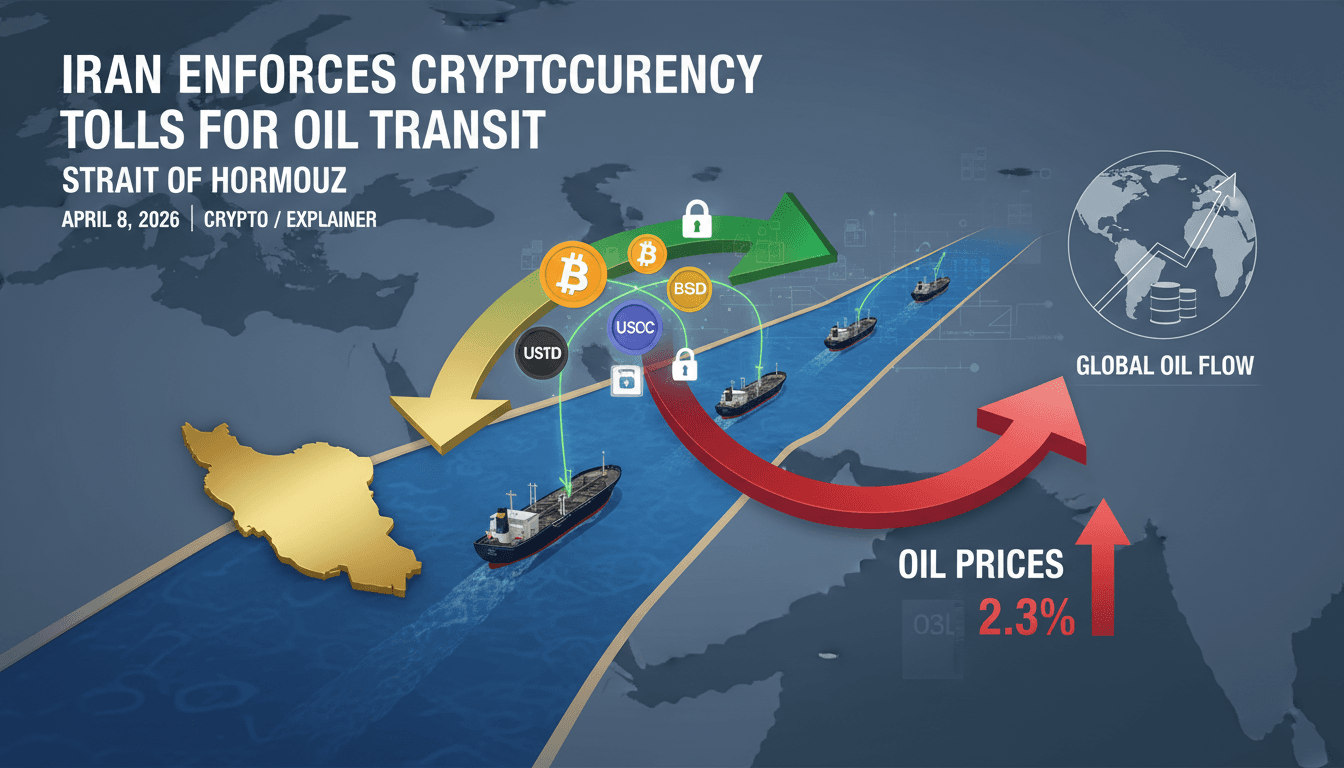
Iran Enforces Cryptocurrency Tolls for Oil Transit in Strait of Hormuz
Here's what it means for you.
If you rely on global oil markets, the new toll system could impact prices and availability in your region.
Why it matters
This toll system represents a significant shift in how oil transactions are conducted amid geopolitical tensions, potentially reshaping global energy markets.
What happened (in 30 seconds)
- On April 8, 2026, Iran began charging oil tankers tolls in Bitcoin and stablecoins for passage through the Strait of Hormuz.
- The toll is set at approximately $1 per barrel, a strategic move to circumvent U.S. sanctions during the ongoing crisis.
- Stablecoins dominate transactions, despite Bitcoin's prominence, due to their stability and liquidity in Iran's sanctions-evasion networks.
The context you actually need
- The 2026 Strait of Hormuz crisis began after U.S.-Israeli airstrikes killed Iran's Supreme Leader, leading to increased military tensions and shipping disruptions.
- Iran has relied on cryptocurrency for trade since 1979 sanctions, with billions processed annually through IRGC-linked wallets.
- The Strait of Hormuz is crucial, handling 20-25% of global seaborne oil, making any disruptions impactful on global oil prices and supply chains.
What's really happening
The introduction of cryptocurrency tolls by Iran's Islamic Revolutionary Guard Corps (IRGC) is a calculated response to ongoing geopolitical pressures and economic sanctions. Following the assassination of Supreme Leader Ali Khamenei on February 28, 2026, the IRGC closed the Strait of Hormuz, a vital maritime route for oil shipments. This closure, coupled with military actions such as ship attacks and mine deployments, created a crisis that severely disrupted tanker traffic.
In this context, the April 8 ceasefire allowed limited oil transit under a new toll system, where payments are required in cryptocurrencies, specifically Bitcoin and stablecoins like USDC. The toll is set at approximately $1 per barrel, a strategic price point that reflects both the need for revenue and the desire to maintain a competitive edge in the global oil market. While Bitcoin is highlighted as a payment option, stablecoins are preferred for their stability and liquidity, making them more practical for immediate transactions.
This shift to cryptocurrency is not merely a financial maneuver; it is a direct response to the long-standing U.S. sanctions that have isolated Iran from traditional banking systems. By leveraging cryptocurrencies, Iran aims to facilitate trade and maintain its oil exports despite external pressures. The IRGC has established a network of wallets that process billions in stablecoins annually, primarily for oil trade and arms procurement, showcasing the effectiveness of this approach in circumventing sanctions.
The implications of this toll system extend beyond Iran. As oil prices fluctuate—recently peaking at $166 per barrel in Dubai—global markets are feeling the impact of these disruptions. Shipping firms, including major players like Maersk, have suspended operations due to the risks associated with sanctions exposure. The U.S. has responded with a naval blockade and mine clearance operations, further complicating the situation.
As the IRGC continues to enforce these tolls, the dynamics of global oil trade are shifting. Countries like the UAE and Saudi Arabia are redirecting their exports through alternative pipelines, indicating a broader regional response to the crisis. The adoption of cryptocurrencies for such significant transactions sets a precedent for other nations considering similar strategies to evade sanctions, potentially reshaping the future of international trade.
Who feels it first (and how)
- Shipping companies: Facing operational suspensions and increased costs due to sanctions and tolls.
- Oil producers in the UAE and Saudi Arabia: Experiencing production curtailments and redirected exports.
- Consumers globally: Likely to see fluctuations in oil prices and potential shortages as supply chains adjust.
What to watch next
- Tanker traffic levels: Monitoring the volume of oil shipments through the Strait of Hormuz will indicate the effectiveness of the toll system and its impact on global supply.
- Cryptocurrency market fluctuations: Changes in Bitcoin and stablecoin values could affect Iran's revenue from tolls and the broader adoption of crypto in international trade.
- Geopolitical developments: Any escalation in U.S.-Iran tensions or changes in sanctions policy could significantly alter the operational landscape for oil transit in the region.
Iran is charging tolls in cryptocurrencies for oil transit through the Strait of Hormuz.
Stablecoins will continue to dominate transactions due to their stability and liquidity.
The long-term effects on global oil prices and shipping operations remain uncertain as the situation evolves.
Frequently Asked Questions
- Why it matters?
- This toll system represents a significant shift in how oil transactions are conducted amid geopolitical tensions, potentially reshaping global energy markets.
- What happened (in 30 seconds)?
- On April 8, 2026, Iran began charging oil tankers tolls in Bitcoin and stablecoins for passage through the Strait of Hormuz. The toll is set at approximately $1 per barrel, a strategic move to circumvent U.S. sanctions during the ongoing crisis. Stablecoins dominate transactions, despite Bitcoin's prominence, due to their stability and liquidity in Iran's sanctions-evasion networks.
- What's really happening?
- The introduction of cryptocurrency tolls by Iran's Islamic Revolutionary Guard Corps (IRGC) is a calculated response to ongoing geopolitical pressures and economic sanctions. Following the assassination of Supreme Leader Ali Khamenei on February 28, 2026, the IRGC closed the Strait of Hormuz, a vital maritime route for oil shipments. This closure, coupled with military actions such as ship attacks and mine deployments, created a crisis that severely disrupted tanker traffic. In this context, th
- Who feels it first (and how)?
- Shipping companies: Facing operational suspensions and increased costs due to sanctions and tolls. Oil producers in the UAE and Saudi Arabia: Experiencing production curtailments and redirected exports. Consumers globally: Likely to see fluctuations in oil prices and potential shortages as supply chains adjust.
- What to watch next?
- Tanker traffic levels: Monitoring the volume of oil shipments through the Strait of Hormuz will indicate the effectiveness of the toll system and its impact on global supply. Cryptocurrency market fluctuations: Changes in Bitcoin and stablecoin values could affect Iran's revenue from tolls and the broader adoption of crypto in international trade. Geopolitical developments: Any escalation in U.S.-Iran tensions or changes in sanctions policy could significantly alter the operational landscape
Research, news, and analysis on blockchain startups, DeFi, and regulations.
"Crypto Briefing provides research, news, and analysis on blockchain startups, DeFi, and crypto regulations with investor-focused coverage."
— A47 Editor
Iran accepts Bitcoin for oil tolls in Strait of Hormuz, stablecoins dominate
Iran has officially accepted Bitcoin as a payment method for oil tolls in the Strait of Hormuz, a strategic maritime passage crucial for global oil trade. This move reflects Iran's intent to leverage cryptocurrency amidst ongoing geopolitical tension...
Covers blockchain, cryptocurrency news, project analysis, and market insights.
"Cointelegraph is a leading crypto-focused media outlet known for timely news, analysis, and educational content related to blockchain and digital assets."
— A47 Editor
Iran views BTC as a strategic asset, but USDt still dominates oil tolls: BPI
The Iranian government has adopted Bitcoin as a payment method for oil tolls, citing its resistance to confiscation; however, transactions have predominantly utilized dollar stablecoins to date.
Bitcoin news, technical analysis, and forecasts across crypto markets.
"NewsBTC covers Bitcoin news, technical analysis, and forecasts across crypto markets and major blockchain projects."
— A47 Editor
Bitcoin Could See Short-Term Pullback Following Price Rebound — Analyst
Bitcoin's price experienced a notable rebound, rising by 2.77% to approximately $78,348 following Iran's announcement that the Strait of Hormuz would remain open during a ceasefire with the U.S. This development has sparked optimism in the cryptocurr...
Covers blockchain, cryptocurrency news, project analysis, and market insights.
"CoinDesk is a well-established cryptocurrency and blockchain news provider, offering comprehensive insights, market data, and industry research."
— A47 Editor
Bitcoin falls back to $76,000 as Iran shuts Hormuz again
Bitcoin's price has fallen back to $76,000 following a significant market reaction to Iran's decision to close the Strait of Hormuz again, resulting in one of the largest short liquidations in recent history, wiping out $593 million in bearish bets o...
Covers Bitcoin plus altcoin news, market updates, and educational resources.
"Bitcoin.com provides news, market data, and guides focused on Bitcoin and the wider crypto industry."
— A47 Editor
Bitcoin Hits $78,348 as Strait of Hormuz Reopening Ignites Global Relief Rally
Bitcoin's price surged to $78,348 following the reopening of the Strait of Hormuz, which has alleviated market fears and ignited a global relief rally. This development comes amid a ceasefire agreement between the U.S. and Iran, contributing to a sig...
Covers blockchain, cryptocurrency news, project analysis, and market insights.
"CoinDesk is a well-established cryptocurrency and blockchain news provider, offering comprehensive insights, market data, and industry research."
— A47 Editor
Beaten-down digital asset treasury names lead crypto stock surge as bitcoin hits $78,000
Bitcoin's price surged to $78,000, marking a significant recovery for digital assets as geopolitical tensions in the Strait of Hormuz eased following Iran's commitment to keep the passage open. This development comes amidst fluctuating oil prices and...