
NASA's Artemis II Crew Begins Return Journey After Historic Lunar Flyby
Here's what it means for you.
As space exploration accelerates, industries related to technology, education, and international collaboration stand to gain significant momentum.
Why it matters
The Artemis II mission marks a pivotal step toward sustainable lunar presence, influencing global partnerships and technological advancements.
What happened (in 30 seconds)
- On April 7, 2026, NASA's Artemis II crew initiated their return to Earth after a record-breaking lunar flyby.
- The crew achieved a distance of 252,756 miles from Earth, surpassing Apollo 13's previous record.
- Splashdown is scheduled for April 10, 2026, off the coast of San Diego, California, following a successful mission validating the Orion spacecraft.
The context you actually need
- The Artemis program aims to establish a sustainable human presence on the Moon and prepare for future Mars exploration, following the uncrewed Artemis I mission in 2022.
- International collaboration is highlighted through Canada's participation, showcasing the global nature of modern space exploration under the Artemis Accords, signed by over 40 nations.
- Technological testing during Artemis II includes critical life support, propulsion, and reentry capabilities, essential for future missions.
What's really happening
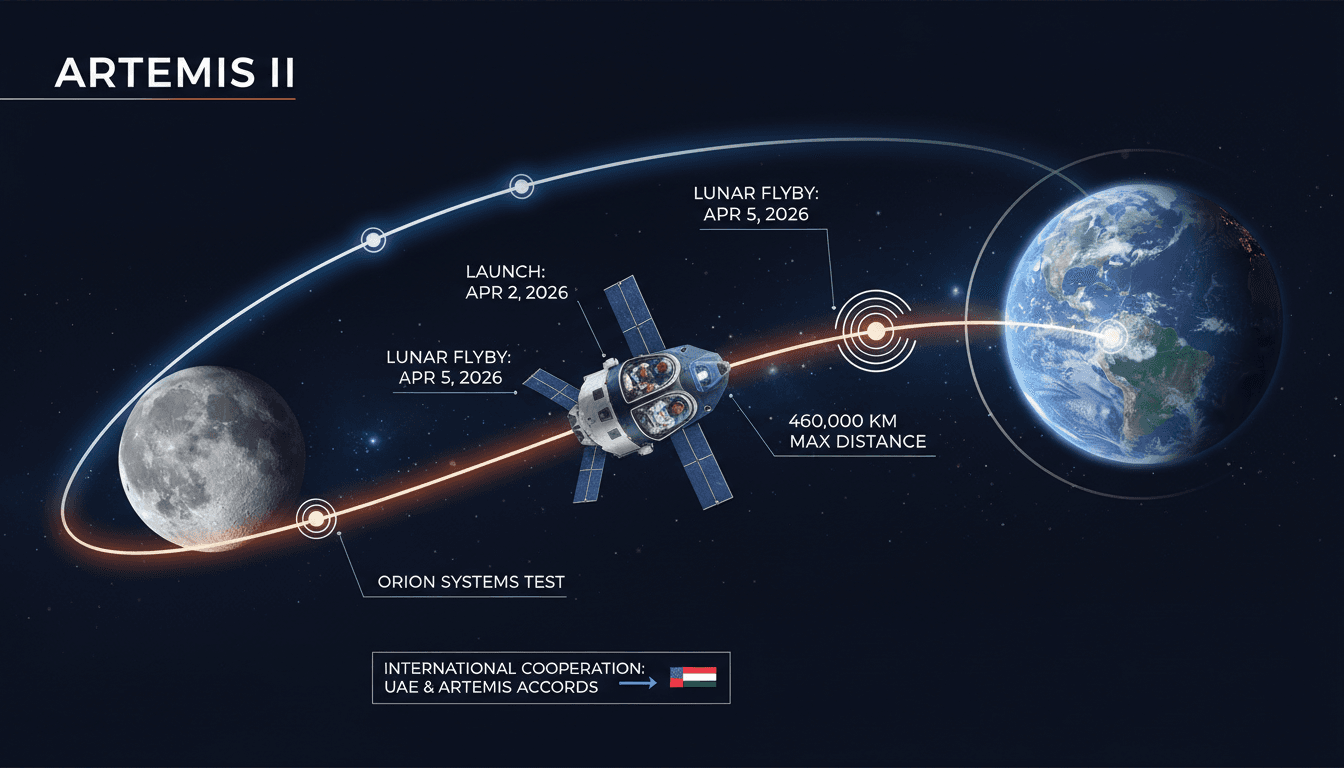
Launched on April 1, 2026, from Kennedy Space Center, the Artemis II mission represents a significant milestone in NASA's Artemis program. The four-person crew, including NASA astronauts Reid Wiseman, Victor Glover, Christina Koch, and Canadian astronaut Jeremy Hansen, embarked on a 10-day journey that included a lunar flyby. This mission is the first crewed flight of the Orion spacecraft, designed to test its systems for future lunar operations.
During the mission, the crew conducted system checks and scientific observations, achieving a record distance of 252,756 miles from Earth on April 6, 2026. This distance eclipses the previous record set by Apollo 13, underscoring the advancements in human spaceflight capabilities. The lunar flyby brought the spacecraft within approximately 4,067 miles of the Moon's surface, allowing the crew to capture images of the far side, a feat that generates excitement and interest in lunar exploration.
As the crew initiated their return trajectory on April 7, 2026, they began a four-day coast back to Earth at speeds around 1,150 mph. This phase of the mission is crucial for testing the spacecraft's reentry capabilities, a vital aspect for future long-duration missions. NASA has been conducting daily briefings, praising the crew's performance and ensuring that all systems are functioning as intended.
The mission's success is not just a triumph for NASA but also a testament to international cooperation in space exploration. The involvement of the Canadian Space Agency through Jeremy Hansen exemplifies how countries can work together to achieve common goals in space. The Artemis Accords, which the UAE has signed, further emphasize the importance of collaboration, aligning with the UAE's ambitions in lunar exploration, including the Emirates Lunar Mission.
The Artemis II mission is expected to lay the groundwork for Artemis III, which aims to land astronauts on the lunar surface. As data from this mission is analyzed, the focus will shift to preparing for the next steps in lunar exploration, which could have far-reaching implications for technology development, international partnerships, and even commercial opportunities in space.
Who feels it first (and how)
- Aerospace engineers: They will see increased demand for advanced technologies and systems related to lunar missions.
- Educational institutions: Schools and universities may experience a surge in interest in STEM fields, driven by the excitement around space exploration.
- International partners: Countries involved in the Artemis Accords will benefit from collaborative projects and shared technological advancements.
What to watch next
- Data analysis from Artemis II: Understanding the mission's outcomes will inform future lunar missions and technology development.
- International partnerships: Watch for new collaborations emerging from the success of Artemis II, particularly among Artemis Accords signatories.
- Public interest in space exploration: Increased media coverage and public engagement could lead to more funding and support for future missions.
The Artemis II mission successfully validated key systems of the Orion spacecraft.
Future missions will build on the data and experiences gained from Artemis II, leading to more ambitious lunar exploration goals.
The long-term impact on commercial space ventures and how they will integrate with governmental missions remains to be seen.
Frequently Asked Questions
- Why it matters?
- The Artemis II mission marks a pivotal step toward sustainable lunar presence, influencing global partnerships and technological advancements.
- What happened (in 30 seconds)?
- On April 7, 2026, NASA's Artemis II crew initiated their return to Earth after a record-breaking lunar flyby. The crew achieved a distance of 252,756 miles from Earth, surpassing Apollo 13's previous record. Splashdown is scheduled for April 10, 2026, off the coast of San Diego, California, following a successful mission validating the Orion spacecraft.
- What's really happening?
- Launched on April 1, 2026, from Kennedy Space Center, the Artemis II mission represents a significant milestone in NASA's Artemis program. The four-person crew, including NASA astronauts Reid Wiseman, Victor Glover, Christina Koch, and Canadian astronaut Jeremy Hansen, embarked on a 10-day journey that included a lunar flyby. This mission is the first crewed flight of the Orion spacecraft, designed to test its systems for future lunar operations. During the mission, the crew conducted system ch
- Who feels it first (and how)?
- Aerospace engineers: They will see increased demand for advanced technologies and systems related to lunar missions. Educational institutions: Schools and universities may experience a surge in interest in STEM fields, driven by the excitement around space exploration. International partners: Countries involved in the Artemis Accords will benefit from collaborative projects and shared technological advancements.
- What to watch next?
- Data analysis from Artemis II: Understanding the mission's outcomes will inform future lunar missions and technology development. International partnerships: Watch for new collaborations emerging from the success of Artemis II, particularly among Artemis Accords signatories. Public interest in space exploration: Increased media coverage and public engagement could lead to more funding and support for future missions.
Arabic-language UAE newspaper coverage focused on domestic affairs, public institutions, business, society, and regional developments.
"Al Khaleej coverage generally reflects a mainstream UAE editorial lens with strong attention to public affairs, institutions, and regional developments."
— A47 Editor
طاقم «أرتيميس 2» في طريقه إلى الأرض
The Artemis 2 crew has concluded their lunar mission and is currently en route back to Earth, having gathered valuable astronomical observations about lunar craters, solar eclipses, and meteor impacts. The astronauts spent approximately seven hours o...
Pan-Arab news coverage spanning politics, business, sports, and regional affairs.
"Asharq Al-Awsat reflects a broad Arab editorial perspective with strong attention to regional geopolitics."
— A47 Editor
«أرتيميس 2» في مدار القمر
The Artemis 2 mission has successfully entered lunar orbit, marking a monumental achievement for humanity as four astronauts witness parts of the Moon that have never been seen by the human eye before. This mission is the first crewed lunar expeditio...
Pan-Arab news coverage spanning politics, business, sports, and regional affairs.
"Asharq Al-Awsat reflects a broad Arab editorial perspective with strong attention to regional geopolitics."
— A47 Editor
«وثبة عملاقة» للبشرية تدخل «أرتيميس 2» في مدار القمر
The Artemis 2 mission has successfully entered lunar orbit, allowing astronauts to observe parts of the Moon that have never been seen by the human eye before. This historic event represents a significant leap for humanity in space exploration, as it...