
Iran War Disrupts Global Oil Supply and Increases Household Financial Strain
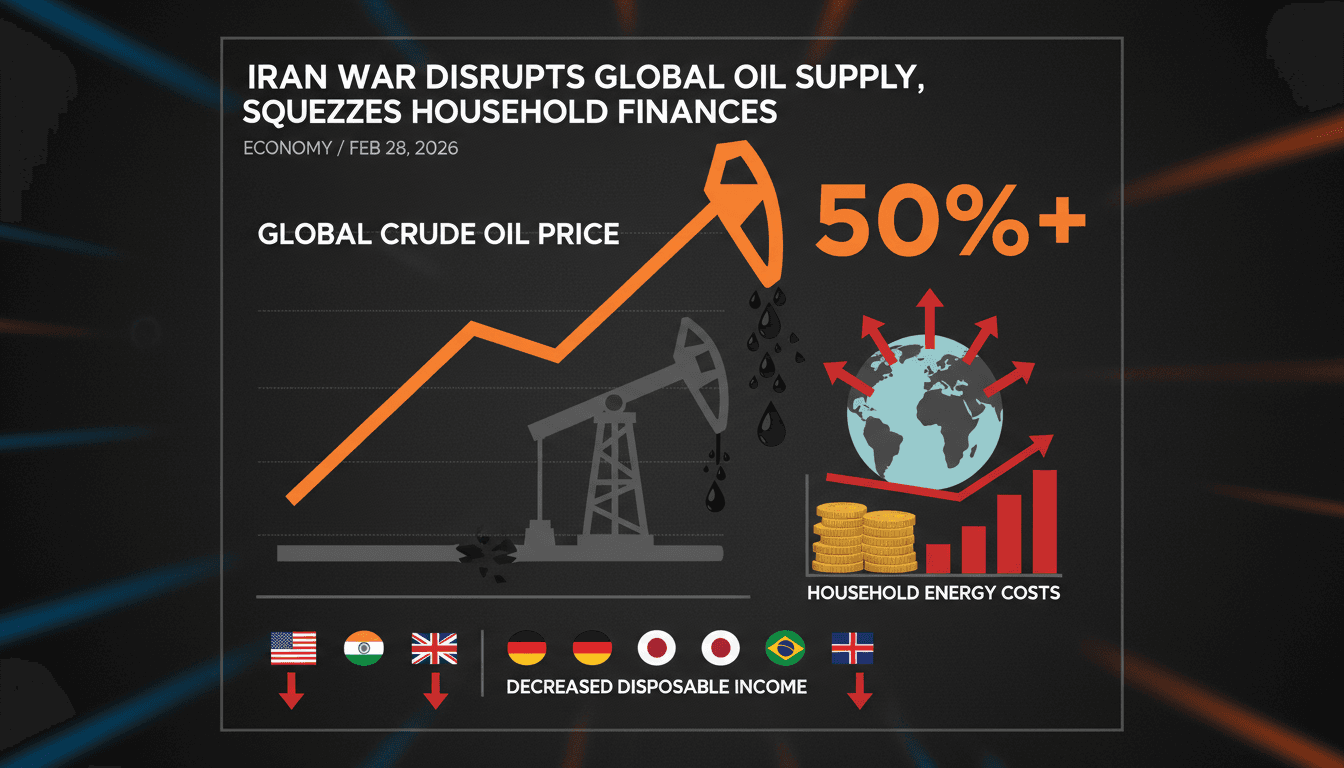
Here's what it means for you.
Rising energy costs from the ongoing conflict could impact your budget and financial planning.
What happened
The 2026 Iran War began on 28 February 2026 with US and Israeli strikes on Iranian military and oil infrastructure, leading to a surge in global oil prices.
The Context
- Geopolitical tensions: The conflict stems from Iran's nuclear program and regional proxy activities, which have long strained relations with the US and Israel.
- Oil supply disruptions: The Strait of Hormuz, a vital passage for 20% of global oil, faced threats of closure, causing crude oil prices to spike over 50%.
- Economic fallout: A fragile ceasefire was declared on 8 April 2026, but ongoing threats of a US naval blockade keep economic uncertainty high.
The Number
The average working-age British household is projected to be worse off this year due to elevated energy prices remaining above pre-war levels, impacting disposable income and spending.
Takeaway
As the situation evolves, expect continued volatility in energy markets and potential financial strain on households globally.
This article was generated by AI from 10 verified sources and reviewed by A47 editorial systems.
Editor-curated FT homepage stories spanning markets, business, world, and opinion.
"The Financial Times is a globally respected business publication with a centrist/center-left tone and strong markets focus."
— A47 Editor
Why time is on Iran’s side
The ongoing conflict in Iran is exacerbating a global energy crisis, with rising oil prices and disruptions in supply chains affecting various industries. Political instability is anticipated to escalate as the situation unfolds, leading to increased...
Global markets, investing, and macroeconomics from a premier financial newsroom.
"Bloomberg is respected for in-depth financial reporting and data-driven analysis."
— A47 Editor
India’s Inflation Picks Up as Iran War Lifts Energy Costs
India's inflation rose in March 2026, driven by increased crude oil prices and gas supply constraints due to the ongoing conflict in Iran. This situation has led to heightened costs for key industries, impacting the overall economic landscape.
Global markets, investing, and macroeconomics from a premier financial newsroom.
"Bloomberg is respected for in-depth financial reporting and data-driven analysis."
— A47 Editor
Wary Investors Eye Another Escalation in Iran War
The failure of recent peace talks between the United States and Iran has raised concerns about a potential escalation in the ongoing conflict, which could lead to increased volatility in global markets. Investors are particularly wary as a fragile ce...
Global markets, investing, and macroeconomics from a premier financial newsroom.
"Bloomberg is respected for in-depth financial reporting and data-driven analysis."
— A47 Editor
Bond Traders Snap Back to Inflation as Higher-for-Longer Sets In
The bond market's focus has shifted back to inflation as a fragile ceasefire between the US and Iran raises concerns about prolonged higher interest rates. This situation is compounded by the anticipation of critical US Consumer Price Index (CPI) dat...
Capitol Hill news, legislation, and policy insight.
"The Hill specializes in U.S. politics and policy, with a focus on Capitol Hill developments and a reputation for insider reporting."
— A47 Editor
'Warflation' will hit more than just gas prices
The ongoing conflict in Iran continues to impact the U.S. economy, with inflation rising to 3.3% in March, the highest increase in nearly four years, primarily driven by escalating energy costs linked to the war. This inflation spike reflects the bro...
Editor-curated FT homepage stories spanning markets, business, world, and opinion.
"The Financial Times is a globally respected business publication with a centrist/center-left tone and strong markets focus."
— A47 Editor
Global economic outlook darkens as policymakers count cost of Iran war
Central bankers and economists are gathering in Washington to assess the economic damage caused by the ongoing conflict in Iran, which has led to rising inflation and declining consumer sentiment in the U.S. The situation is prompting concerns about ...
Social/economic commentary and analysis relevant to business and markets.
"WSJ blends data-driven economic insight with commentary on policy and society."
— A47 Editor
Recent months have been marked by slower growth, stubborn inflation and a weaker job market. Economists worry the war in Iran could exacerbate all three
Recent months have seen a slowdown in economic growth, persistent inflation, and a weakening job market in the U.S., with economists expressing concerns that the ongoing conflict in Iran could worsen these trends. Inflation has surged, reaching 3.3% ...
Markets, economy, and company analysis from NYT’s business desk.
"The New York Times is a globally recognized newspaper offering authoritative reporting with a center-left editorial stance."
— A47 Editor
How the Iran War Is Affecting Inflation
The ongoing conflict in Iran has led to a significant rise in inflation, with U.S. inflation reaching 3.3% in March 2026, marking the largest increase in nearly two years. This surge in prices is primarily driven by escalating energy costs linked to ...
Global markets, investing, and macroeconomics from a premier financial newsroom.
"Bloomberg is respected for in-depth financial reporting and data-driven analysis."
— A47 Editor
War in Iran Likely to Impact Summer Travel Costs
The ongoing war in Iran is causing US airlines to increase fares, add baggage fees, and reduce routes, leading to higher travel costs this summer. This situation is primarily driven by rising oil and jet fuel prices, which have been significantly imp...
Corporate news, economic trends, and markets with UK and global scope.
"BBC News is widely regarded as reputable and impartial, with a public service mandate."
— A47 Editor
How the Iran war affects your money and bills
The ongoing conflict in Iran has significantly impacted global markets, leading to increased costs for petrol, household energy bills, and food prices. The Food and Agriculture Organization (FAO) reported a 2.4% rise in global food prices in March, a...
United Kingdom-focused news including local politics, business, and social issues.
"BBC News is widely regarded as a reputable international news organization, known for its impartial tone and public service mandate."
— A47 Editor
How the Iran war may affect your money and bills
The ongoing war in Iran is expected to significantly impact global economies, leading to increased costs for petrol, household energy bills, and food prices. The conflict has already resulted in substantial military expenditures and casualties, with ...