
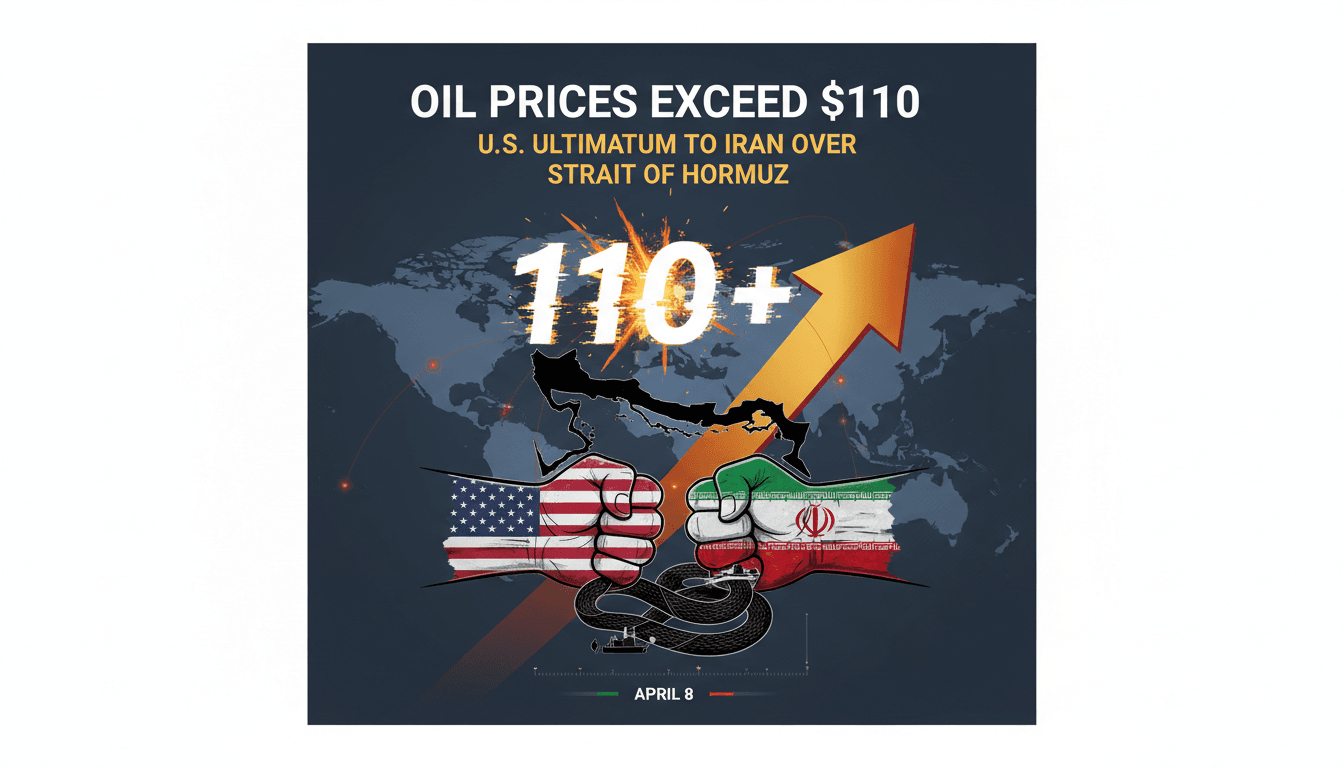
Oil Prices Exceed $110 Amid U.S. Ultimatum to Iran Over Strait of Hormuz
Here's what it means for you.
Rising oil prices could significantly impact your transportation and living costs, especially if you rely on fuel for daily activities.
Why it matters
The surge in oil prices reflects geopolitical tensions that can disrupt global supply chains and inflate costs across various sectors.
What happened (in 30 seconds)
- Oil prices spiked: Brent crude rose 1% to $111 per barrel, while New York light crude climbed 2.6% to $115.3 following President Trump's ultimatum to Iran.
- U.S.-Iran tensions escalated: Trump threatened military action against Iran unless it reopened the Strait of Hormuz by a set deadline.
- Market volatility ensued: Global stock indices showed mixed performance as investors reacted to fears of supply disruptions.
The context you actually need
- Strait of Hormuz significance: This waterway is crucial for global oil transport, handling about 20% of the world's oil and gas shipments.
- Recent military actions: Tensions escalated after a U.S.-Israel military strike on Iran in February 2026, leading to Iran's closure of the Strait.
- Economic implications: The International Monetary Fund (IMF) has warned of rising inflation and slowed growth due to these geopolitical tensions.
What's really happening
On April 6, 2026, President Trump issued a stark ultimatum to Iran, stating that the country could be "taken out" in one night if it did not reopen the Strait of Hormuz by April 8, 8pm ET. This declaration was made against a backdrop of escalating U.S.-Iran tensions, primarily stemming from a military strike earlier in the year that had already heightened fears of supply disruptions. The Strait of Hormuz is a vital chokepoint for oil shipments, and any military action or closure could have immediate and far-reaching impacts on global oil prices.
Following Trump's statement, oil prices reacted sharply, with Brent crude rising to $111 per barrel and New York light crude hitting $115.3. This price surge reflects not just the immediate concern over supply disruptions but also broader investor anxiety regarding the potential for military conflict in the region. The mixed performance of global stock indices indicates that markets are bracing for volatility as they digest the implications of Trump's threats and Iran's potential responses.
Iran has already rejected U.S. ceasefire proposals, vowing retaliation against any strikes on its infrastructure. This creates a precarious situation where military escalation could lead to a full-blown conflict, further disrupting oil supplies. The IMF's Managing Director Kristalina Georgieva has forecasted elevated inflation rates and decelerated economic growth as a direct consequence of these geopolitical tensions. The situation is compounded by the UAE's insistence on secured access to the Strait in any potential U.S.-Iran agreement, highlighting the regional stakes involved.
The underlying mechanism at play here is a classic case of supply and demand dynamics influenced by geopolitical risks. As tensions rise, the perceived risk of supply disruptions increases, leading to higher prices. For consumers and businesses alike, this translates into higher transportation costs, increased prices for goods, and a potential squeeze on disposable income.
Who feels it first (and how)
- Consumers: Higher fuel prices directly impact transportation costs and living expenses.
- Transport sector: Increased fuel costs lead to higher operational expenses for logistics and shipping companies.
- Construction industry: Rising diesel prices can inflate costs for construction projects, affecting timelines and budgets.
- Food supply chains: Higher transportation costs can lead to increased prices for food products, impacting consumers.
- Dubai residents: Facing up to a 33.3% surge in fuel prices, the largest monthly increase on record, affecting daily commuting and overall living expenses.
What to watch next
- Iran's response: How Iran reacts to Trump's ultimatum will be crucial in determining the next steps in this geopolitical crisis.
- Oil price trends: Continued volatility in oil prices will indicate market reactions to any developments in U.S.-Iran relations.
- Global inflation rates: Watch for updates from the IMF and other financial institutions regarding inflation forecasts as the situation unfolds.
Oil prices have surged above $110 due to geopolitical tensions.
Continued volatility in oil markets as the situation develops.
The long-term implications for U.S.-Iran relations and global oil supply stability.
Frequently Asked Questions
- Why it matters?
- The surge in oil prices reflects geopolitical tensions that can disrupt global supply chains and inflate costs across various sectors.
- What happened (in 30 seconds)?
- Oil prices spiked: Brent crude rose 1% to $111 per barrel, while New York light crude climbed 2.6% to $115.3 following President Trump's ultimatum to Iran. U.S.-Iran tensions escalated: Trump threatened military action against Iran unless it reopened the Strait of Hormuz by a set deadline. Market volatility ensued: Global stock indices showed mixed performance as investors reacted to fears of supply disruptions.
- What's really happening?
- On April 6, 2026, President Trump issued a stark ultimatum to Iran, stating that the country could be "taken out" in one night if it did not reopen the Strait of Hormuz by April 8, 8pm ET. This declaration was made against a backdrop of escalating U.S.-Iran tensions, primarily stemming from a military strike earlier in the year that had already heightened fears of supply disruptions. The Strait of Hormuz is a vital chokepoint for oil shipments, and any military action or closure could have immed
- Who feels it first (and how)?
- Consumers: Higher fuel prices directly impact transportation costs and living expenses. Transport sector: Increased fuel costs lead to higher operational expenses for logistics and shipping companies. Construction industry: Rising diesel prices can inflate costs for construction projects, affecting timelines and budgets. Food supply chains: Higher transportation costs can lead to increased prices for food products, impacting consumers. Dubai residents: Facing up to a 33.3% surge in fuel prices,
- What to watch next?
- Iran's response: How Iran reacts to Trump's ultimatum will be crucial in determining the next steps in this geopolitical crisis. Oil price trends: Continued volatility in oil prices will indicate market reactions to any developments in U.S.-Iran relations. Global inflation rates: Watch for updates from the IMF and other financial institutions regarding inflation forecasts as the situation unfolds.
UK and international business news, economics, and corporate coverage.
"The Guardian’s business section covers finance and markets with a progressive editorial tone."
— A47 Editor
Oil and gas crisis from Iran war worse than 1973, 1979 and 2022 together, says IEA
The International Energy Agency (IEA) has declared that the ongoing oil and gas crisis stemming from the blockade of the Strait of Hormuz due to escalating tensions with Iran is more severe than the crises of 1973, 1979, and 2022 combined. This state...
Top international stories selected by The Guardian editors.
"The Guardian is known for its progressive editorial stance and in-depth analysis."
— A47 Editor
Oil and gas crisis from Iran war worse than 1973, 1979 and 2022 together, says IEA
The International Energy Agency (IEA) has declared that the ongoing oil and gas crisis stemming from the blockade of the Strait of Hormuz due to escalating tensions with Iran is more severe than the crises of 1973, 1979, and 2022 combined. This state...
News from the United States including domestic politics, society, and culture.
"The Guardian is known for its progressive editorial stance and in-depth analysis, often advocating for social justice, environmental issues, and liberal values."
— A47 Editor
Oil and gas crisis from Iran war worse than 1973, 1979 and 2022 together, says IEA
The International Energy Agency (IEA) has warned that the ongoing oil and gas crisis stemming from the conflict in Iran is more severe than the oil shocks of 1973, 1979, and 2022 combined, as tensions escalate with a looming deadline set by President...
English-language reporting on Saudi politics, policy, and society.
"Saudi Gazette reflects mainstream Saudi institutional perspectives."
— A47 Editor
Iran defiant as Trump doubles down on his threat to take out country
Iran has firmly rejected President Donald Trump's threats to take military action against the country, specifically targeting critical infrastructure such as bridges and power plants, if it does not reopen the strategically vital Strait of Hormuz by ...