
Trump Issues Naval Blockade Warning Against Iranian Ships in Strait of Hormuz
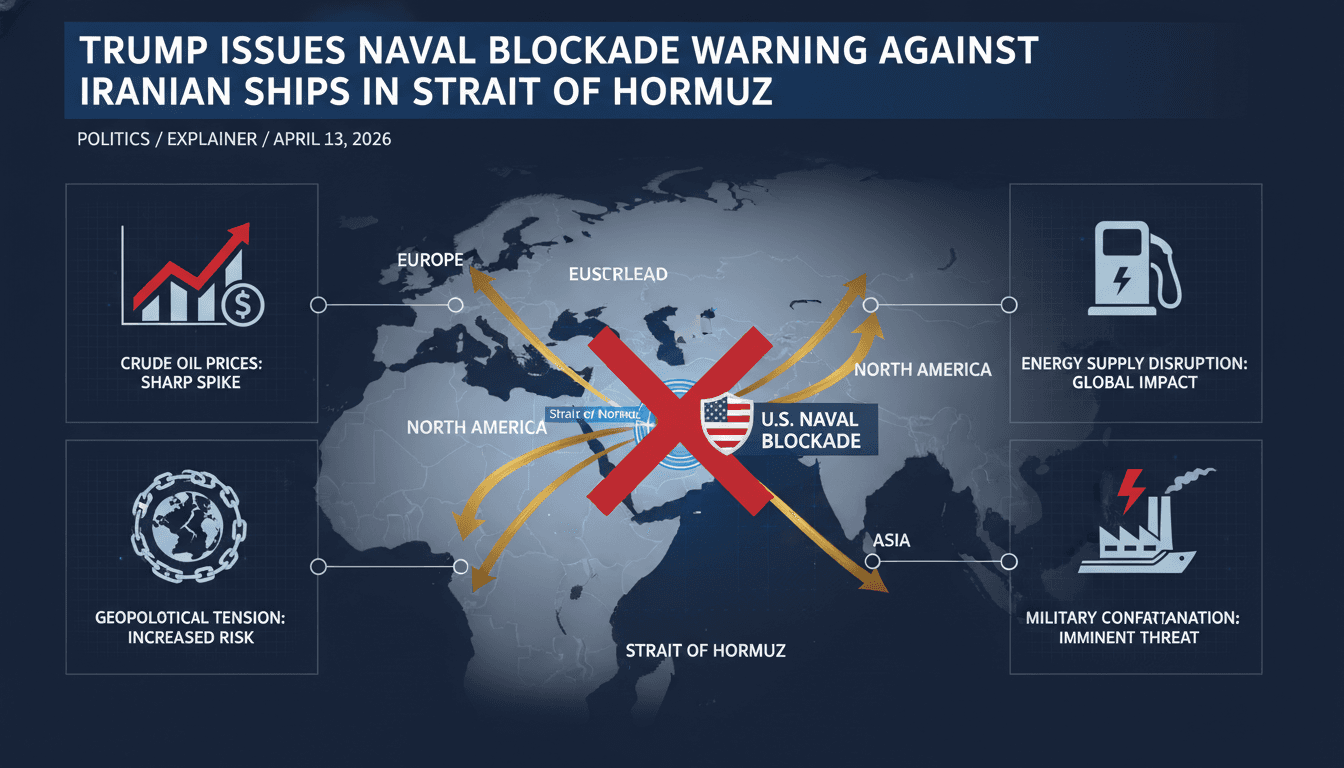
Here's what it means for you.
If you rely on global oil markets or are affected by energy prices, this escalating conflict could significantly impact your costs.
Why it matters
The Strait of Hormuz is a critical chokepoint for global oil supply, with approximately 20% of the world's oil transiting through it.
What happened (in 30 seconds)
- On April 13, 2026, President Donald Trump warned that any Iranian fast-attack ships approaching the U.S. naval blockade would be "immediately ELIMINATED."
- The U.S. enacted a military blockade at 10:00 a.m. ET, targeting all vessels entering or exiting Iranian ports amid heightened tensions.
- Iran's defense minister responded by placing forces on maximum alert, vowing a "harsh and decisive response" to any U.S. aggression.
The context you actually need
- The blockade follows a series of escalated tensions between the U.S. and Iran, initiated when Iran restricted access to the Strait of Hormuz and imposed transit fees on oil tankers.
- Previous U.S. airstrikes had already neutralized much of Iran's conventional navy, sinking 158 vessels, which has left Iran's naval capabilities severely diminished.
- Failed peace talks in Pakistan over the weekend of April 12-13 led to the current military escalation, with both sides unwilling to compromise.
What's really happening
The U.S. naval blockade in the Strait of Hormuz represents a significant escalation in the ongoing conflict between the U.S. and Iran. The strait is a vital artery for global oil transportation, and any disruption can have immediate and far-reaching consequences for energy markets worldwide. The U.S. military's decision to enforce a blockade comes after Iran's provocative actions, including the imposition of tolls on oil tankers and deployment of naval mines, which have already disrupted global energy flows.
President Trump's warning on Truth Social underscores the U.S. administration's commitment to maintaining control over this strategic waterway. The use of the term "immediately ELIMINATED" signals a readiness to engage militarily, which could lead to direct confrontations at sea. This aggressive posture is likely intended to deter Iranian naval operations and reassure global markets of U.S. resolve in protecting oil supply routes.
The backdrop of this crisis includes a series of failed diplomatic efforts. The collapse of peace talks in Pakistan, where both sides could not agree on terms for reopening the strait, has left the situation precarious. With Iran's naval capabilities significantly weakened due to previous U.S. airstrikes, the current blockade may be perceived by Tehran as an existential threat, prompting a fierce military response.
As oil prices surge above $100 per barrel, the implications for global markets are profound. Countries that rely heavily on oil imports, including many in Europe and Asia, will face increased costs, which could lead to inflationary pressures. Additionally, the blockade may prompt countries like China and Russia to reassess their positions, potentially leading to a realignment of geopolitical alliances.
The situation is fluid, and the potential for miscalculation is high. If Iranian forces engage U.S. naval assets, it could trigger a broader conflict, further destabilizing the region and impacting global oil supply chains. The U.S. blockade, while aimed at curbing Iranian influence, may inadvertently escalate tensions and lead to unintended consequences.
Who feels it first (and how)
- Oil consumers: Higher fuel prices due to increased oil costs.
- Shipping companies: Disruptions in maritime routes could lead to delays and increased shipping fees.
- Investors in energy markets: Volatility in oil prices may affect stock portfolios and investment strategies.
- Countries reliant on oil imports: Nations that depend on oil from the Gulf may face economic strain.
What to watch next
- Iran's military response: Any aggressive action by Iranian forces could escalate the conflict and disrupt oil supplies further.
- Global oil prices: Continued volatility in oil markets will impact consumer prices and inflation rates worldwide.
- Diplomatic efforts: Watch for any renewed attempts at negotiations, as successful talks could de-escalate tensions and stabilize markets.
The U.S. has enacted a naval blockade and issued warnings to Iran.
Iranian forces will respond to the blockade with heightened military readiness.
The long-term impact on global oil supply and prices remains uncertain.
Frequently Asked Questions
- Why it matters?
- The Strait of Hormuz is a critical chokepoint for global oil supply, with approximately 20% of the world's oil transiting through it.
- What happened (in 30 seconds)?
- On April 13, 2026, President Donald Trump warned that any Iranian fast-attack ships approaching the U.S. naval blockade would be "immediately ELIMINATED." The U.S. enacted a military blockade at 10:00 a.m. ET, targeting all vessels entering or exiting Iranian ports amid heightened tensions. Iran's defense minister responded by placing forces on maximum alert, vowing a "harsh and decisive response" to any U.S. aggression.
- What's really happening?
- The U.S. naval blockade in the Strait of Hormuz represents a significant escalation in the ongoing conflict between the U.S. and Iran. The strait is a vital artery for global oil transportation, and any disruption can have immediate and far-reaching consequences for energy markets worldwide. The U.S. military's decision to enforce a blockade comes after Iran's provocative actions, including the imposition of tolls on oil tankers and deployment of naval mines, which have already disrupted global
- Who feels it first (and how)?
- Oil consumers: Higher fuel prices due to increased oil costs. Shipping companies: Disruptions in maritime routes could lead to delays and increased shipping fees. Investors in energy markets: Volatility in oil prices may affect stock portfolios and investment strategies. Countries reliant on oil imports: Nations that depend on oil from the Gulf may face economic strain.
- What to watch next?
- Iran's military response: Any aggressive action by Iranian forces could escalate the conflict and disrupt oil supplies further. Global oil prices: Continued volatility in oil markets will impact consumer prices and inflation rates worldwide. Diplomatic efforts: Watch for any renewed attempts at negotiations, as successful talks could de-escalate tensions and stabilize markets.
Macro commentary, policy analysis, growth/inflation themes, and global outlooks.
"Contextual macro coverage that complements day-to-day market headlines."
— A47 Editor
Trump says 34 ships passed through Hormuz strait after blockade comes into effect
Former President Donald Trump announced that 34 ships successfully navigated the Strait of Hormuz following the implementation of a blockade, highlighting ongoing maritime activity in a region marked by geopolitical tensions.
Arabic-language UAE newspaper coverage focused on domestic affairs, public institutions, business, society, and regional developments.
"Al Khaleej coverage generally reflects a mainstream UAE editorial lens with strong attention to public affairs, institutions, and regional developments."
— A47 Editor
ترامب محذراً إيران: الإبادة الفورية لسفنكم إذا اقتربت من حصار «هرمز»
U.S. President Donald Trump issued a stern warning to Iran, stating that any Iranian vessels approaching the blockade in the Strait of Hormuz would face immediate destruction. This statement underscores the heightened tensions between the U.S. and Ir...
Arabic-language political and world news coverage for UAE readers.
"Emarat Al Youm world coverage usually presents international developments through a UAE and Arab audience lens."
— A47 Editor
ترامب محذراً: سيتم تدمير أي سفينة إيرانية تقترب من نطاق الحصار الأميركي ترامب محذراً: سيتم تدمير أي سفينة إيرانية تقترب من نطاق الحصار الأميركي
U.S. President Donald Trump has issued a stern warning that any Iranian vessel approaching the U.S. blockade will be destroyed, emphasizing the U.S. Navy's readiness to intercept such ships. This statement follows the announcement of an immediate blo...
Arabic-language coverage of political affairs and current events.
"Okaz political coverage typically follows mainstream Saudi framing on national and regional affairs."
— A47 Editor
بعد سريان الحصار.. ترمب يهدد قوارب إيران بالقتل الوحشي
Following the implementation of a blockade on Iranian ports, U.S. President Donald Trump threatened to swiftly and brutally eliminate Iranian attack boats, similar to actions taken against drug trafficking vessels. Trump stated on his Truth Social pl...
Regional coverage and analysis focused on politics, diplomacy, and business across the Middle East.
"Al-Monitor is known for analytical reporting on Middle East politics and policy developments."
— A47 Editor
Trump says Iranian 'fast-attack' ships that come close to US blockade will be eliminated
U.S. President Donald Trump has issued a warning that any Iranian 'fast-attack' ships approaching the U.S. maritime blockade will be eliminated. This statement was made on Truth Social, emphasizing the U.S. Navy's readiness to respond to perceived th...
Pan-Arab news coverage spanning politics, business, sports, and regional affairs.
"Asharq Al-Awsat reflects a broad Arab editorial perspective with strong attention to regional geopolitics."
— A47 Editor
ترمب: سندمر أي سفينة إيرانية باستخدام أسلوب التصفية الذي نطبقه ضد تجار المخدرات
On Monday, U.S. President Donald Trump warned that any Iranian ship approaching the U.S. blockade imposed on Iranian ports would be 'immediately destroyed.' This statement underscores the escalating tensions between the U.S. and Iran amid ongoing geo...