
NASA Artemis II Mission Successfully Launches Crewed Lunar Flyby
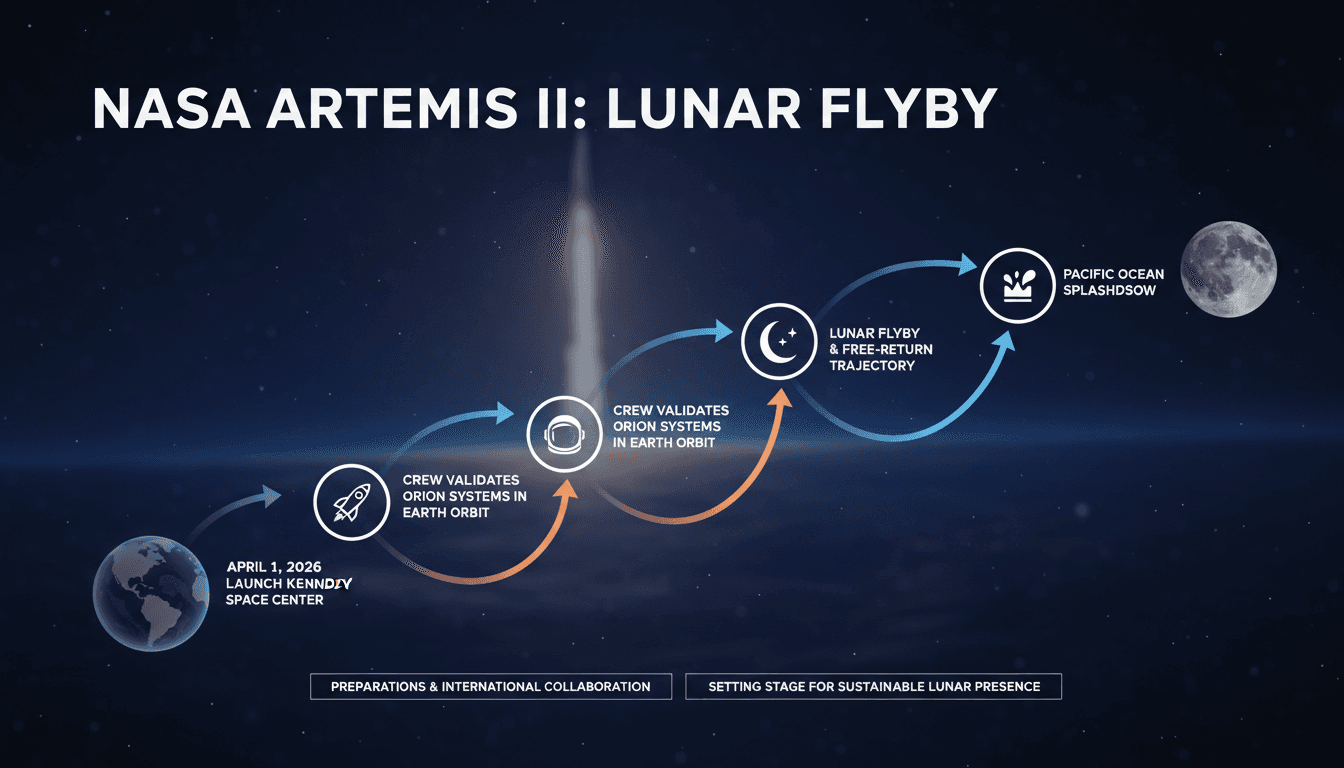
Here's what it means for you.
The Artemis II mission signals a renewed commitment to lunar exploration, impacting industries from aerospace to technology.
What happened
Artemis II launched successfully on April 1, 2026, marking NASA's first crewed mission to the Moon in over 50 years.
The Context
- Historical significance: This mission is the first crewed lunar flyby since Apollo 17, showcasing advancements in space exploration.
- Diversity in space: For the first time, a woman and a person of color are part of a crewed lunar mission, reflecting progress in inclusivity.
- International collaboration: The mission involves partnerships, notably with the Canadian Space Agency, highlighting global cooperation in space exploration.
The Number
Spectators gathered along Florida's Space Coast, creating significant local crowds and economic activity, which underscores the public's growing interest in space exploration.
Takeaway
As Artemis II continues its journey, expect a surge in public and private sector investment in space technologies and exploration initiatives.
Reports on science policy, discoveries, and public debate in the scientific realm.
"The Guardian’s science section is known for thoughtful and critical reporting on global research, ethics, and public understanding of science."
— A47 Editor
Artemis II: Nasa’s crewed rocket lifts off to begin 10-day lunar journey – as it happened
NASA's Artemis II mission successfully launched on April 1, 2026, at 6:35 p.m. ET from Kennedy Space Center in Florida, marking the first crewed journey to the Moon in over 50 years. The mission carries four astronauts aboard the Orion spacecraft, in...
International coverage from The Guardian's global desks.
"The Guardian is known for its progressive editorial stance and in-depth analysis."
— A47 Editor
Artemis II: Nasa’s crewed rocket lifts off to begin 10-day lunar journey – as it happened
NASA's Artemis II mission successfully launched on April 1, 2026, at 6:35 p.m. ET from Kennedy Space Center in Florida, marking the first crewed journey to the Moon in over 50 years. The mission carries four astronauts aboard the Orion spacecraft, in...
Scientific discoveries, health, technology, and natural phenomena.
"Live Science reports on scientific discoveries, health, technology, and natural phenomena with a popular science tone."
— A47 Editor
'80% chance of a go,' launch weather officer says at NASA's Artemis II prelaunch conference
NASA's Artemis II mission is on track for launch on April 1, 2026, with an 80% chance of favorable weather conditions, according to the launch weather officer. The agency has confirmed that an X-class solar flare is not expected to impact the mission...
Reports on climate change, environmental science, sustainability, and nature.
"BBC News is widely regarded as a reputable international news organization, known for its impartial tone and public service mandate."
— A47 Editor
Could weather conditions stop Artemis II Moon launch?
NASA is preparing for the Artemis II mission, which aims to launch the first crewed journey around the Moon in over 50 years. However, the launch, scheduled for April 1, 2026, may be affected by weather conditions, raising concerns about potential de...