
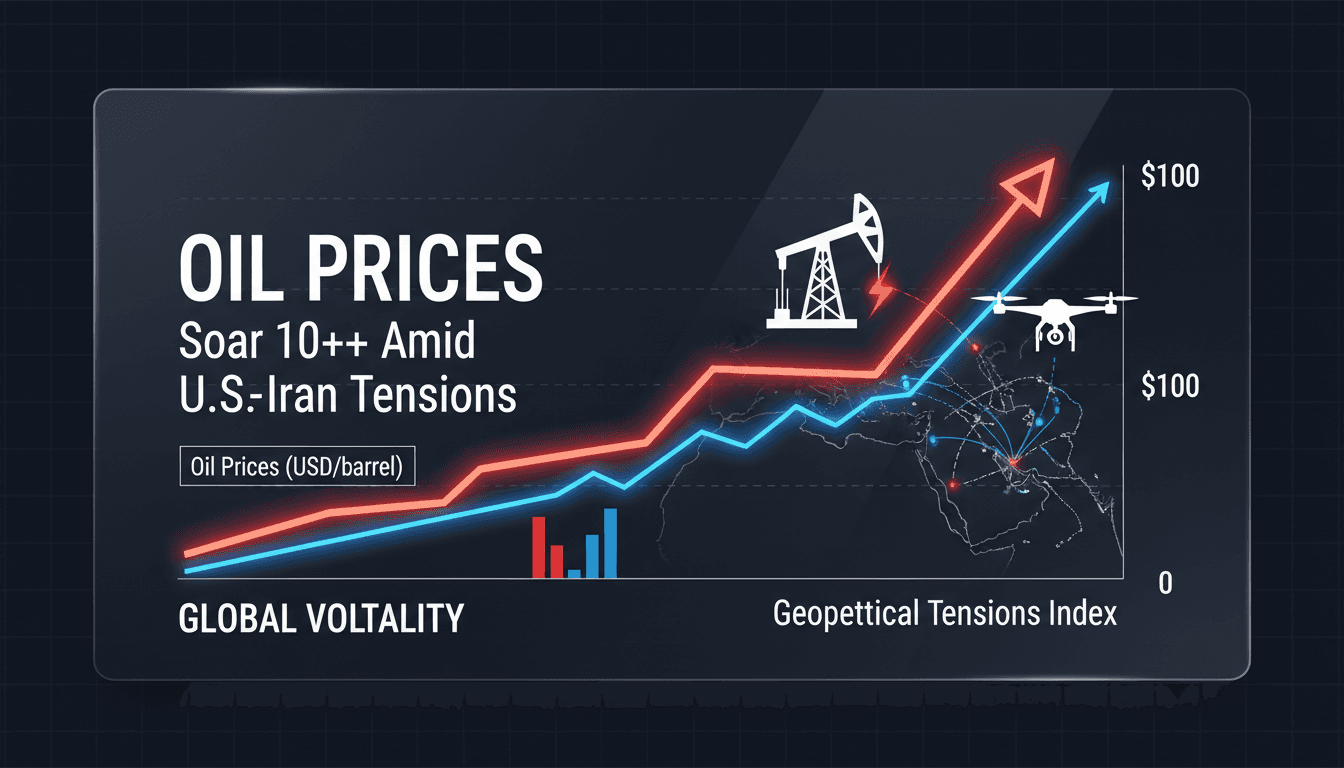
Oil prices rise over 10% amid U.S.-Iran tensions despite retreat from $100
Here's what it means for you.
The recent surge in oil prices highlights the sensitivity of the market to geopolitical tensions, particularly those involving the U.S. and Iran. As prices have risen over 10% this week, businesses and consumers alike may face increased costs, impacting everything from transportation to energy bills. This volatility suggests that stakeholders should prepare for potential fluctuations in oil prices as the situation evolves. The ongoing conflict in the Middle East is a critical factor influencing these price changes, underscoring the interconnectedness of global markets. Policymakers and industry leaders must remain vigilant as developments unfold, as they could have far-reaching implications for economic stability.
What happened
Oil prices have recently dropped below the $100 mark but have seen a significant increase of more than 10% this week. This rise is primarily driven by ongoing clashes between the U.S. and Iran, which have heightened concerns over global oil supply. The escalation of tensions in the Middle East, particularly involving Iran and Ukraine, has further impacted market dynamics.
Despite the retreat from above $100, physical oil prices are nearing $110 due to supply issues. The current market environment reflects a complex interplay of geopolitical factors that are influencing oil prices on a global scale. As a result, the oil market is experiencing notable fluctuations that warrant close attention.
The Context
The ongoing tensions between the U.S. and Iran are contributing significantly to the volatility in the oil market. These geopolitical developments are not isolated; they are intertwined with broader conflicts in the Middle East and Ukraine, which are affecting global oil supply chains. Stakeholders, including governments and energy companies, are closely monitoring these situations as they unfold.
The recent price movements indicate a market that is highly reactive to geopolitical events. As oil prices fluctuate, the implications extend beyond just the energy sector, impacting economies worldwide. Understanding the context of these tensions is crucial for anticipating future market behavior.
Takeaway
As geopolitical tensions continue, the oil market is likely to remain volatile, with prices influenced by developments in the Middle East and other conflict zones. Stakeholders should monitor U.S.-Iran relations closely, as any significant changes could lead to further price fluctuations. Additionally, watching for shifts in physical oil prices will be essential as the situation evolves.
The current landscape suggests that the oil market will remain sensitive to geopolitical developments, which could lead to ongoing volatility. Businesses and consumers alike should prepare for potential impacts on pricing and availability in the near future.
Regional and international reporting focused on Middle Eastern politics, diplomacy, and economics.
"Asharq Al-Awsat is a Saudi-owned international newspaper reflecting mainstream Gulf political perspectives."
— A47 Editor
Physical Oil Prices Jump with Some Nearing $110 as Iran, Ukraine Wars Hit Supply
Physical oil prices have surged, with some nearing $110 per barrel, driven by supply disruptions linked to the ongoing conflicts in Iran and Ukraine. This spike reflects heightened geopolitical tensions and market reactions to military actions in the...
Global business headlines with AI angles.
"General business outlet that frequently covers AI."
— A47 Editor
Oil Drops Below $100 As U.S.-Iran Clashes Continue, But Have Climbed More Than 10% This Week
Oil prices have dropped below $100 amid ongoing clashes between the U.S. and Iran, although they have risen more than 10% this week due to escalating tensions. The conflict has intensified particularly in the strategically vital Strait of Hormuz, imp...
Oil, metals, and agriculture: supply/demand headlines, OPEC chatter, inventories, and price action.
"Solid tape for energy and metals traders tracking macro and micro catalysts."
— A47 Editor
Oil retreats from above $100, still set for weekly rise on Middle East escalation
Oil prices have retreated from above $100 but remain set for a weekly rise due to escalating tensions in the Middle East. This fluctuation reflects ongoing geopolitical instability, particularly between the United States and Iran, which has significa...