
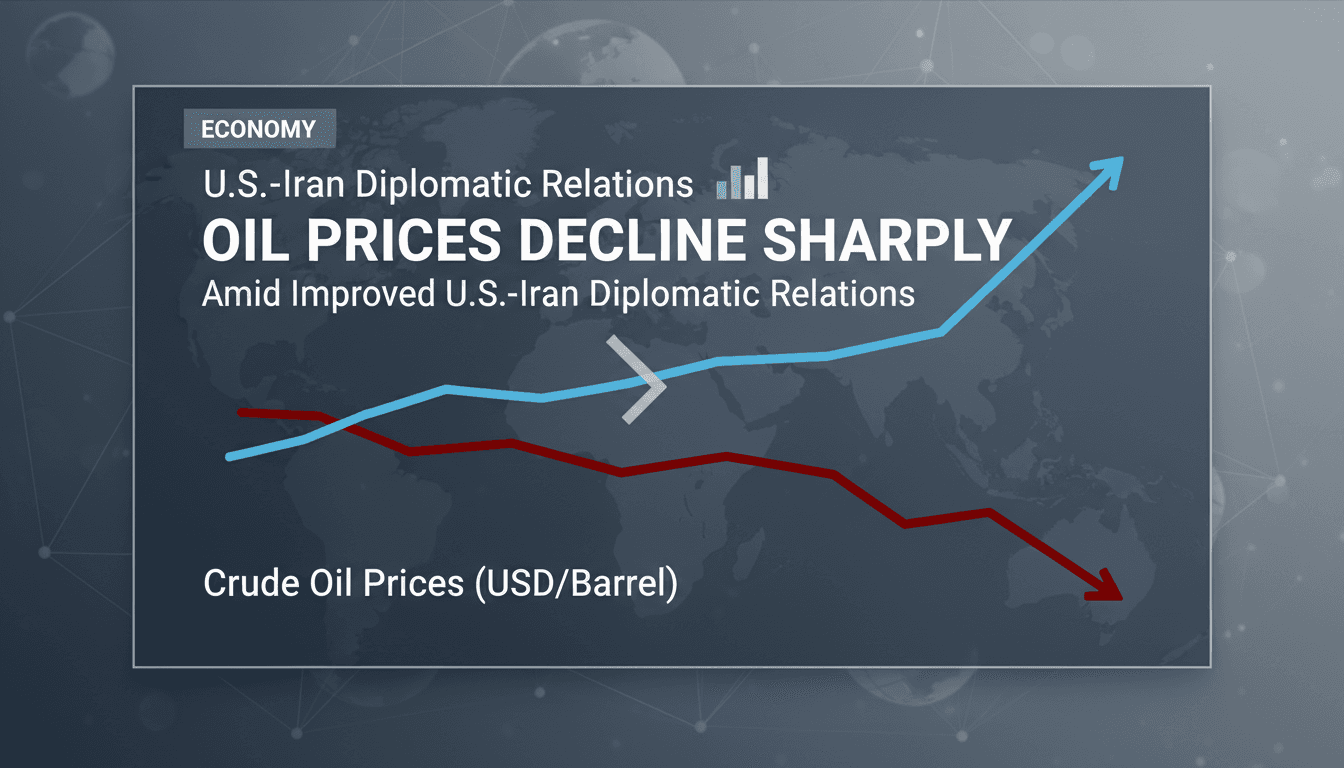
Oil prices decline sharply amid improved U.S.-Iran diplomatic relations
Here's what it means for you.
The recent decline in oil prices signals a potential shift in the energy market, driven by improved diplomatic relations between the U.S. and Iran. This development may lead to more stable shipping conditions in the Strait of Hormuz, a critical route for global oil supply. As tensions ease, businesses and consumers alike could benefit from reduced volatility in oil prices, impacting everything from fuel costs to broader economic conditions. Market analysts are closely monitoring these diplomatic efforts, as they could influence future pricing strategies and investment decisions in the energy sector. The ongoing negotiations will be pivotal in determining the long-term stability of oil prices.
What happened
Oil prices have experienced a significant decline as diplomatic relations between the U.S. and Iran have improved. This shift is largely attributed to the U.S. delaying planned military actions against Iran, which has raised hopes for a reduction in regional tensions. During early trading, Brent crude prices dropped over 7%, reflecting immediate market reactions to these diplomatic developments.
Currently, Brent crude oil is priced at $83.51 per barrel, marking a notable decrease due to the renewed focus on diplomacy. Goldman Sachs has projected that oil prices will stabilize between $80 and $90 per barrel until a new nuclear agreement is confirmed or tensions escalate further.
The Context
The backdrop of this situation involves the Strait of Hormuz, a vital shipping route for a significant portion of the world's oil supply. The U.S. and Iran have a long history of strained relations, and any improvement in diplomacy could have far-reaching implications for global energy markets. The recent actions by the U.S. suggest a willingness to engage in dialogue, which may alleviate fears of energy supply disruptions.
Goldman Sachs' forecast indicates that the market is responding to the uncertainty surrounding geopolitical developments. As negotiations continue, stakeholders in the energy sector are keenly aware of how these dynamics could influence oil prices and overall market stability.
Takeaway
As diplomatic negotiations between the U.S. and Iran progress, the oil market may experience fluctuations that could impact global energy prices. Observers should watch for potential announcements regarding a new nuclear agreement, which could further stabilize or disrupt the current pricing landscape. The situation remains fluid, and any shifts in U.S.-Iran relations could lead to increased volatility in oil prices.
In the coming weeks, the market will likely react to any significant developments, making it essential for businesses and investors to stay informed about the evolving geopolitical context.
Stock market news, investing ideas, and trading analysis.
"TheStreet provides market news and retail-investor-focused analysis."
— A47 Editor
Goldman Sachs sends surprising message on oil prices
Goldman Sachs has indicated that the recent decline in oil prices may signal a potential resolution to the ongoing Middle East crisis, particularly with the U.S. delaying planned attacks on Iran and improved diplomatic signals. This has led traders t...
Pan-Arab news coverage spanning politics, business, sports, and regional affairs.
"Asharq Al-Awsat reflects a broad Arab editorial perspective with strong attention to regional geopolitics."
— A47 Editor
«غولدمان ساكس» يتوقع نطاقاً للنفط بين 80 و90 دولاراً جرَّاء ضبابية حرب إيران
Goldman Sachs has projected that the price of Brent crude oil will remain within the range of $80 to $90 per barrel until a new nuclear agreement between the United States and Iran is confirmed or tensions escalate.
English-language digital publication covering business, politics, technology, and current affairs.
"The Arabian Post mixes original and syndicated-style coverage with a broad regional and global business-news orientation."
— A47 Editor
Oil tumbles as Iran diplomacy revives Hormuz hopes
Oil prices experienced a significant decline on Monday, dropping over 7% during early trading, as renewed diplomatic efforts between Washington and Tehran aimed at reopening the Strait of Hormuz emerged. Brent crude, a key benchmark for global oil pr...