
U.S. Government Refunds $100 Billion in Illegal Tariffs Following Supreme Court Ruling
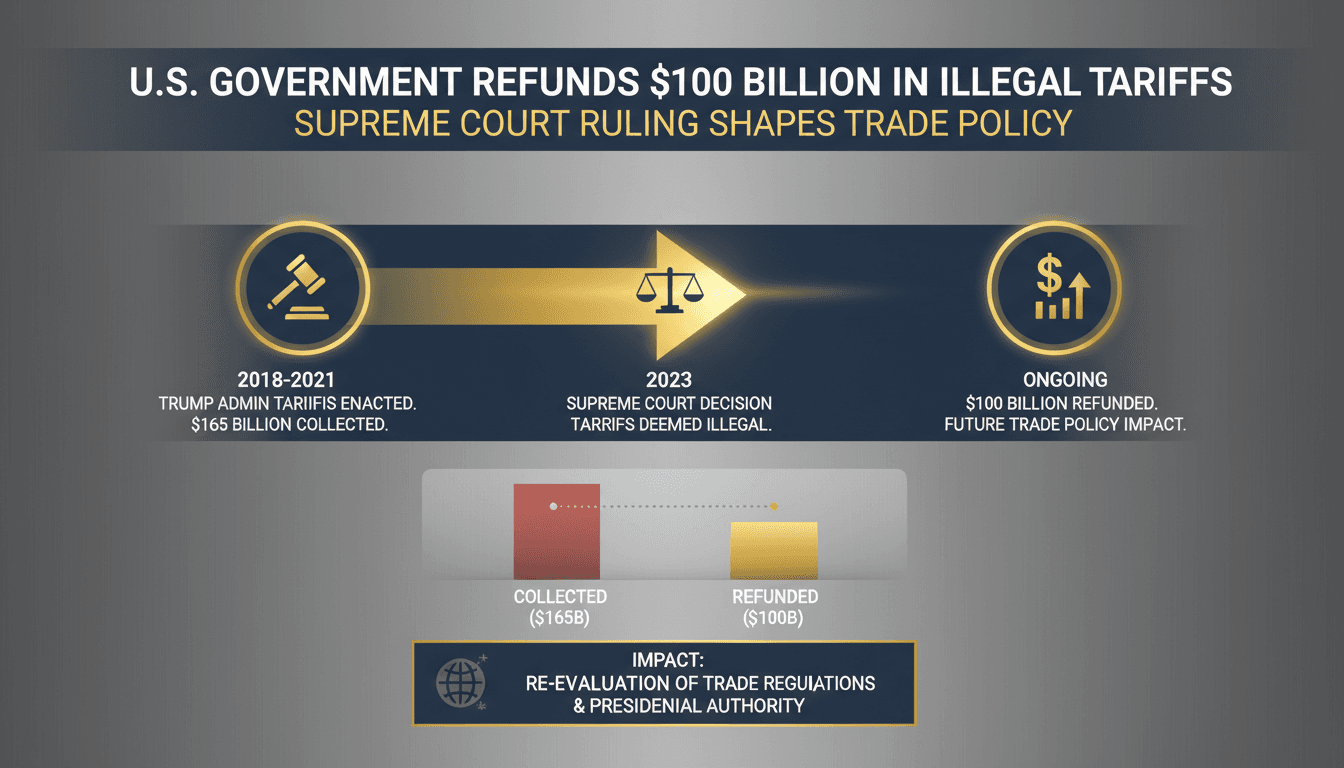
Here's what it means for you.
The recent Supreme Court ruling that deemed the Trump administration's 'liberation day' tariffs illegal has significant implications for businesses and trade policy. The refund of $100 billion to affected companies highlights the financial impact of these tariffs and sets a precedent for future tariff regulations. As the government continues to process refunds, stakeholders should remain vigilant regarding potential changes in trade legislation and enforcement. This ruling may also influence how tariffs are challenged in court, potentially reshaping the landscape of U.S. trade policy moving forward. Businesses should prepare for ongoing discussions around tariff structures and compliance.
What happened
The U.S. government has initiated a refund of approximately $100 billion in tariffs following a Supreme Court ruling that declared these tariffs illegal. This refund represents about 60% of the total $165 billion collected under the controversial 'liberation day' tariffs imposed by the Trump administration. The refunds were confirmed by customs officials and reported to the U.S. Court of International Trade.
The Supreme Court's decision has prompted the government to begin returning funds to businesses that were adversely affected by these tariffs. While this refund process is underway, billions more in tariffs remain pending repayment, indicating that the financial implications of this ruling are far-reaching.
The Context
The 'liberation day' tariffs were initially imposed by the Trump administration as part of its trade policy, which aimed to protect domestic industries. However, the Supreme Court's ruling against these tariffs has raised questions about the legality of such trade measures and their long-term effects on U.S. trade relations. The decision underscores the importance of judicial oversight in trade policy and the potential for legal challenges to influence future tariff implementations.
As the refund process unfolds, it may serve as a critical moment for businesses and policymakers alike. The ongoing discussions surrounding these tariffs could lead to significant changes in how tariffs are structured and enforced in the future, impacting both domestic and international trade dynamics.
Takeaway
As the U.S. government continues to process the refunds, stakeholders should monitor developments regarding remaining tariff repayments. The situation may prompt legislative changes that could reshape the landscape of tariffs and trade regulations.
Future legal interpretations of trade policies will likely be influenced by this ruling, setting a precedent for how tariffs are implemented and challenged in court. Businesses and policymakers alike should stay informed about potential shifts in trade policy that may arise from this significant judicial decision.
Corporate news, economic trends, and markets with UK and global scope.
"BBC News is widely regarded as reputable and impartial, with a public service mandate."
— A47 Editor
Trump administration pays back $100bn in 'Liberation Day' tariffs to businesses
The Trump administration has refunded approximately $100 billion in tariffs, representing about 60% of the total revenue collected under the 'Liberation Day' policy, following a Supreme Court ruling that deemed these tariffs unlawful. This refund mar...
Pan-Arab news coverage spanning politics, business, sports, and regional affairs.
"Asharq Al-Awsat reflects a broad Arab editorial perspective with strong attention to regional geopolitics."
— A47 Editor
أميركا تردّ 100 مليار دولار من رسوم جمركية فرضها ترمب
Reports indicate that the Trump administration has refunded approximately $100 billion in tariffs collected prior to a ruling by the U.S. Supreme Court declaring them illegal. This decision marks a significant reversal in trade policy that had been i...
UK and international business news, economics, and corporate coverage.
"The Guardian’s business section covers finance and markets with a progressive editorial tone."
— A47 Editor
US refunds $100bn of Donald Trump’s ‘liberation day’ tariffs
The U.S. government has refunded approximately $100 billion of the tariffs collected under former President Donald Trump's administration, following a Supreme Court ruling that deemed these levies illegal. This refund accounts for about 60% of the to...
News from the United States including domestic politics, society, and culture.
"The Guardian is known for its progressive editorial stance and in-depth analysis, often advocating for social justice, environmental issues, and liberal values."
— A47 Editor
US refunds $100bn of Donald Trump’s ‘liberation day’ tariffs
The U.S. government has refunded approximately $100 billion of the tariffs collected under former President Donald Trump's administration, following a Supreme Court ruling that deemed these levies illegal. This refund accounts for about 60% of the to...
International coverage from The Guardian's global desks.
"The Guardian is known for its progressive editorial stance and in-depth analysis."
— A47 Editor
US refunds $100bn of Donald Trump’s ‘liberation day’ tariffs
The U.S. government has refunded approximately $100 billion of the tariffs collected under former President Donald Trump's administration, following a Supreme Court ruling that deemed these levies illegal. This refund accounts for about 60% of the to...
Editor-curated FT homepage stories spanning markets, business, world, and opinion.
"The Financial Times is a globally respected business publication with a centrist/center-left tone and strong markets focus."
— A47 Editor
Trump administration refunds $100bn in ‘liberation day’ tariffs
The Trump administration has refunded approximately $100 billion in tariffs that were deemed unlawful by the Supreme Court, returning about 60% of the levies previously collected. This decision follows a significant ruling by the Supreme Court that i...