
Oil prices decline as U.S.-Iran negotiations unfold
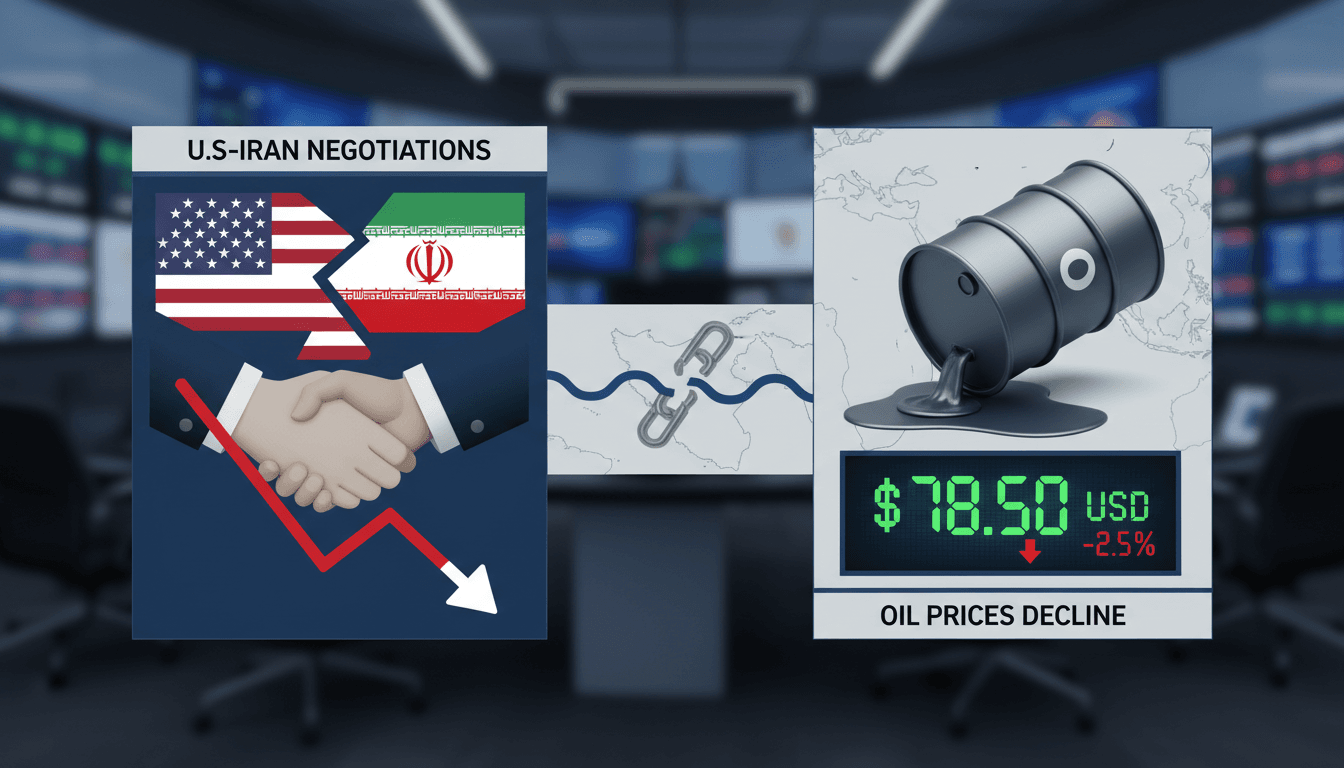
Here's what it means for you.
The recent decline in oil prices signals a period of uncertainty for investors, particularly as negotiations between the U.S. and Iran unfold. With Brent crude oil prices dipping below $80, market participants are closely monitoring the potential implications for global oil supply. The outcome of these talks could reshape pricing trends and overall market stability in the coming weeks. As the situation develops, stakeholders in the oil market must remain vigilant. The Strait of Hormuz, a critical shipping route, is at the center of these discussions, making the geopolitical landscape even more significant for oil traders.
What happened
Oil prices have fallen below $80 amid ongoing negotiations between the United States and Iran. Currently, Brent crude oil is priced at $78.44 per barrel, reflecting a 1.2% decrease. This decline follows significant drops in previous trading sessions, highlighting the market's sensitivity to geopolitical tensions.
Investors are particularly concerned about the implications for navigation through the Strait of Hormuz, a vital shipping route for oil. The ongoing diplomatic efforts aim to resolve tensions between the U.S. and Iran, which could have far-reaching effects on global oil supply.
The Context
The negotiations between the U.S. and Iran are crucial, as they seek to address longstanding tensions that have implications for oil markets worldwide. The Strait of Hormuz is a key chokepoint for oil shipments, making any disruptions a matter of global concern. Recent trading sessions have already shown significant volatility, reflecting investor anxiety.
As these talks progress, the potential for resumed navigation through the Strait of Hormuz adds another layer of complexity to the situation. The outcome of these discussions will not only affect oil prices but also the broader geopolitical stability in the region.
Takeaway
Looking ahead, the future of oil prices will largely depend on the success of the U.S.-Iran negotiations. Investors should keep a close eye on the results of these talks, as they could significantly impact market stability and pricing trends. Additionally, trends in oil prices following the negotiations will be critical to monitor.
The geopolitical landscape surrounding the Strait of Hormuz will remain a focal point for traders and policymakers alike. As developments unfold, the implications for global oil supply and pricing will become clearer.
Pan-Arab news coverage spanning politics, business, sports, and regional affairs.
"Asharq Al-Awsat reflects a broad Arab editorial perspective with strong attention to regional geopolitics."
— A47 Editor
النفط دون 80 دولاراً في انتظار نتائج محادثات أميركا وإيران
Oil prices continued to decline during trading on Wednesday, following a sharp drop in the previous two sessions, as investors await the outcomes of U.S.-Iran negotiations.
Arabic-language coverage of international news and geopolitics.
"RT Arabic is a Russian state-funded outlet often criticized for promoting Kremlin-aligned narratives."
— A47 Editor
النفط يواصل تراجعه وسط ترقب مفاوضات مضيق هرمز
Oil prices continued to decline today as investors await the outcome of negotiations between Washington and Tehran, hoping for a resumption of navigation through the Strait of Hormuz.
Pan-Arab political news and analysis.
"Al-Quds Al-Arabi is a London-based Arabic newspaper known for political coverage."
— A47 Editor
النفط يواصل التراجع مع ترقب نتيجة محادثات أمريكا وإيران
Oil prices continued to decline on Wednesday following a sharp drop in previous trading sessions, as investors await updates on the progress of negotiations aimed at resolving the conflict between the United States and Iran, and the potential resumpt...