
Japanese yen nears critical 160 per dollar threshold raising intervention concerns
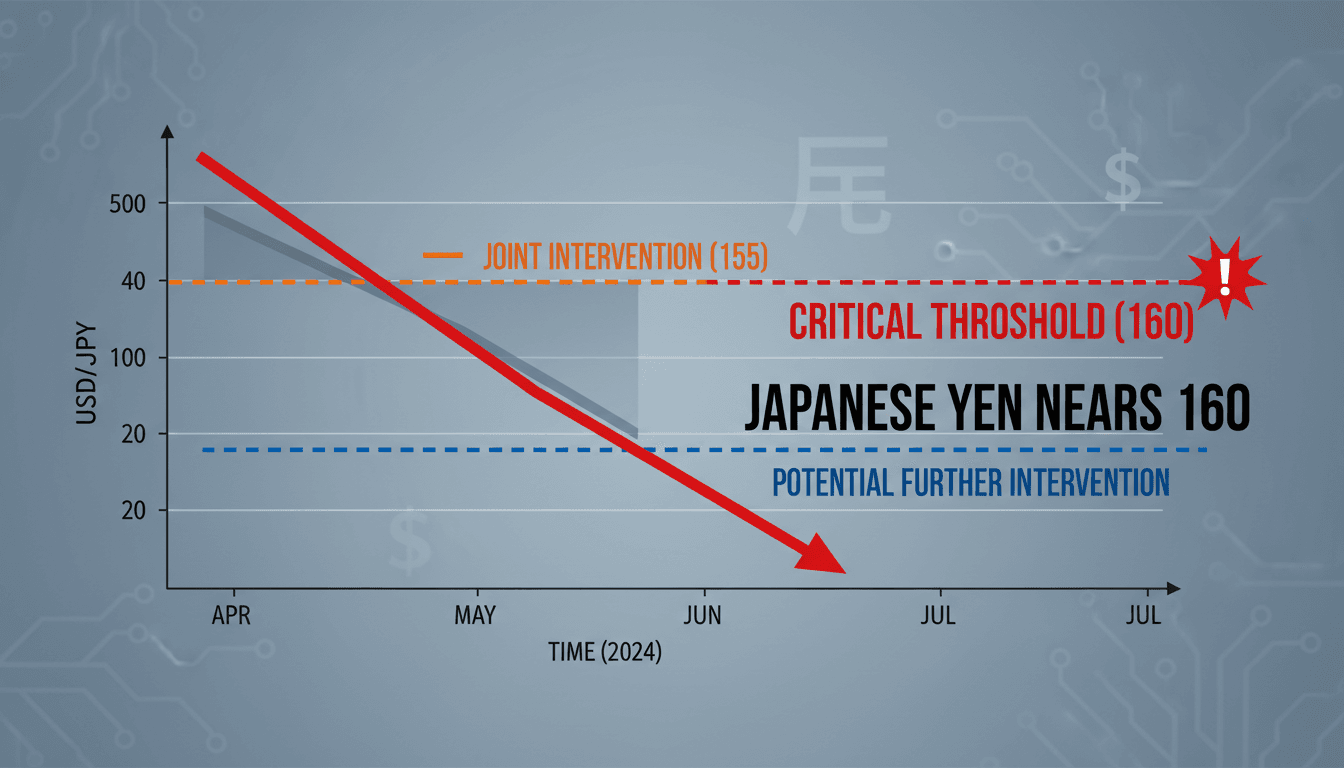
Here's what it means for you.
The Japanese yen is approaching a critical threshold of 160 per dollar, raising alarms about potential intervention by Japanese authorities. This situation could lead to increased volatility in the currency market, impacting investors and policymakers alike. As the yen's value declines, market participants should remain vigilant for any signs of coordinated efforts to stabilize the currency.
What happened
The yen is nearing the significant level of 160 per dollar, prompting concerns about intervention from Japanese authorities. The recent joint intervention by the US and Japan has lost its effectiveness, resulting in a notable decline in the yen's value. As the currency approaches this psychological threshold, market sentiment is shifting, reflecting apprehension among investors.
The impact of the US-Japan intervention has faded, with the yen giving up half of its previous gains. This decline has intensified worries about the lack of coordination among central banks, further complicating the situation. The current fluctuations in the yen's value are being closely monitored by market participants.
The Context
The yen's value is a critical indicator for both domestic and international markets, especially as it approaches the 160 per dollar mark. The recent joint intervention by the US and Japan was intended to bolster the yen's strength, but its ineffectiveness has raised questions about future strategies. Investors are increasingly concerned about the absence of a unified approach among central banks, which could lead to heightened volatility.
As the situation develops, the actions of Japanese authorities will be pivotal in determining the yen's trajectory. The timing of any potential intervention is crucial, as market reactions could significantly influence currency stability. The current environment underscores the importance of effective communication and coordination among central banks.
Takeaway
Market participants should closely watch for any announcements from Japanese authorities regarding potential currency intervention as the yen approaches the critical 160 mark. The situation remains fluid, and continued weakness in the yen could prompt further measures to stabilize the currency. Investors will be looking for signs of coordinated efforts among central banks, which could impact market sentiment and trading strategies.
As the yen's fluctuations continue, the implications for both domestic and international markets will be significant. Stakeholders should prepare for potential volatility and remain alert to developments in this evolving scenario.
Pan-Arab news coverage spanning politics, business, sports, and regional affairs.
"Asharq Al-Awsat reflects a broad Arab editorial perspective with strong attention to regional geopolitics."
— A47 Editor
الين يتذبذب قرب 160 للدولار مع تلاشي أثر التدخل الأميركي-الياباني
The yen fluctuated near the significant level of 160 yen to the dollar on Tuesday, as the effects of the joint U.S.-Japan intervention in the currency market began to fade.
Global markets, investing, and macroeconomics from a premier financial newsroom.
"Bloomberg is respected for in-depth financial reporting and data-driven analysis."
— A47 Editor
Yen Inches Toward 160 Per Dollar, Raising Intervention Concerns
The Japanese yen has edged closer to the critical level of 160 per dollar, raising concerns about potential intervention by Japanese authorities to stabilize the currency. This movement follows a period of significant volatility, with the yen recentl...
Editor-curated FT homepage stories spanning markets, business, world, and opinion.
"The Financial Times is a globally respected business publication with a centrist/center-left tone and strong markets focus."
— A47 Editor
Yen sinks as effect of US-Japan intervention fades
The Japanese yen has significantly declined, giving up roughly half of its gains following a joint intervention by the United States and Japan aimed at stabilizing the currency, which had previously fallen to a 40-year low against the US dollar. Inve...