
China's inflation rates decline for the first time since the Iran war began
Here's what it means for you.
The recent decline in China's inflation rates signals a potential shift in the economic landscape, which could influence consumer behavior and policy decisions. As inflation stabilizes, businesses and investors may find a more predictable environment for planning and investment. This trend may also prompt the Chinese government to consider adjustments in economic policy to sustain growth.
What happened
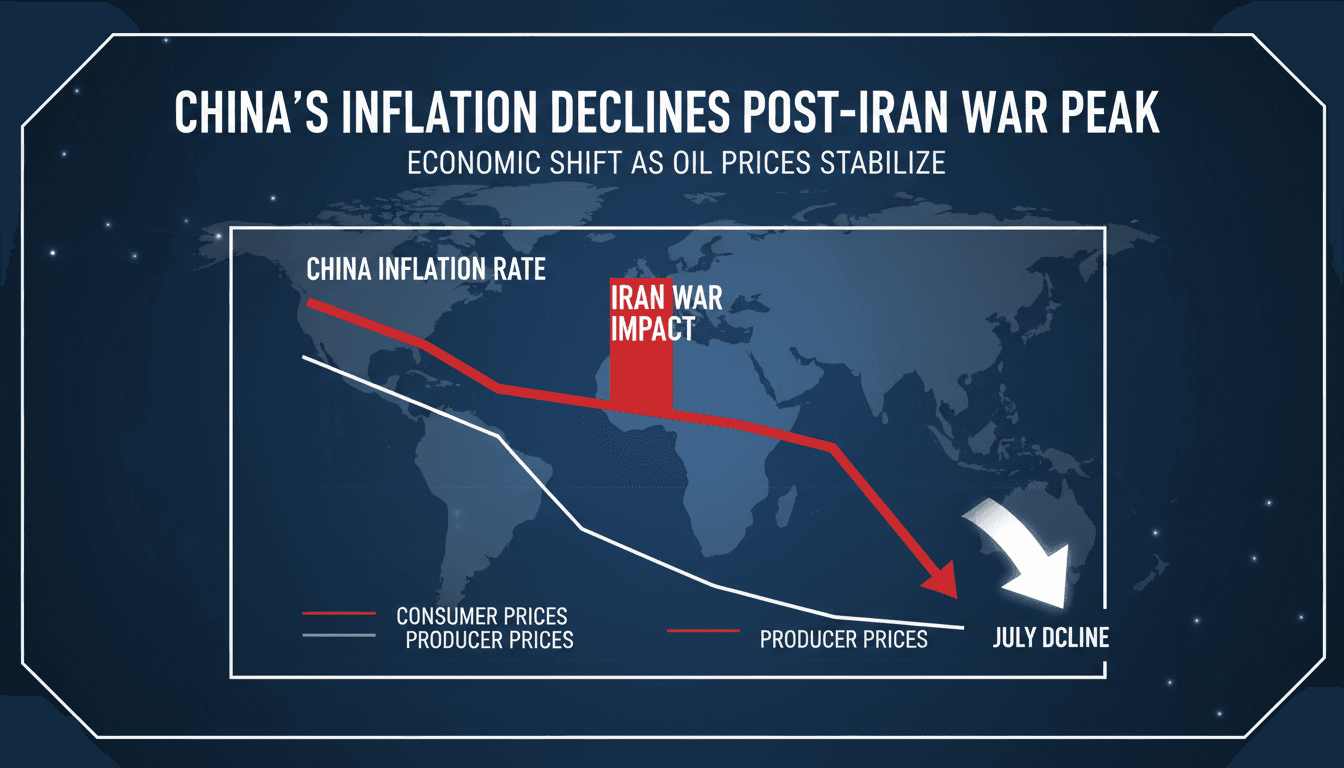
In July 2026, China's inflation rates experienced a notable decrease, marking the first easing since the onset of the Iran war in February. Both consumer prices and factory-gate inflation rose at slower rates, indicating a reduction in cost pressures. The Consumer Price Index (CPI) recorded a year-on-year increase of just 1.5%, the slowest pace since January.
This cooling of inflation is largely attributed to the waning impact of the Iran war on global oil prices. As the oil shock subsides, the broader trend of easing cost pressures becomes evident, suggesting a potential stabilization in China's economic environment.
The Context
The Iran war, which began in February 2026, significantly impacted global oil prices and, consequently, inflation rates worldwide. As the conflict continues, its effects on the Chinese economy have begun to diminish, allowing for a more favorable inflation scenario. The July CPI increase reflects a broader trend of deceleration in both consumer and producer prices, which is crucial for economic stability.
The easing of inflation may have implications for various stakeholders, including consumers, businesses, and policymakers. A stable inflation rate can foster consumer confidence and spending, while also providing a clearer framework for businesses to operate within.
Takeaway
Looking ahead, the cooling inflation in China may influence economic policies and consumer spending patterns in the coming months. Observers should monitor future inflation reports to assess the ongoing economic recovery and any potential policy adjustments from the Chinese government. The current trends suggest that as inflation pressures ease, a more stable economic environment may emerge.
Editor-curated FT homepage stories spanning markets, business, world, and opinion.
"The Financial Times is a globally respected business publication with a centrist/center-left tone and strong markets focus."
— A47 Editor
China’s monthly inflation cools as impact from Iran war eases
China's monthly inflation rate has shown signs of cooling, with the Consumer Price Index (CPI) rising at its slowest pace since January, as the impact of the ongoing Iran war begins to ease. Factory-gate price growth has also decelerated, indicating ...
Macro commentary, policy analysis, growth/inflation themes, and global outlooks.
"Contextual macro coverage that complements day-to-day market headlines."
— A47 Editor
China factory-gate inflation slows more than expected in July
In July 2026, China's factory-gate inflation slowed more than anticipated, reflecting a broader trend of declining manufacturing activity. The manufacturing Purchasing Managers' Index (PMI) indicated a contraction for the first time in five months, d...
Global political, business, and cultural coverage from WSJ international desks.
"The Wall Street Journal offers extensive international reporting with a reputation for financial insight and a center-right editorial stance."
— A47 Editor
China Inflation Cools More Than Expected in July
China's inflation rate cooled more than expected in July, indicating a potential easing of price pressures in the economy. This development comes amid a backdrop of slowing economic growth, with the country's growth rate reported at 4.3%, the slowest...
Key macro releases (CPI, jobs, PMIs), surprise indexes, and market implications.
"Great for data-print awareness and instant read-through to rates and risk assets."
— A47 Editor
China’s producer inflation eases in July, below expectations
China's producer inflation eased in July 2026, falling below expectations as factory-gate price growth slowed, reflecting a deceleration in manufacturing activity amid ongoing economic challenges. This marks the first significant easing since the ons...
Global markets, investing, and macroeconomics from a premier financial newsroom.
"Bloomberg is respected for in-depth financial reporting and data-driven analysis."
— A47 Editor
China’s Inflation Cools as Iran War Oil Shock Starts to Ease
China's factory-gate inflation has eased for the first time since the onset of the Iran war in late February, with consumer prices also showing a deceleration, indicating that the cost pressures from the oil shock are beginning to diminish.