
Libya's central bank governor Naji Issa resigns amid financial instability
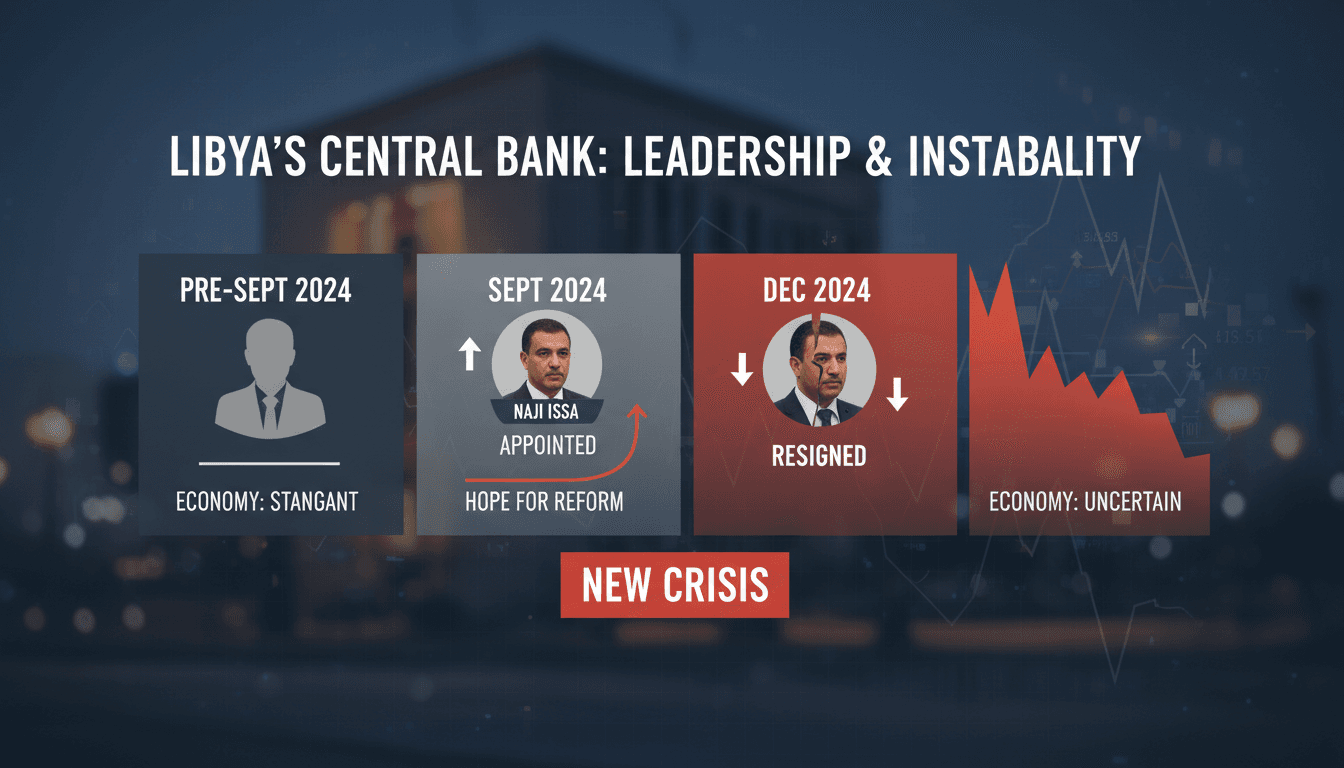
Here's what it means for you.
The resignation of Naji Issa as the governor of Libya's central bank introduces a significant challenge for the country's financial governance. His departure raises immediate concerns about the stability of Libya's economy, which has been struggling with ongoing financial issues. Stakeholders, including investors and policymakers, will be closely monitoring the situation as it unfolds. This leadership change could impact market confidence and the effectiveness of economic policies aimed at stabilizing Libya's financial landscape. The appointment of a new governor will be critical in determining the direction of the central bank and its ability to address pressing economic challenges.
What happened
Naji Issa has officially resigned from his position as the governor of Libya's central bank. His resignation comes without a stated reason and follows his appointment in September 2024 as part of a UN-backed agreement aimed at resolving Libya's financial issues. The announcement was confirmed by Issa himself and reported by multiple news outlets.
This unexpected leadership change adds to the ongoing instability within Libya's financial institutions. Issa's resignation raises questions about the future governance of the central bank and its role in addressing the country's economic challenges.
The Context
Naji Issa was appointed as the governor of Libya's central bank in September 2024, a critical moment intended to stabilize the country's economy amid a financial crisis. His tenure was part of a broader UN-backed initiative to restore confidence in Libya's financial systems. The resignation of Issa, alongside the appointment of his vice-governor Miree Al-Barasee, highlights the fragility of Libya's financial governance.
The central bank's leadership is crucial as Libya navigates its complex political and economic landscape. Ongoing economic challenges, including inflation and currency devaluation, underscore the importance of effective governance in restoring stability and public trust.
Takeaway
The resignation of Naji Issa may lead to further financial instability in Libya, prompting immediate attention from both local and international stakeholders. The potential appointment of a new central bank governor will be a key development to watch, as it could influence the direction of Libya's economic policies.
Reactions from Libya's parliament and financial markets will also be critical in assessing the impact of this leadership change. As the country continues to grapple with its economic challenges, the central bank's ability to navigate this transition will be vital for restoring confidence in Libya's financial future.
Regional coverage of Middle East politics, diplomacy, and security issues.
"Arab News Middle East coverage often reflects Saudi and Gulf strategic interests in regional affairs."
— A47 Editor
Libya’s central bank chief resigns
Naji Issa, the governor of Libya's central bank, has resigned, a decision confirmed by the private TV channel Al-Ahrar. His resignation comes without a stated reason and follows his appointment in September 2024, which was part of a UN-backed agreeme...
Pan-Arab news coverage spanning politics, business, sports, and regional affairs.
"Asharq Al-Awsat reflects a broad Arab editorial perspective with strong attention to regional geopolitics."
— A47 Editor
أزمة جديدة تواجه «المركزي الليبي» مع اعتذار محافظه عن منصبه
The Central Bank of Libya is facing a new crisis as its governor, Nagy Issa, has submitted an official request to the heads of the House of Representatives and the High Council of State to resign from his position. This development occurred on Monday...
Regional and international reporting focused on Middle Eastern politics, diplomacy, and economics.
"Asharq Al-Awsat is a Saudi-owned international newspaper reflecting mainstream Gulf political perspectives."
— A47 Editor
Libya's Central Bank Governor Submits Resignation
Naji Issa, the governor of Libya's central bank, has submitted his resignation, a decision confirmed by the private TV channel Al-Ahrar. His resignation comes without a stated reason and follows his appointment in September 2024, which was part of a ...