
Iran conflict leads to significant global oil supply disruptions
Here's what it means for you.
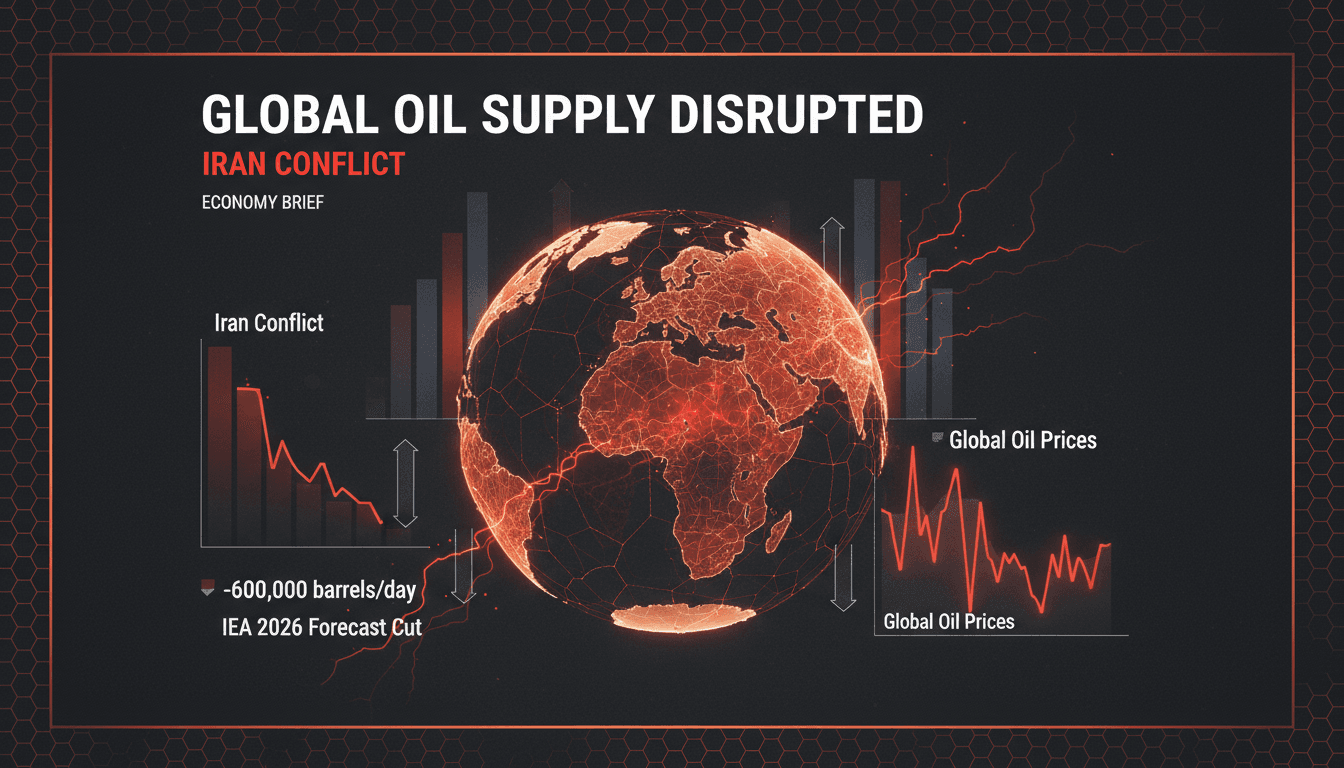
The ongoing conflict in Iran is poised to create substantial challenges for global oil markets, with potential disruptions estimated at 600,000 barrels per day. This situation is likely to lead to increased volatility in oil prices, affecting both consumers and businesses reliant on stable energy supplies. Policymakers and industry stakeholders must closely monitor developments as the conflict unfolds, given its implications for energy security and market stability.
What happened
The United States has reported that the disruptions in oil supply stemming from the conflict in Iran are expected to continue into the next year. The International Energy Agency (IEA) has responded to this crisis by making significant cuts to its oil supply forecasts for 2026. These adjustments reflect a growing concern over the prolonged instability in oil markets due to the ongoing conflict.
As the situation develops, the IEA's forecasts indicate that the impact on global oil supply could be severe, with potential losses reaching 600,000 barrels per day. This level of disruption is unprecedented and highlights the fragility of the current global oil supply chain.
The Context
The conflict in Iran has far-reaching implications for the global oil market, prompting the IEA to take its most drastic measures in adjusting supply forecasts. The anticipated disruptions are expected to persist through 2027, raising alarms among energy analysts and market participants. The situation underscores the interconnectedness of geopolitical events and energy markets, where instability in one region can ripple across the globe.
Stakeholders, including oil-producing nations and energy consumers, are now faced with the challenge of navigating a volatile market landscape. The potential for further escalation in the Iran conflict adds another layer of uncertainty, making it crucial for all parties to stay informed and prepared for rapid changes in supply and pricing.
Takeaway
As the conflict in Iran continues, the global oil market is likely to experience ongoing challenges, necessitating close monitoring of developments. Analysts will be watching for potential escalations in the conflict and how other oil-producing nations respond to stabilize the market. The adjustments made by the IEA signal a need for vigilance as the situation evolves.
The implications of these disruptions extend beyond immediate supply concerns, potentially affecting energy policies and economic strategies worldwide. Stakeholders must remain agile and responsive to the shifting dynamics of the oil market in the coming months.
UAE-based English-language newspaper covering regional politics, economics, and global affairs.
"The National reflects Emirati policy perspectives while maintaining international editorial standards."
— A47 Editor
Iran war drives IEA to deepest cut in 2026 oil supply forecast
The International Energy Agency (IEA) has significantly reduced its oil supply forecast for 2026, citing the ongoing conflict in Iran and the closure of the Strait of Hormuz as key factors influencing this decision. This marks the deepest cut in the ...
UAE-based English-language newspaper covering regional politics, economics, and global affairs.
"The National reflects Emirati policy perspectives while maintaining international editorial standards."
— A47 Editor
Oil disruptions from Iran war to continue through next year, US says
The United States has indicated that oil disruptions stemming from the ongoing conflict in Iran are expected to persist into the next year, highlighting the geopolitical tensions affecting global oil supply.
Macro commentary, policy analysis, growth/inflation themes, and global outlooks.
"Contextual macro coverage that complements day-to-day market headlines."
— A47 Editor
US sees oil disruptions from Iran conflict reaching 600,000 bpd
The United States has projected that oil disruptions stemming from the ongoing conflict with Iran could reach 600,000 barrels per day (bpd). This situation arises amid heightened geopolitical tensions and instability in the region, particularly affec...