
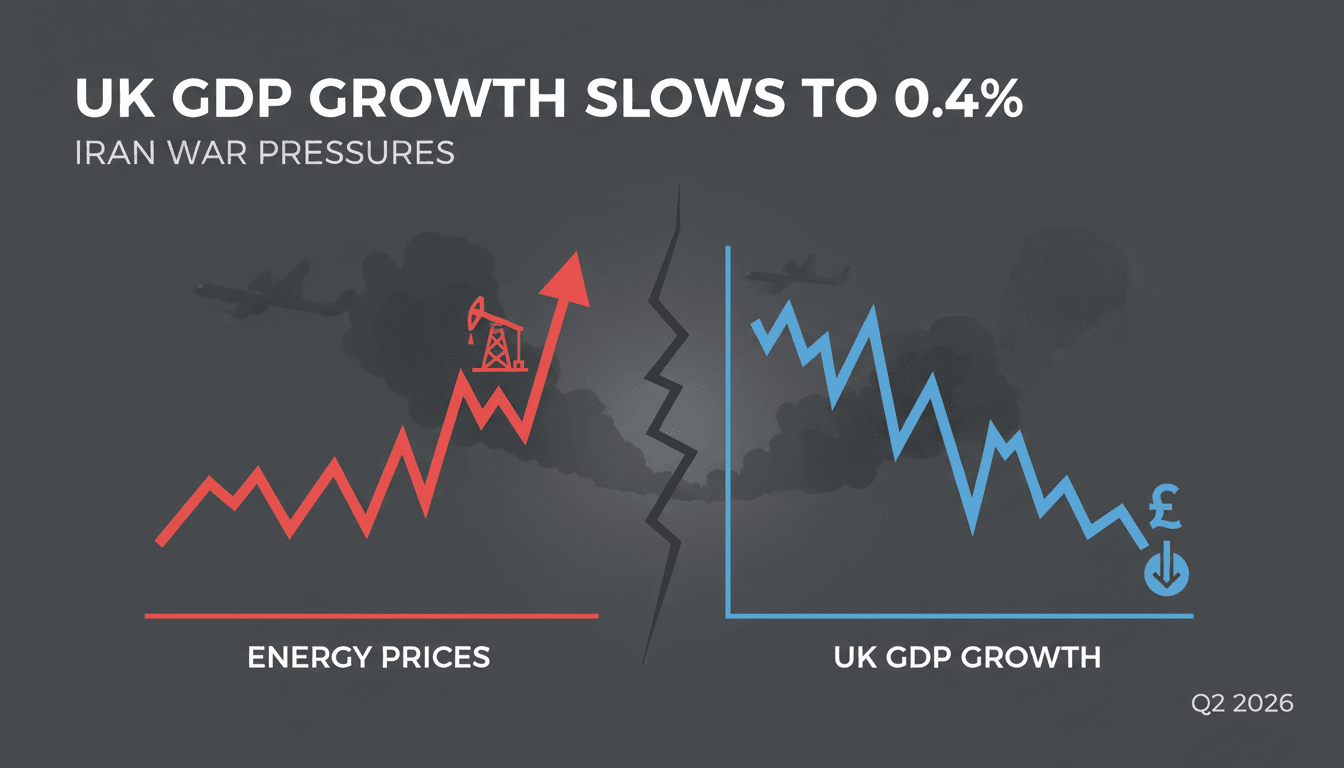
UK GDP growth slows to 0.4% amid Iran war pressures
Here's what it means for you.
The UK economy's growth has slowed, reflecting the impact of rising energy prices due to the ongoing Iran war. This situation creates uncertainty for businesses and consumers alike, potentially affecting spending and investment decisions. Policymakers will need to monitor these developments closely to mitigate any adverse effects on economic stability.
What happened
The UK economy recorded a GDP growth of 0.4% in the second quarter of 2026, a decrease from 0.6% in the previous quarter. This slowdown is primarily attributed to rising energy prices linked to the ongoing conflict in Iran. Despite this decline, the UK economy outperformed the U.S. during the same period, showcasing some resilience amid geopolitical challenges.
Analysts are cautioning that continued geopolitical tensions may further hinder economic growth in the UK in the coming months. The current growth rate indicates a potential shift in the economic landscape, prompting stakeholders to reassess their strategies.
The Context
The ongoing Iran war has significantly contributed to increased energy prices, which are affecting the UK economy. As energy costs rise, businesses face higher operational expenses, which could lead to reduced consumer spending and investment. The situation is further complicated by the uncertainty surrounding the geopolitical climate in the Middle East.
With the UK economy experiencing heightened uncertainty, stakeholders are keenly observing how these developments will unfold. The implications of the Iran war extend beyond immediate energy prices, potentially influencing broader economic indicators and consumer confidence.
Takeaway
As the situation in the Middle East evolves, the UK economy may face further challenges, particularly regarding energy prices and their impact on consumer spending and business investment. Analysts suggest that monitoring energy prices will be crucial for understanding the economic implications moving forward.
The resilience of the UK economy will be tested as the effects of the Iran war continue to unfold, and stakeholders should remain vigilant for updates on the geopolitical situation.
Social/economic commentary and analysis relevant to business and markets.
"WSJ blends data-driven economic insight with commentary on policy and society."
— A47 Editor
U.K. Economy Continues Robust Performance in Second Quarter
The U.K. economy demonstrated a robust performance in the second quarter of 2026, outpacing the U.S. growth despite the ongoing geopolitical tensions in the Middle East. This growth reflects the resilience of the British economy amid external uncerta...
International coverage from The Guardian's global desks.
"The Guardian is known for its progressive editorial stance and in-depth analysis."
— A47 Editor
UK economic growth slows down as Iran war pushes up energy prices
The UK economy experienced a slowdown in growth, with GDP expanding by only 0.4% in the second quarter of 2026, down from 0.6% in the previous quarter, as the ongoing conflict in Iran began to impact energy prices and economic stability.
UK and global business, economy, and markets coverage.
"Sky News is often seen as a center-right outlet in the UK, known for rolling news and breaking business stories."
— A47 Editor
UK growth slows but economy resilient despite Iran war
The latest data indicates that the UK economy has experienced a slowdown in growth, yet it remains resilient in the face of the ongoing conflict in Iran. This situation reflects the complexities of global economic interdependencies, particularly in t...
UK politics, business, and social stories.
"Sky News is a UK-based 24-hour channel known for fast-breaking news and political coverage."
— A47 Editor
UK growth slows but economy resilient despite Iran war
The latest data indicates that the UK economy has experienced a slowdown in growth, yet it remains resilient in the face of the ongoing conflict in Iran. This situation reflects the complexities of global economic interdependencies, particularly in t...