
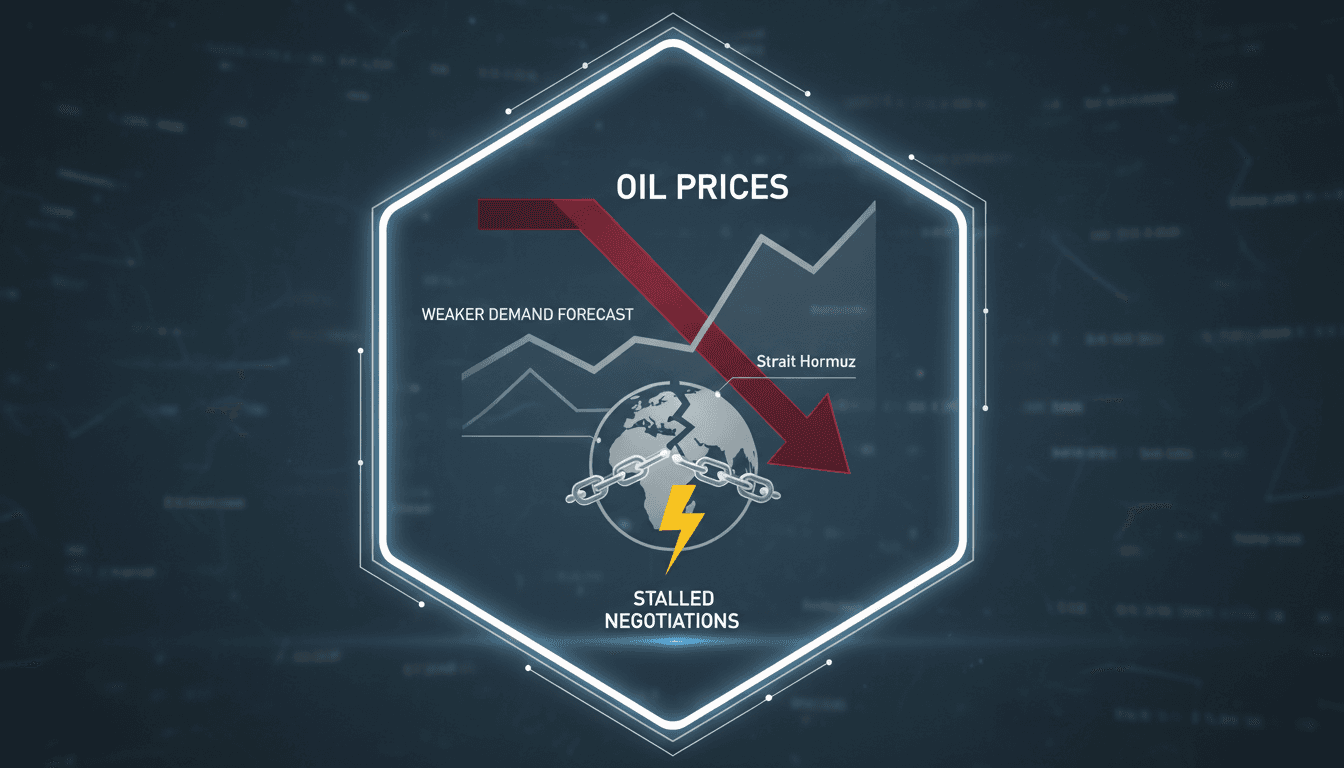
Oil prices decline amid weaker demand outlook and stalled Strait of Hormuz negotiations
Here's what it means for you.
The recent decline in oil prices signals a shift in market sentiment, primarily driven by a weaker demand outlook. Investors are now reassessing their positions as geopolitical tensions in the Middle East continue to influence supply concerns. The stalled negotiations regarding the reopening of the Strait of Hormuz, a crucial oil shipping route, further complicate the landscape. As the situation unfolds, stakeholders across various sectors should prepare for potential volatility in oil prices. This could impact everything from transportation costs to energy policy decisions.
What happened
Oil prices have fallen significantly due to a weaker demand outlook, overshadowing concerns about supply disruptions in the Middle East. The decline is particularly pronounced as negotiations to reopen the Strait of Hormuz remain stalled, leaving investors anxious about the future. This critical shipping route is vital for global oil shipments, and its closure could exacerbate supply issues.
The market is reacting to these developments, with investors closely monitoring the situation. The lack of progress in negotiations has led to a reassessment of demand forecasts, contributing to the downward trend in oil prices.
The Context
The Strait of Hormuz is a vital passage for global oil shipments, making its stability crucial for the oil market. Current geopolitical tensions in the Middle East are heightening concerns about potential supply disruptions, which are now being overshadowed by the weakening demand outlook. As negotiations stall, the uncertainty surrounding the Strait of Hormuz adds to the complexity of the situation.
Market sentiment is shifting as investors grapple with the implications of these geopolitical factors. The interplay between demand forecasts and regional tensions will likely dictate the oil market's trajectory in the near future.
Takeaway
Looking ahead, the oil market is expected to remain volatile, influenced by both demand shifts and ongoing geopolitical developments in the Middle East. Investors should keep a close eye on updates regarding the negotiations for the Strait of Hormuz, as any progress could significantly impact market dynamics. Additionally, further assessments of global oil demand trends will be crucial in understanding the broader implications for the industry.
As the situation evolves, stakeholders must remain agile and informed to navigate the potential challenges and opportunities that may arise.
Markets desk coverage, trading insights, and investor updates.
"WSJ’s markets reporting provides in-depth analysis and context for investors."
— A47 Editor
Oil Falls Amid Weaker Demand Outlook, Stalled Hormuz Talks
Oil prices have declined as investors reassess the demand outlook amid stalled negotiations regarding the reopening of the Strait of Hormuz, a critical passage for global oil transport. This drop reflects ongoing geopolitical tensions in the Middle E...
Regional and international reporting focused on Middle Eastern politics, diplomacy, and economics.
"Asharq Al-Awsat is a Saudi-owned international newspaper reflecting mainstream Gulf political perspectives."
— A47 Editor
Oil Eases as Weaker Demand Outlook Counters Mideast Supply Concerns
Oil prices have eased as a weaker demand outlook has countered concerns regarding supply disruptions in the Middle East. This decline reflects the ongoing volatility in the oil market, influenced by geopolitical tensions and fluctuating investor sent...
Oil, metals, and agriculture: supply/demand headlines, OPEC chatter, inventories, and price action.
"Solid tape for energy and metals traders tracking macro and micro catalysts."
— A47 Editor
Oil eases as weaker demand outlook counters Mideast supply concerns
Oil prices have eased as a weaker demand outlook has emerged, countering concerns over supply disruptions in the Middle East. This decline reflects the market's response to shifting economic conditions and geopolitical tensions.