
Brent Crude Oil Prices Rise to $91 Amid Middle East Tensions
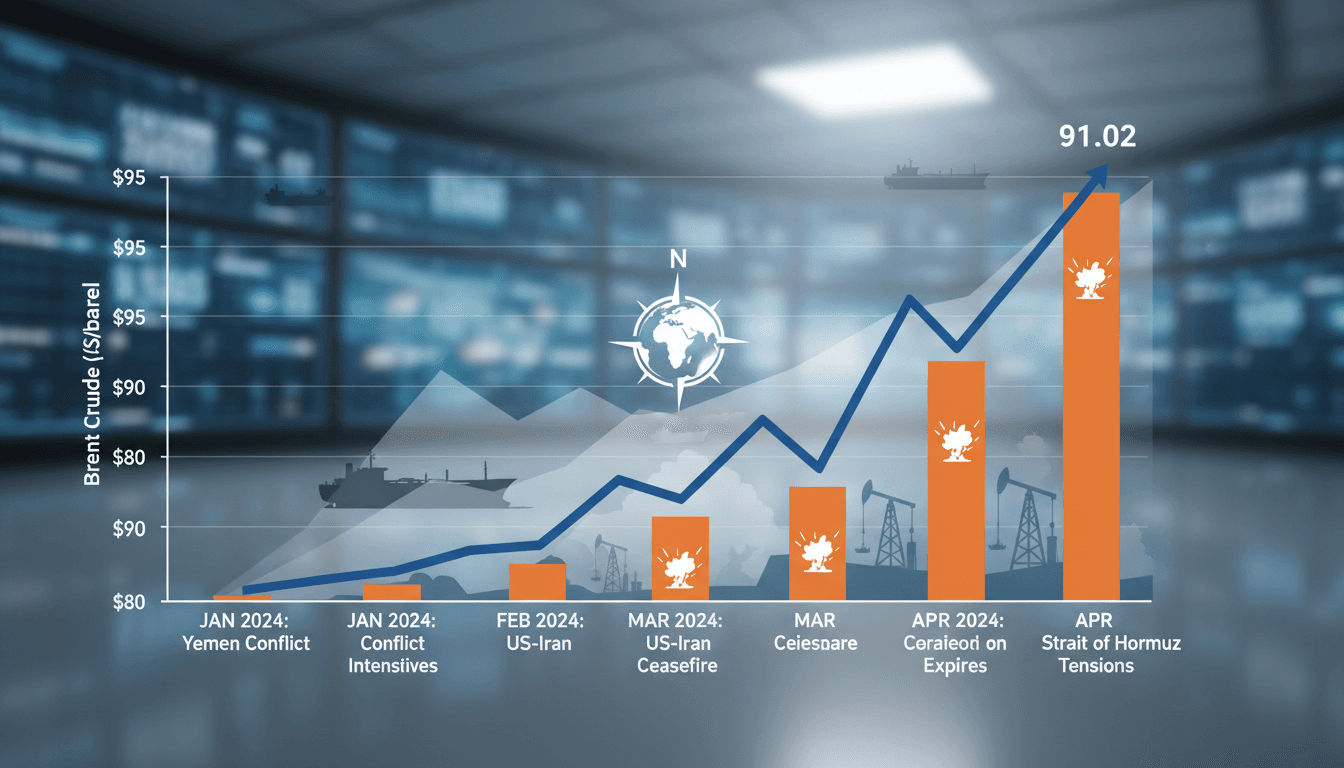
Here's what it means for you.
As oil prices climb, expect higher fuel and utility costs impacting your daily expenses.
Why it matters
Rising Brent crude prices signal increased energy costs globally, affecting inflation and consumer spending.
What happened (in 30 seconds)
- Brent crude oil futures settled at $91.02 per barrel on August 19, 2026, the highest in three weeks.
- Geopolitical tensions in the Middle East, particularly between the U.S. and Iran, have escalated supply concerns.
- West Texas Intermediate (WTI) also rose, reflecting broader market reactions to instability in oil-producing regions.
The context you actually need
- Tensions began in late February 2026, with military actions disrupting shipping in the Strait of Hormuz.
- A ceasefire between the U.S. and Iran expired in mid-August without renewal, leading to heightened risk premiums in oil markets.
- Previous de-escalation had allowed prices to stabilize, but renewed uncertainty has pushed them back up.
What's really happening
The recent surge in Brent crude prices to $91.02 per barrel is a direct response to escalating geopolitical tensions in the Middle East, particularly the U.S.-Iran conflict. This conflict, which has been ongoing since February 2026, has seen military actions and disruptions to shipping routes, notably in the critical Strait of Hormuz, through which a significant portion of the world's oil supply is transported.
The expiration of a 60-day ceasefire in mid-August 2026 has exacerbated these tensions, with Iran adopting a more aggressive stance and rejecting the extension of the interim deal. This has led to a market environment characterized by uncertainty and risk, prompting traders to adjust their positions in anticipation of potential supply disruptions. The result is a notable increase in oil prices, as traders factor in the likelihood of further instability in the region.
The implications of these price movements extend beyond the immediate market. Higher oil prices typically lead to increased costs for consumers, as fuel and energy prices rise. This can contribute to inflationary pressures, impacting everything from transportation costs to utility bills. In regions like Dubai, where residents are already facing elevated fuel and energy costs, the ripple effects of rising crude prices can strain household budgets and influence spending patterns.
Moreover, the dynamics of the oil market are influenced by OPEC+ producers, who may respond to these price movements by adjusting their production levels. If prices remain elevated, it could incentivize increased production from these countries, potentially stabilizing prices in the long term. However, the immediate outlook remains uncertain, as geopolitical tensions continue to loom large over the market.
In summary, the rise in Brent crude prices reflects a complex interplay of geopolitical factors and market reactions, with significant implications for consumers and the broader economy. As the situation evolves, stakeholders across various sectors will need to monitor developments closely to navigate the potential impacts on energy costs and economic stability.
Who feels it first (and how)
- Consumers: Higher fuel and utility costs directly affect household budgets.
- Transport Sector: Increased fuel prices lead to higher operational costs for logistics and transportation companies.
- Energy Companies: Fluctuations in crude prices impact profitability and investment strategies.
- Investors: Energy sector stocks may see volatility, influencing portfolio performance.
What to watch next
- Diplomatic developments: Any new negotiations or agreements between the U.S. and Iran could stabilize or further disrupt oil prices.
- OPEC+ production decisions: Changes in output levels from OPEC+ could influence supply and pricing dynamics in the coming months.
- Global economic indicators: Watch for inflation rates and consumer spending trends, as rising energy costs may impact broader economic conditions.
Brent crude prices have surpassed $91 per barrel due to geopolitical tensions.
Higher energy costs will affect consumer spending and inflation rates.
The duration and extent of geopolitical tensions and their impact on oil supply.
Frequently Asked Questions
- Why it matters?
- Rising Brent crude prices signal increased energy costs globally, affecting inflation and consumer spending.
- What happened (in 30 seconds)?
- Brent crude oil futures settled at $91.02 per barrel on August 19, 2026, the highest in three weeks. Geopolitical tensions in the Middle East, particularly between the U.S. and Iran, have escalated supply concerns. West Texas Intermediate (WTI) also rose, reflecting broader market reactions to instability in oil-producing regions.
- What's really happening?
- The recent surge in Brent crude prices to $91.02 per barrel is a direct response to escalating geopolitical tensions in the Middle East, particularly the U.S.-Iran conflict. This conflict, which has been ongoing since February 2026, has seen military actions and disruptions to shipping routes, notably in the critical Strait of Hormuz, through which a significant portion of the world's oil supply is transported. The expiration of a 60-day ceasefire in mid-August 2026 has exacerbated these tensi
- Who feels it first (and how)?
- Consumers: Higher fuel and utility costs directly affect household budgets. Transport Sector: Increased fuel prices lead to higher operational costs for logistics and transportation companies. Energy Companies: Fluctuations in crude prices impact profitability and investment strategies. Investors: Energy sector stocks may see volatility, influencing portfolio performance.
- What to watch next?
- Diplomatic developments: Any new negotiations or agreements between the U.S. and Iran could stabilize or further disrupt oil prices. OPEC+ production decisions: Changes in output levels from OPEC+ could influence supply and pricing dynamics in the coming months. Global economic indicators: Watch for inflation rates and consumer spending trends, as rising energy costs may impact broader economic conditions.
Sports reporting with a focus on Saudi and regional competitions.
"Okaz sports coverage is broad and audience-friendly, with strong attention to Saudi teams and leagues."
— A47 Editor
برنت يتجاوز 91 دولاراً مع استمرار توترات الشرق الأوسط
Oil prices have risen to their highest levels in three weeks, with Brent crude futures increasing by 15 cents to reach $91.02 per barrel, while West Texas Intermediate crude futures rose by 44 cents to $84.94 per barrel, amid ongoing tensions in the ...
Pan-Arab news coverage spanning politics, business, sports, and regional affairs.
"Asharq Al-Awsat reflects a broad Arab editorial perspective with strong attention to regional geopolitics."
— A47 Editor
النفط يتجاوز 91 دولاراً مع تراجع آمال السلام بين أميركا وإيران
Oil prices rose above $91 on Tuesday as hopes for a peace agreement to end the ongoing conflict in the Middle East diminished, particularly between the United States and Iran. This increase reflects the market's sensitivity to geopolitical tensions i...
Arabic-language coverage of international news and geopolitics.
"RT Arabic is a Russian state-funded outlet often criticized for promoting Kremlin-aligned narratives."
— A47 Editor
أسعار خام برنت تتجاوز 91 دولارا للبرميل مدفوعة بأنباء احتجاز إيران لناقلة نفط إماراتية في مضيق هرمز
Brent crude prices have surpassed $91 per barrel for the first time since July 31, driven by reports of Iran's seizure of an Emirati oil tanker in the Strait of Hormuz. This incident has raised concerns over maritime security in a critical oil transi...
Arabic-language economic and business reporting with strong UAE market relevance.
"Emarat Al Youm business coverage often centers UAE property, banking, consumer issues, and economic policy."
— A47 Editor
ارتفاع طفيف بأسعار النفط و"برنت" يسجل 88.72 دولار للبرميل ارتفاع طفيف بأسعار النفط و"برنت" يسجل 88.72 دولار للبرميل
Oil prices experienced a slight increase during early Asian trading today, with Brent crude futures rising by 20 cents, or 0.2%, reaching $88.72 per barrel. This uptick reflects ongoing fluctuations in the global oil market.