
US National Debt Exceeds 100% of GDP Amid Rising Military Spending
Here's what it means for you.
As a global investor or professional, understanding the implications of US fiscal policies can help you navigate potential market volatility.
Why it matters
The rising US national debt and military expenditures signal potential shifts in global economic stability and investment strategies.
What happened (in 30 seconds)
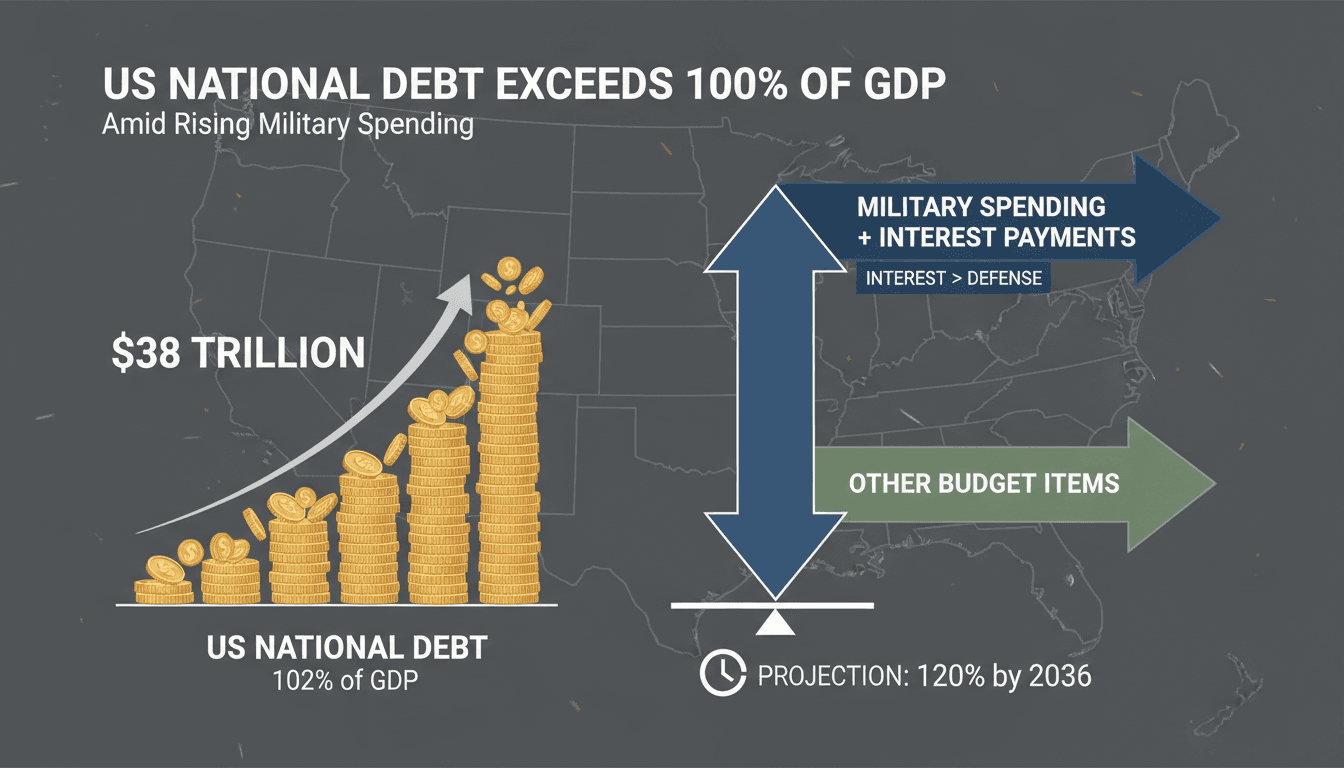
- US national debt surpassed 100% of GDP in early 2026, reaching approximately $37-39 trillion.
- Interest payments on the debt now exceed annual defense spending, becoming the second-largest budget item after Social Security.
- Projections indicate that debt held by the public could rise to 120% of GDP by 2036, driven by persistent deficits and compounding interest costs.
The context you actually need
- Historical trends show that US federal debt typically rises during armed conflicts and economic crises, with significant increases during the Civil War, World Wars, and post-2001 military engagements.
- Current fiscal policies have led to structural imbalances, with tax policies and entitlement spending contributing to a mismatch between revenues and expenditures.
- Global implications arise as the US dollar remains a dominant currency, affecting international trade and investment flows, particularly for countries like the UAE.
What's really happening
By 2026, the US national debt has reached a critical threshold, exceeding 100% of GDP for the first time in history. This milestone reflects a culmination of factors, including sustained military expenditures, rising interest rates, and structural fiscal imbalances. The Congressional Budget Office (CBO) projects that if current policies remain unchanged, the debt held by the public could escalate to 120% of GDP by 2036.
The primary driver of this debt accumulation is the persistent budget deficit, where government expenditures consistently outpace revenues. Military spending has played a significant role, particularly in the context of ongoing global conflicts and defense commitments. As interest payments on the national debt now surpass annual defense spending, they have become the second-largest budget item after Social Security. This shift indicates a critical juncture for US fiscal policy, as rising interest costs may crowd out funding for other essential services and priorities.
The implications of this debt are far-reaching. For one, it constrains the federal government's fiscal flexibility, limiting its ability to respond to economic downturns or invest in infrastructure and social programs. Additionally, as the US continues to borrow, it may face higher borrowing costs, which could further exacerbate the debt situation.
Internationally, the ramifications are equally significant. Countries and investors holding US assets, including those in Dubai, may experience volatility in US Treasury yields and currency fluctuations. The reliance on dollar-denominated trade means that any instability in US fiscal sustainability could ripple through global markets, affecting investment flows and economic stability in regions heavily tied to the US economy.
Who feels it first (and how)
- Government policymakers: They face pressure to balance defense spending with other budget priorities.
- Investors: Those holding US Treasury bonds may see fluctuations in yields and prices.
- Global trade partners: Countries reliant on dollar-denominated trade could experience currency volatility.
- Taxpayers: Rising national debt may lead to increased taxes or reduced public services in the future.
- Military contractors: They may face uncertainty regarding future defense budgets and contracts.
What to watch next
- Interest rates: Watch for changes in Federal Reserve policy, as rising rates could further increase borrowing costs and impact fiscal sustainability.
- Budget proposals: Monitor upcoming federal budget proposals for indications of shifts in military spending and social program funding.
- Debt ceiling discussions: Pay attention to debates around raising the debt ceiling, which could signal political willingness to address fiscal imbalances.
The US national debt has surpassed 100% of GDP, with interest payments now exceeding defense spending.
Continued budget deficits will drive the debt-to-GDP ratio higher in the coming years.
The long-term impact of rising debt on economic growth and fiscal policy remains uncertain.
Frequently Asked Questions
- Why it matters?
- The rising US national debt and military expenditures signal potential shifts in global economic stability and investment strategies.
- What happened (in 30 seconds)?
- US national debt surpassed 100% of GDP in early 2026, reaching approximately $37-39 trillion. Interest payments on the debt now exceed annual defense spending, becoming the second-largest budget item after Social Security. Projections indicate that debt held by the public could rise to 120% of GDP by 2036, driven by persistent deficits and compounding interest costs.
- What's really happening?
- By 2026, the US national debt has reached a critical threshold, exceeding 100% of GDP for the first time in history. This milestone reflects a culmination of factors, including sustained military expenditures, rising interest rates, and structural fiscal imbalances. The Congressional Budget Office (CBO) projects that if current policies remain unchanged, the debt held by the public could escalate to 120% of GDP by 2036. The primary driver of this debt accumulation is the persistent budget defi
- Who feels it first (and how)?
- Government policymakers: They face pressure to balance defense spending with other budget priorities. Investors: Those holding US Treasury bonds may see fluctuations in yields and prices. Global trade partners: Countries reliant on dollar-denominated trade could experience currency volatility. Taxpayers: Rising national debt may lead to increased taxes or reduced public services in the future. Military contractors: They may face uncertainty regarding future defense budgets and contracts.
- What to watch next?
- Interest rates: Watch for changes in Federal Reserve policy, as rising rates could further increase borrowing costs and impact fiscal sustainability. Budget proposals: Monitor upcoming federal budget proposals for indications of shifts in military spending and social program funding. Debt ceiling discussions: Pay attention to debates around raising the debt ceiling, which could signal political willingness to address fiscal imbalances.
Arabic-language coverage of international news and geopolitics.
"RT Arabic is a Russian state-funded outlet often criticized for promoting Kremlin-aligned narratives."
— A47 Editor
الاقتصاد الأمريكي.. أعباء الحرب والديون
The U.S. national debt has surpassed the $40 trillion mark for the first time in the country's history, highlighting the significant financial burdens stemming from ongoing military engagements and other expenditures.
Global business headlines with AI angles.
"General business outlet that frequently covers AI."
— A47 Editor
The U.S. Debt Just Crossed $40 Trillion. Here's Where Americans Could Feel It First.
The U.S. national debt has surpassed $40 trillion for the first time, raising concerns about the implications of continued borrowing by the government. This significant milestone highlights the increasing financial burden on federal revenue, as more ...
Business and tech news excluding paywalled content.
"High-volume business/tech outlet with frequent AI coverage."
— A47 Editor
What's happening with the national debt — and how it could affect your wallet
America's national debt has surpassed $40 trillion, a milestone reached earlier than expected, largely due to declining federal revenues following significant political decisions. This surge in debt raises concerns about rising interest costs, which ...