
Iran Faces Escalating Fuel Shortages Amid Sanctions and Subsidy Debates
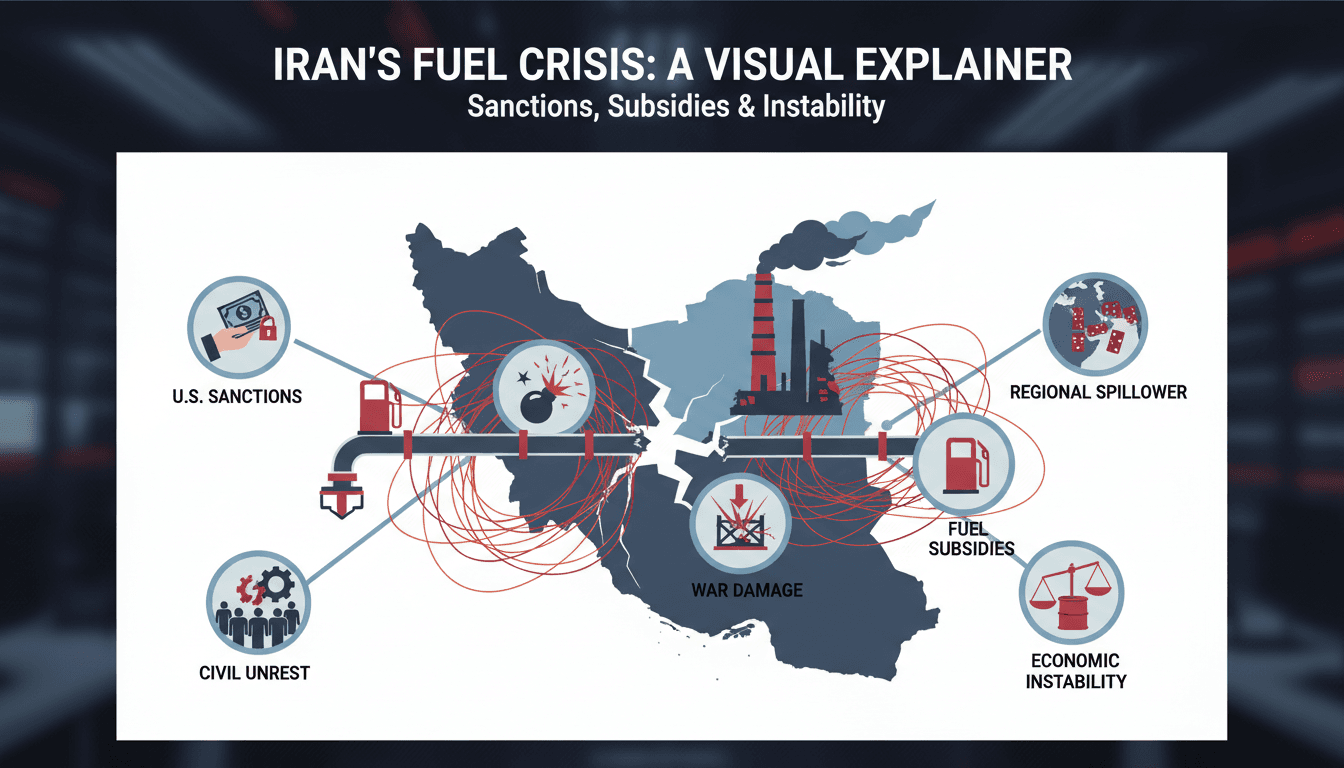
Here's what it means for you.
The ongoing fuel crisis in Iran could have ripple effects on global oil markets and regional stability.
Why it matters
The Iranian fuel subsidy crisis highlights vulnerabilities in energy supply chains and the potential for civil unrest, impacting global economic conditions.
What happened (in 30 seconds)
- Fuel shortages: As of late August 2026, Iran faces a daily gasoline shortfall of 15 million liters against a demand of 135 million liters.
- Government response: President Masoud Pezeshkian acknowledged the unsustainability of current subsidies but halted price increases to avoid protests reminiscent of 2019.
- U.S. sanctions: A naval blockade and expanded sanctions have exacerbated the crisis, damaging refining infrastructure and limiting imports.
The context you actually need
- Historical reliance: Iran has long imported gasoline due to limited refining capacity, making it vulnerable to external shocks.
- Economic strain: Hyperinflation and rial devaluation have strained government finances, complicating subsidy management.
- Protest history: Previous protests over fuel price hikes in 2019 and early 2026 have created a cautious atmosphere among officials regarding any price adjustments.
What's really happening
The fuel crisis in Iran is a complex interplay of sanctions, economic mismanagement, and geopolitical tensions. Since the outbreak of war on February 28, 2026, U.S.-Israeli strikes have severely damaged Iran's refining and storage infrastructure. This has led to a significant reduction in domestic fuel production, creating a daily shortfall of 15 million liters against a demand of 135 million liters, as reported by the Iranian Energy Consumption Improvement Organization.
The Iranian government has historically maintained low fuel prices through heavy subsidies, which have kept prices between 15,000 and 50,000 rials per liter. However, these subsidies are becoming increasingly unsustainable amid hyperinflation and the devaluation of the rial. The government is now facing a dilemma: continue subsidizing fuel at a loss or risk civil unrest by increasing prices. President Pezeshkian has publicly acknowledged the unsustainability of the current system, indicating a shift in policy may be necessary.
Despite the acknowledgment of the crisis, the government has opted to halt a pilot price increase in Kerman province due to fears of public backlash. This decision reflects the government's acute awareness of the potential for unrest, given the memories of violent protests in 2019 over sudden price hikes. The current situation has led to long queues at gas stations in Tehran, with citizens reporting waits of two hours or more, prompting panic buying.
The U.S. has intensified its sanctions, further isolating Iran economically. The Iranian government is exploring consumption cuts and alternative measures to manage the crisis without immediate price changes. However, the ongoing shortages and economic discontent could lead to a tipping point, where citizens may feel compelled to protest against the government’s handling of the crisis.
Who feels it first (and how)
- Iranian citizens: Drivers and families are directly impacted by fuel shortages and rising living costs.
- Local businesses: Small businesses reliant on transportation and logistics face increased operational costs.
- Government officials: Policymakers are under pressure to manage public discontent while navigating economic sanctions.
- Regional economies: Neighboring countries may experience economic ripple effects due to instability in Iran.
What to watch next
- Fuel price adjustments: Monitor any announcements regarding fuel price changes, as they could trigger public protests.
- Sanction developments: Keep an eye on U.S. sanctions and their impact on Iran's economy and fuel supply.
- Public sentiment: Watch for signs of civil unrest or protests, which could escalate if fuel shortages continue.
Iran is experiencing significant fuel shortages due to sanctions and war damage.
The government will continue to face pressure to adjust fuel prices or implement consumption cuts.
The potential for widespread protests and their impact on the Iranian government remains uncertain.
Frequently Asked Questions
- Why it matters?
- The Iranian fuel subsidy crisis highlights vulnerabilities in energy supply chains and the potential for civil unrest, impacting global economic conditions.
- What happened (in 30 seconds)?
- Fuel shortages: As of late August 2026, Iran faces a daily gasoline shortfall of 15 million liters against a demand of 135 million liters. Government response: President Masoud Pezeshkian acknowledged the unsustainability of current subsidies but halted price increases to avoid protests reminiscent of 2019. U.S. sanctions: A naval blockade and expanded sanctions have exacerbated the crisis, damaging refining infrastructure and limiting imports.
- What's really happening?
- The fuel crisis in Iran is a complex interplay of sanctions, economic mismanagement, and geopolitical tensions. Since the outbreak of war on February 28, 2026, U.S.-Israeli strikes have severely damaged Iran's refining and storage infrastructure. This has led to a significant reduction in domestic fuel production, creating a daily shortfall of 15 million liters against a demand of 135 million liters, as reported by the Iranian Energy Consumption Improvement Organization. The Iranian government
- Who feels it first (and how)?
- Iranian citizens: Drivers and families are directly impacted by fuel shortages and rising living costs. Local businesses: Small businesses reliant on transportation and logistics face increased operational costs. Government officials: Policymakers are under pressure to manage public discontent while navigating economic sanctions. Regional economies: Neighboring countries may experience economic ripple effects due to instability in Iran.
- What to watch next?
- Fuel price adjustments: Monitor any announcements regarding fuel price changes, as they could trigger public protests. Sanction developments: Keep an eye on U.S. sanctions and their impact on Iran's economy and fuel supply. Public sentiment: Watch for signs of civil unrest or protests, which could escalate if fuel shortages continue.
Arabic-language coverage of political affairs and current events.
"Okaz political coverage typically follows mainstream Saudi framing on national and regional affairs."
— A47 Editor
أزمة الوقود تتفاقم.. هل يشعل رفع الدعم شرارة الاحتجاجات في إيران؟
The fuel crisis in Iran is worsening, with long queues forming at gas stations in Tehran as drivers wait for hours to obtain gasoline. This situation is exacerbated by tightening US sanctions and an ongoing economic war, leading officials to consider...
English-language reporting on Saudi politics, policy, and society.
"Saudi Gazette reflects mainstream Saudi institutional perspectives."
— A47 Editor
Iran’s gas lines are growing, but there’s no sign of its leaders bowing to US pressure
Iran is experiencing significant fuel shortages, with long lines forming at gas stations in Tehran as the United States intensifies its economic blockade and threatens further sanctions. Reports indicate that drivers are preemptively filling their ta...
Regional coverage and analysis focused on politics, diplomacy, and business across the Middle East.
"Al-Monitor is known for analytical reporting on Middle East politics and policy developments."
— A47 Editor
Iranians queue for petrol after US announces new sanctions
Long queues formed at petrol stations in Tehran as Iranians rushed to secure fuel following the announcement of new U.S. sanctions aimed at pressuring Iran. These sanctions come amid a military stalemate and stalled peace talks, exacerbating the alre...