
US Treasury Proposes Restrictions on Banque Misr UAE Branches Over Alleged Iranian Financial Ties
Here's what it means for you.
If you conduct business in the UAE, be prepared for potential disruptions in banking services linked to Banque Misr.
Why it matters
This proposal could significantly impact financial transactions between the UAE and Egypt, affecting businesses and individuals reliant on Banque Misr's services.
What happened (in 30 seconds)
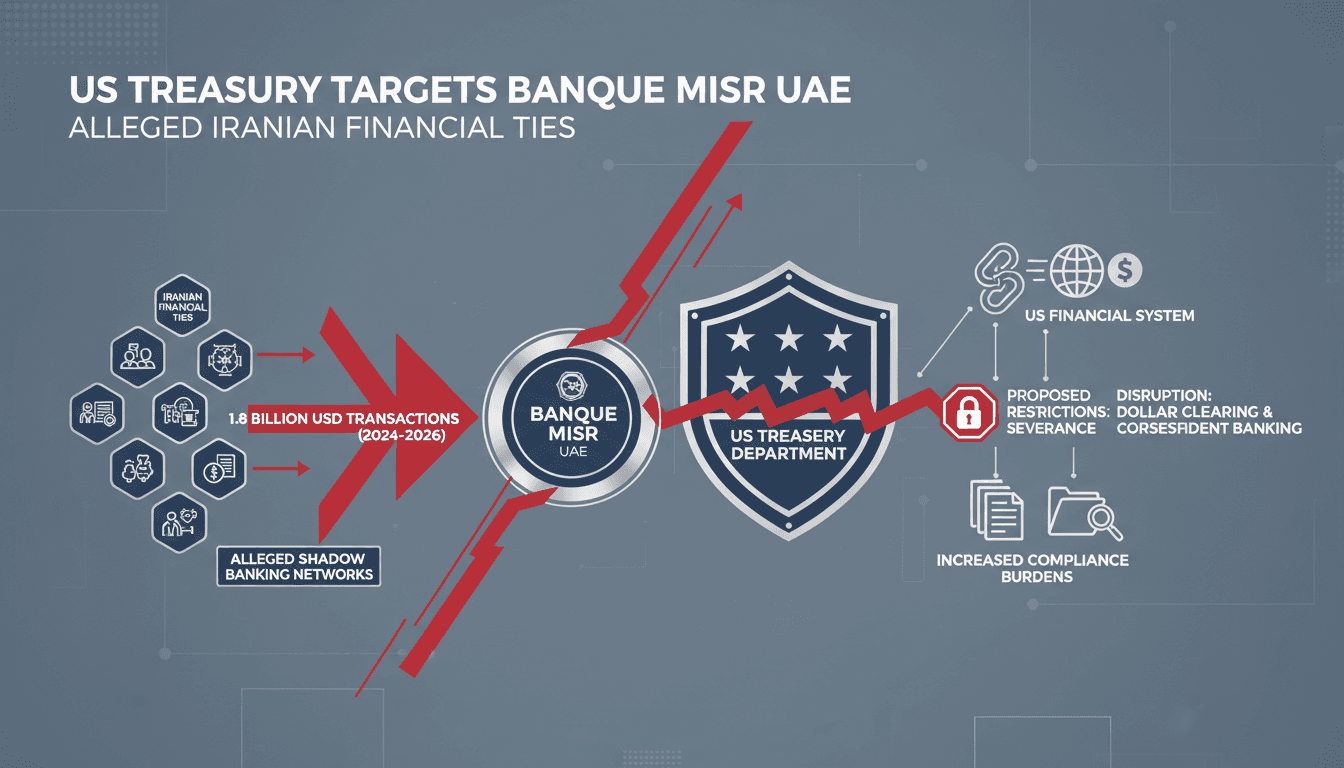
- On August 28, 2026, the US Treasury proposed measures to sever Banque Misr UAE branches from the US financial system.
- The action targets approximately 1.8 billion USD in transactions linked to suspected Iranian shadow banking networks.
- This is part of the Trump administration's Operation Economic Outcast campaign aimed at isolating Iran's economy.
The context you actually need
- Banque Misr, Egypt's second-largest bank, has been identified as a conduit for illicit Iranian finance through its UAE branches.
- The proposed restrictions would block US financial institutions from maintaining correspondent accounts for these branches.
- This follows a broader US strategy to cut Iran's access to the dollar system, intensifying scrutiny on third-party facilitators.
What's really happening
On August 28, 2026, the US Treasury Department proposed special measures under the USA PATRIOT Act, designating Banque Misr's UAE branches as a primary money laundering concern. This designation stems from the processing of approximately 1.8 billion USD in transactions linked to 103 companies suspected of ties to Iranian shadow banking networks between January 2024 and June 2026. The proposed measures would prohibit US financial institutions from opening or maintaining correspondent accounts for these branches, effectively cutting off their access to the US dollar system.
This action is part of a larger strategy known as Operation Economic Outcast, which aims to isolate Iran economically by penalizing third-party facilitators. The Trump administration's renewed maximum pressure campaign against Iran has intensified scrutiny on financial institutions that may inadvertently support Iranian activities. By targeting Banque Misr, the US Treasury is sending a clear message to other banks and financial entities about the risks associated with engaging in transactions that could be linked to Iran.
The implications of this proposal extend beyond just Banque Misr. The UAE, a significant financial hub, could see disruptions in dollar clearing, correspondent banking, and trade finance services. This could lead to increased compliance burdens for UAE-based entities and residents conducting business with Banque Misr, as they may need to seek alternative banking arrangements to avoid secondary sanctions risks. The potential fallout could also affect the broader financial landscape in the region, as banks and businesses reassess their relationships with Egyptian financial institutions.
As the 30-day public comment period unfolds, the financial community is closely monitoring the situation. The lack of an immediate official response from the Egyptian government suggests a cautious approach, but the potential for heightened scrutiny on Egyptian banks' regional operations is evident. The proposed restrictions could lead to shifts in financial flows between the UAE and Egypt, impacting trade and investment dynamics.
Who feels it first (and how)
- Businesses in the UAE: Companies relying on Banque Misr for transactions may face disruptions and increased compliance costs.
- Egyptian expatriates: Individuals sending remittances through Banque Misr could experience delays or changes in service.
- Financial institutions: Banks in the UAE may need to reassess their relationships with Banque Misr and implement stricter compliance measures.
What to watch next
- Public comments: Monitor the responses during the 30-day comment period, as they could influence the final decision on the proposed measures.
- Market reactions: Watch for shifts in financial flows between the UAE and Egypt, particularly in banking and trade sectors.
- Regulatory changes: Keep an eye on potential adjustments in compliance requirements for banks operating in the region.
The US Treasury has proposed restrictions on Banque Misr's UAE branches.
Increased scrutiny on Egyptian banks' operations in the UAE and potential shifts in financial flows.
The long-term impact on UAE-Egypt financial relations and how businesses will adapt to these changes.
Frequently Asked Questions
- Why it matters?
- This proposal could significantly impact financial transactions between the UAE and Egypt, affecting businesses and individuals reliant on Banque Misr's services.
- What happened (in 30 seconds)?
- On August 28, 2026, the US Treasury proposed measures to sever Banque Misr UAE branches from the US financial system. The action targets approximately 1.8 billion USD in transactions linked to suspected Iranian shadow banking networks. This is part of the Trump administration's Operation Economic Outcast campaign aimed at isolating Iran's economy.
- What's really happening?
- On August 28, 2026, the US Treasury Department proposed special measures under the USA PATRIOT Act, designating Banque Misr's UAE branches as a primary money laundering concern. This designation stems from the processing of approximately 1.8 billion USD in transactions linked to 103 companies suspected of ties to Iranian shadow banking networks between January 2024 and June 2026. The proposed measures would prohibit US financial institutions from opening or maintaining correspondent accounts for
- Who feels it first (and how)?
- Businesses in the UAE: Companies relying on Banque Misr for transactions may face disruptions and increased compliance costs. Egyptian expatriates: Individuals sending remittances through Banque Misr could experience delays or changes in service. Financial institutions: Banks in the UAE may need to reassess their relationships with Banque Misr and implement stricter compliance measures.
- What to watch next?
- Public comments: Monitor the responses during the 30-day comment period, as they could influence the final decision on the proposed measures. Market reactions: Watch for shifts in financial flows between the UAE and Egypt, particularly in banking and trade sectors. Regulatory changes: Keep an eye on potential adjustments in compliance requirements for banks operating in the region.
Arabic-language coverage of international news and geopolitics.
"RT Arabic is a Russian state-funded outlet often criticized for promoting Kremlin-aligned narratives."
— A47 Editor
إدارة ترامب تعتزم معاقبة بنك مصري بسبب تعاملات مع إيران
The U.S. Treasury Department plans to revoke the access of branches of Banque Misr in the United Arab Emirates to the U.S. financial system due to transactions with Iran, as reported by the Financial Times.
Regional coverage and analysis focused on politics, diplomacy, and business across the Middle East.
"Al-Monitor is known for analytical reporting on Middle East politics and policy developments."
— A47 Editor
US issues fresh Iran-related sanctions as war marks six months
The United States has imposed new Iran-related sanctions, targeting an Egyptian bank and revoking financial access for Banque Misr’s branches in the UAE, as part of an ongoing economic campaign against Tehran. This announcement follows a warning from...
Pan-Arab political news and analysis.
"Al-Quds Al-Arabi is a London-based Arabic newspaper known for political coverage."
— A47 Editor
واشنطن تفرض عقوبات جديدة على إيران.. وتقيّد مصرفا مصريا بسبب تعاملاته مع طهران
The United States imposed new sanctions related to Iran on Friday, following a warning from Treasury Secretary Scott Pisent about further actions amid ongoing conflict. The sanctions target an individual connected to Iran's Bank Melli and an entity b...