
Fed Chair Warsh Indicates Possible Interest Rate Hikes Amid Persistent Inflation
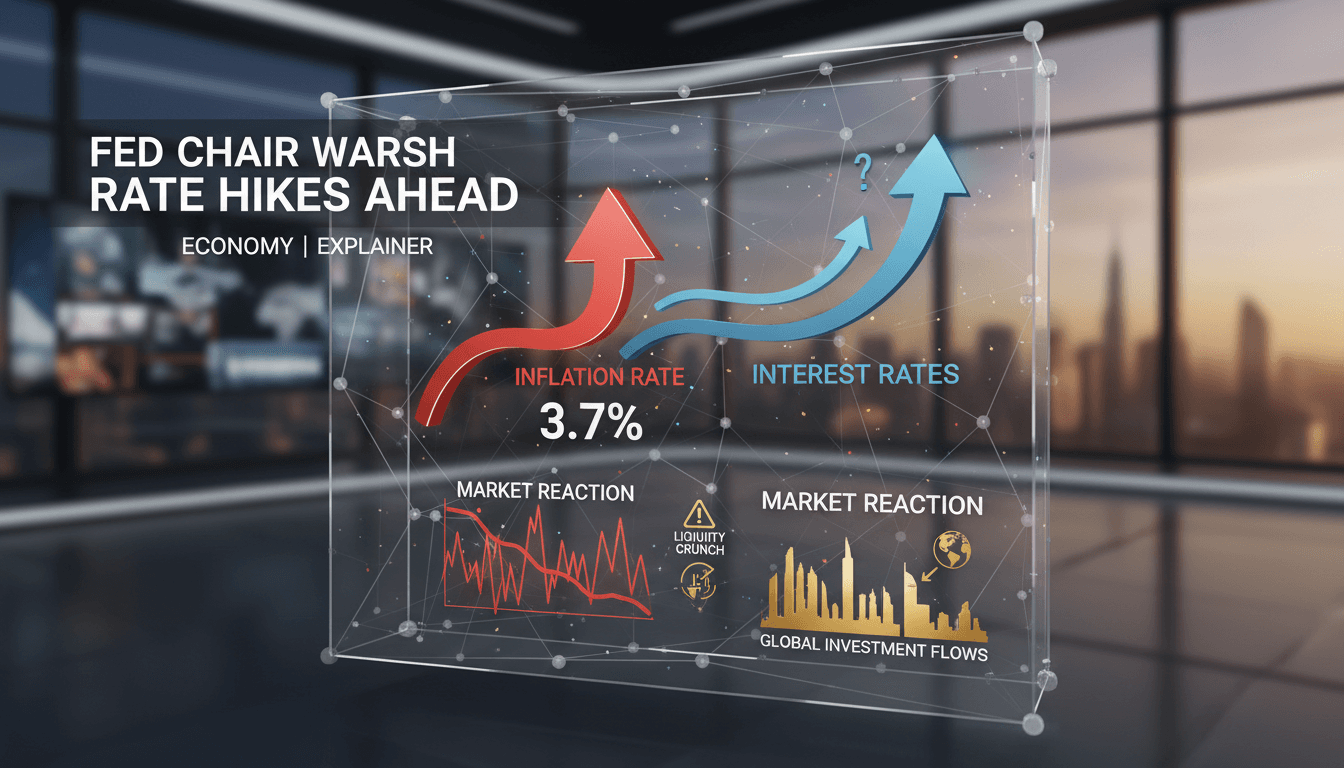
Here's what it means for you.
If inflation remains stubbornly high, your borrowing costs could rise, impacting everything from mortgages to business loans.
Why it matters
Persistent inflation above the Federal Reserve's target could lead to higher interest rates, affecting economic stability and consumer spending.
What happened (in 30 seconds)
- Warsh signaled potential rate hikes during his keynote at the Jackson Hole Economic Symposium if inflation does not return to the 2% target.
- Current inflation stands at 3.7%, significantly above the Fed's goal, prompting market speculation about a September rate increase.
- Market reactions included a rise in the U.S. dollar and Treasury yields, reflecting increased expectations for tighter monetary policy.
The context you actually need
- Inflation has exceeded the Fed's target for over five years, with only modest improvements noted in the last two years.
- The Fed's policy rate has remained stable at 3.50%-3.75% since December 2025, indicating a cautious approach to monetary tightening.
- Warsh's previous communications were criticized for lacking clarity on immediate policy, making his recent remarks particularly impactful.
What's really happening
Federal Reserve Chair Kevin Warsh's address at the Jackson Hole Economic Symposium on August 28, 2026, has significant implications for monetary policy and the broader economy. With inflation stubbornly hovering at 3.7%, well above the Fed's 2% target, Warsh's comments reflect a growing urgency within the central bank to address inflationary pressures. His acknowledgment that short-term interest rates are the primary tool for achieving the Fed's dual mandate of price stability and maximum employment underscores the central bank's commitment to controlling inflation.
Warsh's remarks come at a time when economic growth remains resilient, and labor markets are stable. However, the persistent inflation rate indicates that the underlying trends are not improving as hoped. Approximately half of the items in the Personal Consumption Expenditures (PCE) index are rising at rates above 3% annually, suggesting that inflation expectations could become unanchored if not addressed promptly. This scenario poses a risk not only to consumer purchasing power but also to the overall economic stability.
The market's immediate reaction to Warsh's speech was telling; the probability of a rate hike in September surged from around 40% to 55%. This shift indicates that investors are increasingly pricing in the possibility of tighter monetary policy in response to inflation concerns. Warsh's avoidance of explicit forward guidance, while emphasizing the need for "work to do" in terms of disinflation, leaves room for interpretation and speculation among market participants.
The implications of potential rate hikes extend beyond the U.S. economy. Elevated interest rates could strengthen the U.S. dollar, impacting global liquidity and commodity prices. For regions like Dubai, this could mean higher borrowing costs for real estate investments and pressure on the stability of the AED-USD peg. As the Fed navigates these complex dynamics, the balance between fostering economic growth and controlling inflation will be critical.
Who feels it first (and how)
- Homebuyers: Higher interest rates could increase mortgage costs, making home purchases less affordable.
- Businesses: Companies relying on loans for expansion may face increased borrowing costs, impacting growth plans.
- Investors: Changes in interest rates can affect stock and bond markets, influencing investment strategies.
- Consumers: Rising rates may lead to higher prices for goods and services, reducing disposable income.
What to watch next
- Inflation data releases: Upcoming reports on inflation will be crucial in determining the Fed's next steps and market expectations.
- Federal Reserve meetings: The outcomes of future meetings will provide insights into the Fed's policy direction and potential rate adjustments.
- Market reactions: Observing how financial markets respond to economic data and Fed communications will indicate investor sentiment and economic outlook.
Inflation is currently at 3.7%, above the Fed's target.
The Fed may raise interest rates if inflation does not show significant improvement.
The long-term impact of potential rate hikes on economic growth and consumer behavior remains uncertain.
Frequently Asked Questions
- Why it matters?
- Persistent inflation above the Federal Reserve's target could lead to higher interest rates, affecting economic stability and consumer spending.
- What happened (in 30 seconds)?
- Warsh signaled potential rate hikes during his keynote at the Jackson Hole Economic Symposium if inflation does not return to the 2% target. Current inflation stands at 3.7%, significantly above the Fed's goal, prompting market speculation about a September rate increase. Market reactions included a rise in the U.S. dollar and Treasury yields, reflecting increased expectations for tighter monetary policy.
- What's really happening?
- Federal Reserve Chair Kevin Warsh's address at the Jackson Hole Economic Symposium on August 28, 2026, has significant implications for monetary policy and the broader economy. With inflation stubbornly hovering at 3.7%, well above the Fed's 2% target, Warsh's comments reflect a growing urgency within the central bank to address inflationary pressures. His acknowledgment that short-term interest rates are the primary tool for achieving the Fed's dual mandate of price stability and maximum employ
- Who feels it first (and how)?
- Homebuyers: Higher interest rates could increase mortgage costs, making home purchases less affordable. Businesses: Companies relying on loans for expansion may face increased borrowing costs, impacting growth plans. Investors: Changes in interest rates can affect stock and bond markets, influencing investment strategies. Consumers: Rising rates may lead to higher prices for goods and services, reducing disposable income.
- What to watch next?
- Inflation data releases: Upcoming reports on inflation will be crucial in determining the Fed's next steps and market expectations. Federal Reserve meetings: The outcomes of future meetings will provide insights into the Fed's policy direction and potential rate adjustments. Market reactions: Observing how financial markets respond to economic data and Fed communications will indicate investor sentiment and economic outlook.
Macro commentary, policy analysis, growth/inflation themes, and global outlooks.
"Contextual macro coverage that complements day-to-day market headlines."
— A47 Editor
Warsh signals Fed may need to raise rates if above-target inflation persists
Federal Reserve Chairman Kevin Warsh indicated that the central bank may need to raise interest rates if inflation remains above target levels, reflecting ongoing concerns about price stability. This statement comes amid rising market anxiety and a n...
UAE-based English-language newspaper covering regional politics, economics, and global affairs.
"The National reflects Emirati policy perspectives while maintaining international editorial standards."
— A47 Editor
Warsh says US Fed has 'work to do' if inflation remains stubborn
Kevin Warsh, the new chair of the US Federal Reserve, stated that the central bank has significant work ahead if inflation remains persistent, following a decision to hold interest rates steady amid ongoing economic uncertainties.
Pan-Arab news coverage spanning politics, business, sports, and regional affairs.
"Asharq Al-Awsat reflects a broad Arab editorial perspective with strong attention to regional geopolitics."
— A47 Editor
في أقوى إشارة من نوعها... وارش يفتح الباب أمام رفع الفائدة الأميركية
Kevin Warsh, the Chair of the U.S. Federal Reserve, has issued the strongest indication to date regarding the potential need to raise interest rates. This statement marks a significant moment in the ongoing discussions about monetary policy and its i...
Arabic-language economic and business reporting with strong UAE market relevance.
"Emarat Al Youm business coverage often centers UAE property, banking, consumer issues, and economic policy."
— A47 Editor
وارش: التضخم يثير القلق والذكاء الاصطناعي يرسم ملامح السياسة النقدية وارش: التضخم يثير القلق والذكاء الاصطناعي يرسم ملامح السياسة النقدية
Kevin Warsh, the Chairman of the U.S. Federal Reserve, issued strong warnings regarding the trajectory of interest rates amidst rising inflation concerns. His remarks highlight the challenges faced by policymakers in navigating economic uncertainties...
Capitol Hill news, legislation, and policy insight.
"The Hill specializes in U.S. politics and policy, with a focus on Capitol Hill developments and a reputation for insider reporting."
— A47 Editor
Warsh indicates Fed could raise rates to cool inflation
Federal Reserve Chair Kevin Warsh indicated that the central bank may consider raising interest rates to combat persistent inflation, which he described as remaining too high. In a recent speech, Warsh emphasized the need for confidence that inflatio...
Oil, metals, and agriculture: supply/demand headlines, OPEC chatter, inventories, and price action.
"Solid tape for energy and metals traders tracking macro and micro catalysts."
— A47 Editor
Gold falls after Warsh flags persistent inflation, tighter Fed policy
Gold prices have declined following comments from Federal Reserve Chairman Kevin Warsh, who indicated that persistent inflation may lead to tighter monetary policy. This development has raised concerns among investors about the future trajectory of g...