
UK Faces Severe Fiscal Constraints Ahead of 2026 Budget
Here's what it means for you.
If you have financial ties to the UK, expect potential tax increases or spending cuts that could impact your investments and economic stability.
Why it matters
The UK's fiscal challenges could lead to significant economic adjustments, affecting both domestic and international markets.
What happened (in 30 seconds)
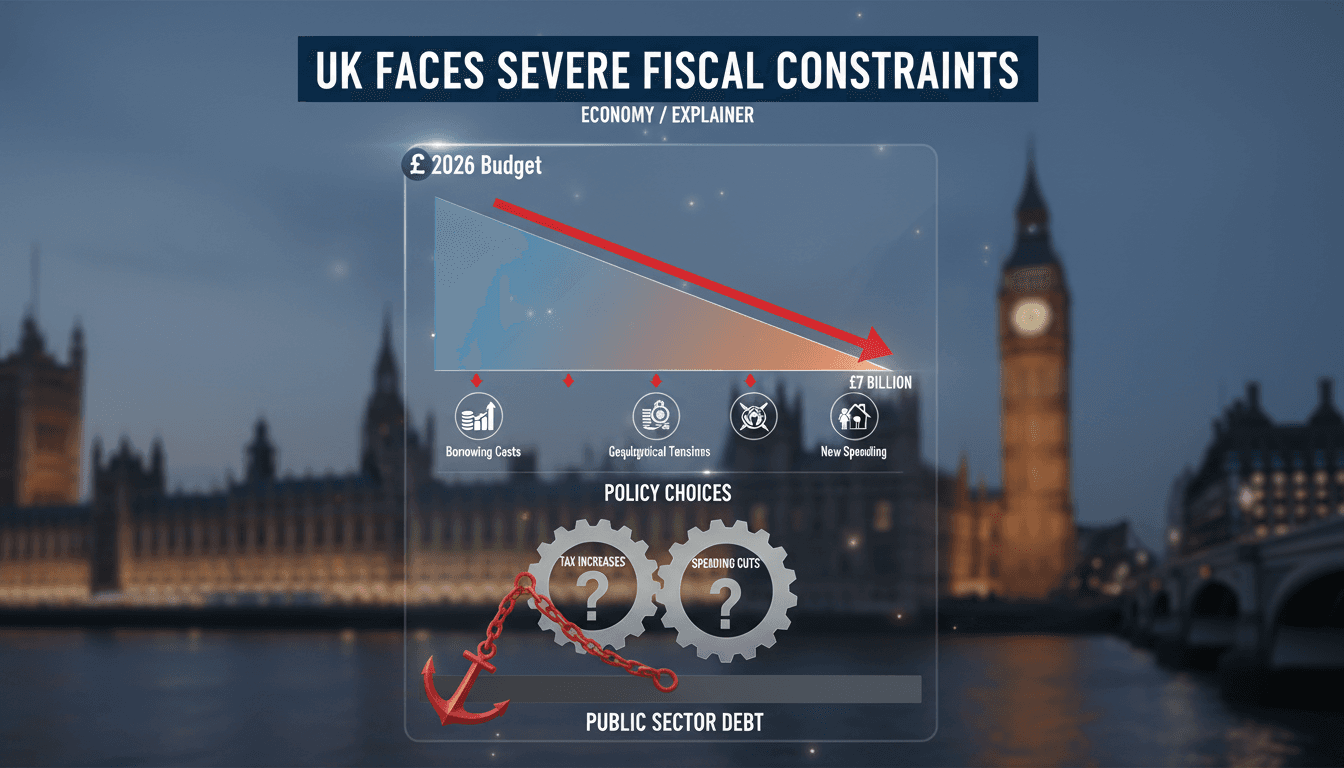
- UK fiscal authorities warned of a 'deeply uncomfortable' position ahead of the September 2026 budget, with headroom estimates dropping to £7 billion.
- Chancellor John Healey faces pressure to either raise taxes or cut spending due to rising borrowing costs and geopolitical tensions.
- Public sector net debt is projected to reach approximately 94-95% of GDP, raising sustainability concerns from the Office for Budget Responsibility (OBR).
The context you actually need
- Post-pandemic debt accumulation has left the UK with significant fiscal challenges, exacerbated by prior government policies that doubled national debt.
- Geopolitical factors, particularly the US-Iran conflict, have driven up oil prices and gilt yields, further straining fiscal resources.
- Recent Labour government commitments require a current budget surplus by 2028-29, putting additional pressure on fiscal policy decisions.
What's really happening
The UK's fiscal landscape is increasingly precarious as it grapples with a combination of high public debt and rising borrowing costs. The Office for Budget Responsibility (OBR) has highlighted that without significant fiscal tightening, the trajectory of public sector net debt is unsustainable. As of early September 2026, the headroom against fiscal rules has shrunk dramatically from £23.6 billion in March 2026 to an estimated £7 billion, primarily due to soaring interest rates and increased spending commitments.
The recent sell-off in global bond markets has pushed 30-year gilt yields to levels not seen since 1998, effectively halving the available fiscal space for the UK government. This situation is compounded by monthly borrowing data indicating that deficits in April 2026 exceeded forecasts by £4.9 billion, signaling a deeper fiscal strain than anticipated.
Chancellor John Healey is now under intense pressure to make difficult decisions regarding the budget. The looming budget in September 2026 will likely require either tax increases or spending cuts to align with fiscal sustainability goals. The Resolution Foundation and Capital Economics have warned that the minimum fiscal headroom of £7 billion may not be sufficient to meet the government's fiscal rules, which mandate a current budget surplus by 2028-29.
Moreover, the geopolitical landscape, particularly the ongoing US-Iran conflict, has implications for oil prices and, consequently, inflation. Higher oil prices can lead to increased costs for consumers and businesses, further complicating the fiscal situation. The government’s ability to navigate these challenges will be critical in maintaining economic stability and public confidence.
Who feels it first (and how)
- Taxpayers: Potential tax increases could directly impact disposable income.
- Public sector employees: Spending cuts may lead to job losses or reduced services.
- Investors: Increased borrowing costs could affect returns on UK-linked investments.
- Consumers: Rising inflation from higher oil prices may lead to increased living costs.
- Expatriates: Those with financial ties to the UK may need to adjust their financial planning.
What to watch next
- Interest rates: Monitor Bank of England decisions, as further rate hikes could exacerbate fiscal pressures.
- Budget announcements: The September 2026 budget will reveal the government's fiscal strategy and potential tax changes.
- Geopolitical developments: Ongoing tensions, particularly in the Middle East, could influence oil prices and economic stability.
The UK's fiscal headroom is critically low, estimated at £7 billion.
Tax increases or spending cuts will be necessary to meet fiscal sustainability goals.
The exact impact of geopolitical tensions on UK fiscal policy and economic conditions remains uncertain.
Frequently Asked Questions
- Why it matters?
- The UK's fiscal challenges could lead to significant economic adjustments, affecting both domestic and international markets.
- What happened (in 30 seconds)?
- UK fiscal authorities warned of a 'deeply uncomfortable' position ahead of the September 2026 budget, with headroom estimates dropping to £7 billion. Chancellor John Healey faces pressure to either raise taxes or cut spending due to rising borrowing costs and geopolitical tensions. Public sector net debt is projected to reach approximately 94-95% of GDP, raising sustainability concerns from the Office for Budget Responsibility (OBR).
- What's really happening?
- The UK's fiscal landscape is increasingly precarious as it grapples with a combination of high public debt and rising borrowing costs. The Office for Budget Responsibility (OBR) has highlighted that without significant fiscal tightening, the trajectory of public sector net debt is unsustainable. As of early September 2026, the headroom against fiscal rules has shrunk dramatically from £23.6 billion in March 2026 to an estimated £7 billion, primarily due to soaring interest rates and increased sp
- Who feels it first (and how)?
- Taxpayers: Potential tax increases could directly impact disposable income. Public sector employees: Spending cuts may lead to job losses or reduced services. Investors: Increased borrowing costs could affect returns on UK-linked investments. Consumers: Rising inflation from higher oil prices may lead to increased living costs. Expatriates: Those with financial ties to the UK may need to adjust their financial planning.
- What to watch next?
- Interest rates: Monitor Bank of England decisions, as further rate hikes could exacerbate fiscal pressures. Budget announcements: The September 2026 budget will reveal the government's fiscal strategy and potential tax changes. Geopolitical developments: Ongoing tensions, particularly in the Middle East, could influence oil prices and economic stability.
UK and global business, economy, and markets coverage.
"Sky News is often seen as a center-right outlet in the UK, known for rolling news and breaking business stories."
— A47 Editor
'Deeply uncomfortable' fiscal position facing UK ahead of crucial budget
The UK is currently facing a 'deeply uncomfortable' fiscal situation as government borrowing costs have surged to their highest levels in nearly 30 years, raising concerns ahead of the upcoming budget. Experts warn that this financial strain is exace...
UK politics, business, and social stories.
"Sky News is a UK-based 24-hour channel known for fast-breaking news and political coverage."
— A47 Editor
'Deeply uncomfortable' fiscal position facing UK ahead of crucial budget
The UK is currently facing a 'deeply uncomfortable' fiscal situation as government borrowing costs have surged to their highest levels in nearly 30 years, raising concerns ahead of the upcoming budget. Experts warn that this financial strain is exace...
Global political, business, and cultural coverage from WSJ international desks.
"The Wall Street Journal offers extensive international reporting with a reputation for financial insight and a center-right editorial stance."
— A47 Editor
UK Prime Minister Says Government Will Be ‘Grounded in Fiscal Responsibility’
UK Prime Minister Andy Burnham announced that the government will prioritize fiscal responsibility and adhere to its budget rules, aiming to cut debts amid rising financial pressures. This statement comes as the UK faces its highest long-term borrowi...
Political developments, policy debates, elections, and government affairs in the UK.
"BBC News is widely regarded as a reputable international news organization, known for its impartial tone and public service mandate."
— A47 Editor
UK long-term borrowing costs highest since 1998 ahead of October Budget
The UK is facing its highest long-term borrowing costs since 1998, creating significant pressure on Prime Minister Andy Burnham as he prepares for his first Budget in October. This financial strain comes amid a severe cost of living crisis affecting ...