
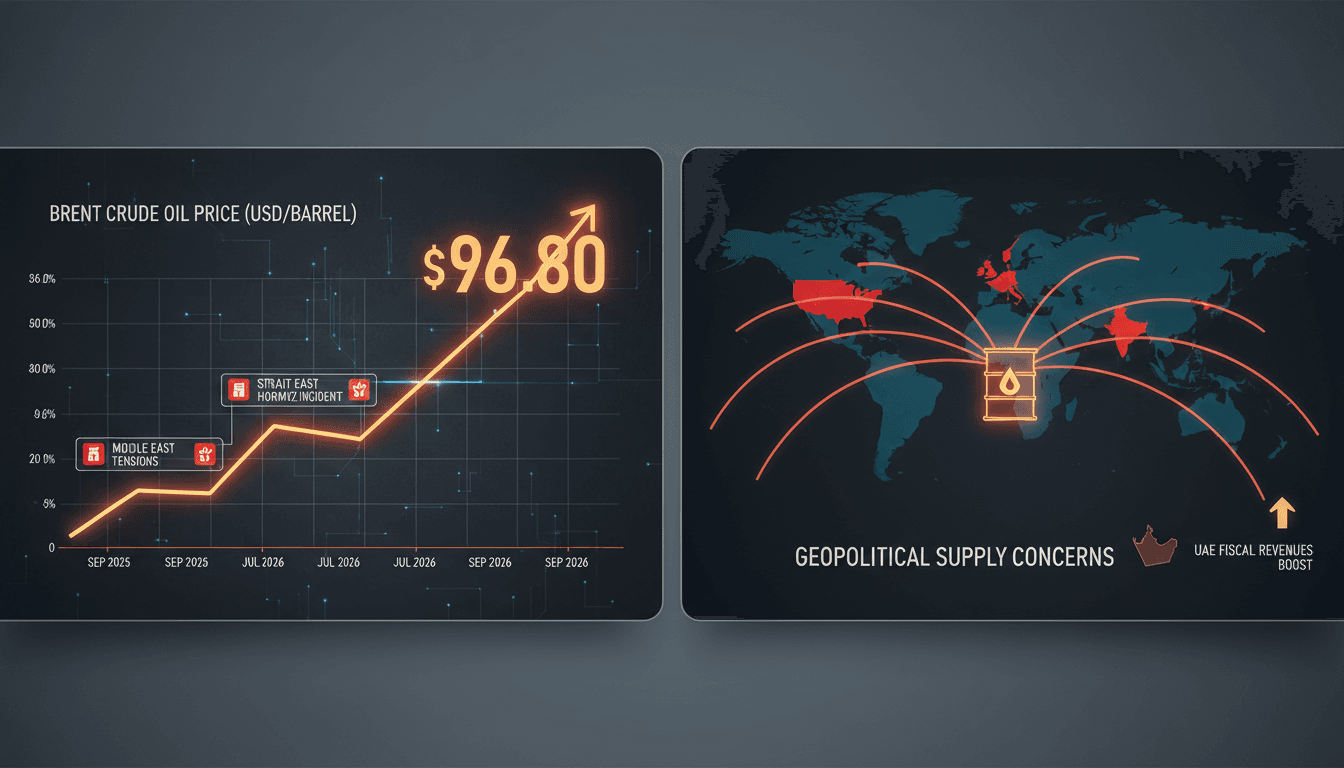
Brent Crude Oil Reaches $96.80 per Barrel Amid Geopolitical Tensions
Here's what it means for you.
Rising oil prices can directly affect your energy costs, impacting everything from fuel to consumer goods.
Why it matters
The surge in Brent crude prices reflects ongoing geopolitical tensions that can disrupt global supply chains and economic stability.
What happened (in 30 seconds)
- Brent crude oil reached $96.80 per barrel on September 7, 2026, marking a 0.54% daily gain and a 7.8% weekly increase.
- WTI crude also rose, closing at $92.14 per barrel, reflecting a 0.72% increase amid similar market dynamics.
- Geopolitical concerns in the Middle East, particularly around the Strait of Hormuz, continue to drive market volatility and supply risk premiums.
The context you actually need
- Escalating tensions between the US and Iran have raised concerns about oil supply disruptions, particularly through critical shipping routes.
- OPEC+ production policies and reduced flows from key waterways have tightened global supply expectations, contributing to price increases.
- Market sentiment remains bullish, with traders closely monitoring geopolitical developments that could further impact energy exports.
What's really happening
On September 7, 2026, Brent crude oil prices surged to $96.80 per barrel, extending a notable weekly gain of 7.8%. This increase is primarily driven by heightened geopolitical tensions in the Middle East, particularly concerning the Strait of Hormuz, a vital chokepoint for global oil shipments. The market's response reflects a complex interplay of supply and demand dynamics, influenced by both regional conflicts and broader economic conditions.
The recent rise in oil prices can be traced back to escalating military actions and diplomatic strains between the US and Iran, which have created a climate of uncertainty for oil traders. As these tensions persist, traders are increasingly willing to pay a premium for oil futures, anticipating potential disruptions in supply. This has led to a significant uptick in risk premiums across energy markets, as participants brace for possible escalations that could affect shipping routes and production levels.
Additionally, OPEC+ production policies have played a crucial role in shaping the current market landscape. With member countries adjusting their output in response to fluctuating demand and geopolitical pressures, the overall supply of oil has tightened. This has further compounded the upward pressure on prices, as reduced flows through key waterways have heightened concerns about availability.
The implications of rising oil prices extend beyond immediate market reactions. Higher oil prices can lead to increased revenues for national oil companies, particularly in oil-rich regions like the UAE. This can bolster government budgets and support diversification projects in sectors such as tourism, finance, and real estate. However, consumers may face higher costs for energy and goods, as businesses pass on increased expenses.
As the situation evolves, market participants will continue to monitor developments in the Middle East and their potential impact on energy exports. The interplay between geopolitical risks and market dynamics will remain a critical factor in determining the trajectory of oil prices in the coming weeks and months.
Who feels it first (and how)
- Consumers: Higher fuel prices will increase transportation and utility costs.
- Businesses: Companies reliant on oil for operations may see rising expenses, affecting pricing strategies.
- Investors: Energy sector stocks may experience volatility, impacting portfolios.
- Governments: Oil-exporting nations could benefit from increased revenues, while importers may face budgetary pressures.
What to watch next
- Geopolitical developments: Continued tensions in the Middle East could lead to further price fluctuations, impacting global supply.
- OPEC+ decisions: Any changes in production levels by OPEC+ could significantly influence market dynamics and pricing.
- Economic indicators: Watch for shifts in consumer spending and inflation rates, as rising oil prices may affect overall economic health.
Brent crude oil prices are currently rising due to geopolitical tensions.
Continued volatility in oil prices as market participants react to ongoing developments.
The long-term impact on global economic stability and consumer behavior remains uncertain.
Frequently Asked Questions
- Why it matters?
- The surge in Brent crude prices reflects ongoing geopolitical tensions that can disrupt global supply chains and economic stability.
- What happened (in 30 seconds)?
- Brent crude oil reached $96.80 per barrel on September 7, 2026, marking a 0.54% daily gain and a 7.8% weekly increase. WTI crude also rose, closing at $92.14 per barrel, reflecting a 0.72% increase amid similar market dynamics. Geopolitical concerns in the Middle East, particularly around the Strait of Hormuz, continue to drive market volatility and supply risk premiums.
- What's really happening?
- On September 7, 2026, Brent crude oil prices surged to $96.80 per barrel, extending a notable weekly gain of 7.8%. This increase is primarily driven by heightened geopolitical tensions in the Middle East, particularly concerning the Strait of Hormuz, a vital chokepoint for global oil shipments. The market's response reflects a complex interplay of supply and demand dynamics, influenced by both regional conflicts and broader economic conditions. The recent rise in oil prices can be traced back t
- Who feels it first (and how)?
- Consumers: Higher fuel prices will increase transportation and utility costs. Businesses: Companies reliant on oil for operations may see rising expenses, affecting pricing strategies. Investors: Energy sector stocks may experience volatility, impacting portfolios. Governments: Oil-exporting nations could benefit from increased revenues, while importers may face budgetary pressures.
- What to watch next?
- Geopolitical developments: Continued tensions in the Middle East could lead to further price fluctuations, impacting global supply. OPEC+ decisions: Any changes in production levels by OPEC+ could significantly influence market dynamics and pricing. Economic indicators: Watch for shifts in consumer spending and inflation rates, as rising oil prices may affect overall economic health.
Arabic-language economic and business reporting with strong UAE market relevance.
"Emarat Al Youm business coverage often centers UAE property, banking, consumer issues, and economic policy."
— A47 Editor
النفط يواصل ارتفاعه و"برنت" عند 96.80 دولار للبرميل النفط يواصل ارتفاعه و"برنت" عند 96.80 دولار للبرميل
Oil prices continued to rise today, with Brent crude reaching $96.80 per barrel, supported by strong gains from the previous week. This increase follows a period of fluctuating prices, highlighting the ongoing volatility in the oil market.
Sports reporting with a focus on Saudi and regional competitions.
"Okaz sports coverage is broad and audience-friendly, with strong attention to Saudi teams and leagues."
— A47 Editor
أسعار النفط تواصل الارتفاع وسط مخاوف من اضطراب الإمدادات
Oil prices continued to rise on Monday amid escalating concerns over a prolonged disruption in Middle Eastern supplies, driven by reciprocal attacks between the United States and Iran on vessels in the Strait of Hormuz and other areas. Brent crude fu...
Jordanian news and regional updates.
"Roya News is a Jordanian outlet focused on breaking news and local affairs."
— A47 Editor
ارتفاع أسعار خام برنت عالمياً إلى 96.58 دولاراً مع تصاعد مخاطر الإمدادات في هرمز
Global prices for Brent crude oil have surged to $96.58 amid escalating supply risks in the Strait of Hormuz. This increase reflects heightened market anxiety regarding potential disruptions in oil supply routes, which are critical for global energy ...
Jordanian news and regional updates.
"Roya News is a Jordanian outlet focused on breaking news and local affairs."
— A47 Editor
ارتفاع أسعار النفط عالمياً ليسجل 95.85 دولاراً للبرميل في العقود الآجلة
Global oil prices have risen to $95.85 per barrel in futures trading, reflecting significant movements in the financial markets. This increase indicates a notable shift in the oil market dynamics, influenced by various economic factors.
Arabic-language coverage of Saudi, regional, and international affairs.
"Al Bilad offers mainstream Saudi newspaper coverage across domestic and broader Arab topics."
— A47 Editor
موجز
Oil prices have seen a notable increase, with Brent crude futures rising by 76 cents to settle at $92.68 per barrel, while West Texas Intermediate crude gained 18 cents, reaching $91.48 per barrel. This marks a strong end to the week for oil markets.