
UAE Expands Alternative Energy Export Routes Amid Iran Conflict
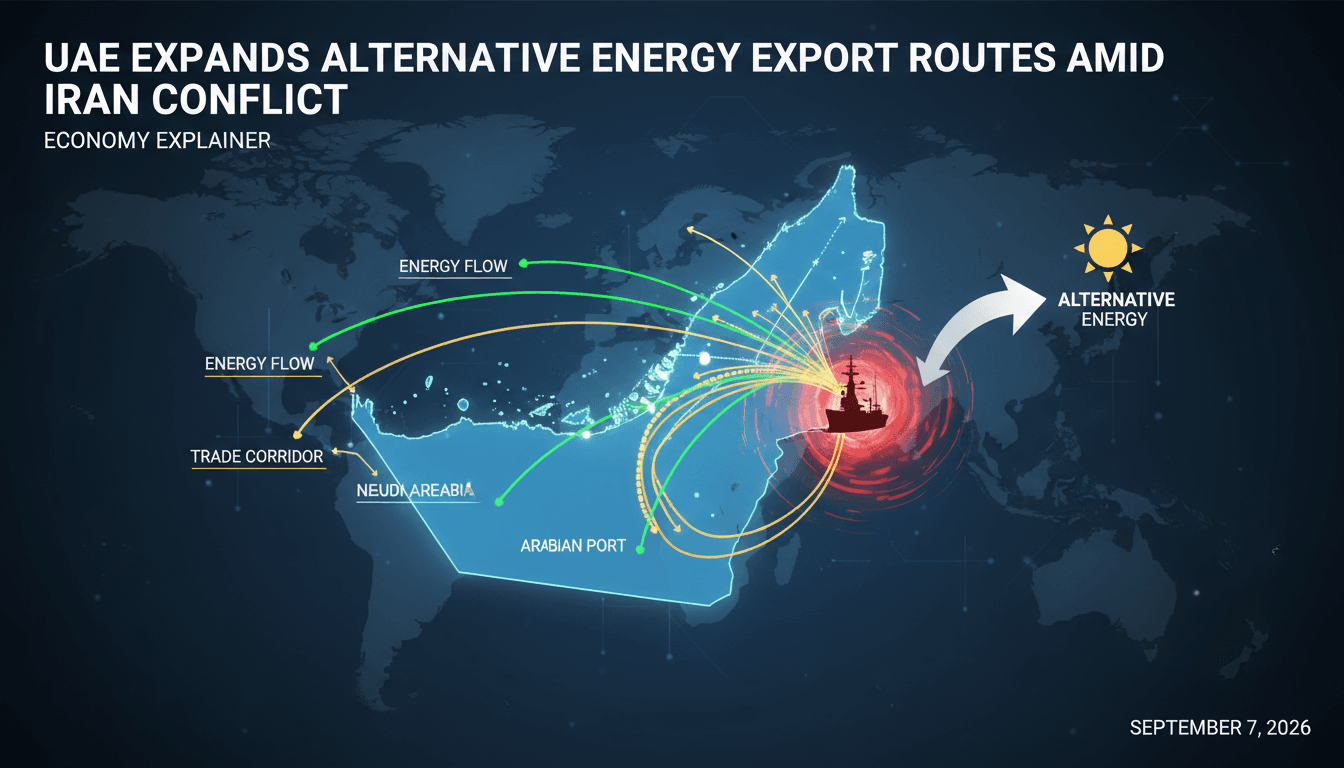
Here's what it means for you.
If you rely on global trade or energy markets, the UAE's strategic shift could reshape logistics and pricing dynamics.
Why it matters
This initiative is crucial for maintaining energy security and trade continuity in a volatile region.
What happened (in 30 seconds)
- On September 7, 2026, UAE presidential adviser Anwar Gargash announced accelerated plans for alternative energy export routes and trade corridors.
- The UAE is expanding port capacity, pipelines, and railways to reduce reliance on the Strait of Hormuz amid ongoing regional conflict with Iran.
- Non-oil foreign trade in the UAE grew by 13% in the first half of 2026, highlighting economic resilience despite disruptions.
The context you actually need
- The Strait of Hormuz is a critical chokepoint for global oil transit, and recent Iranian attacks have raised security concerns.
- Existing infrastructure, such as the Habshan-Fujairah pipeline and Etihad Rail, laid the groundwork for this accelerated initiative.
- Regional partners are echoing calls for self-sufficiency in security, indicating a broader shift in Gulf cooperation.
What's really happening
The UAE's announcement at the Hili Forum marks a significant pivot in its energy and trade strategy, driven by the need to mitigate risks associated with the ongoing conflict with Iran. The Strait of Hormuz, through which approximately 20% of the world's oil passes, has become increasingly perilous due to Iranian missile and drone strikes targeting both UAE territory and commercial shipping. This has led to a sharp decline in maritime traffic and soaring insurance costs, exposing vulnerabilities in the UAE's energy and trade logistics.
In response, the UAE is not only accelerating existing plans but also expanding its infrastructure to enhance resilience. The focus is on eastern ports like Fujairah and Khorfakkan, which will provide direct access to the Gulf of Oman, thus bypassing the Strait of Hormuz. The Abu Dhabi Crude Oil Pipeline (ADCOP) is set to double its capacity by 2027, while rail enhancements through the Etihad Rail and Hafeet Rail projects are prioritized to facilitate efficient cargo movement.
Moreover, the UAE is activating alternative corridors, such as the Green Corridor with Oman and links between Sharjah and Dammam, to reroute cargo effectively. This strategic diversification is not merely a reaction to immediate threats; it reflects a broader ambition for the UAE to achieve greater strategic autonomy while maintaining its partnerships, particularly with the United States.
The urgency of these developments is underscored by the impressive 13% growth in non-oil foreign trade during the first half of 2026, showcasing the UAE's economic resilience amid regional turmoil. The government is also directing ADNOC to fast-track the West-East Pipeline project, with operations expected to commence in 2027, further solidifying the UAE's commitment to energy security.
As the UAE fortifies its logistics and trade networks, it is also fostering a culture of self-sufficiency in security among Gulf states, indicating a potential shift in regional dynamics. This multifaceted approach not only aims to safeguard energy exports but also to ensure economic continuity in the face of external pressures.
Who feels it first (and how)
- Logistics companies: Increased demand for alternative transport routes will reshape operational strategies.
- Energy exporters: Enhanced pipeline and port capacities will influence pricing and supply chain dynamics.
- Local businesses: Economic support mechanisms will stabilize operations amid regional uncertainties.
- Workers in trade sectors: Job stability is likely to improve due to non-oil trade expansion.
What to watch next
- Increased traffic at eastern ports: Monitoring cargo volumes at Fujairah and Khorfakkan will indicate the effectiveness of the new routes.
- Pipeline operational timelines: The progress of the ADCOP expansion and West-East Pipeline will be critical for energy export stability.
- Regional security developments: Any escalation in Iran's military actions could impact trade routes and insurance costs.
The UAE is expanding its energy export routes and trade corridors.
Non-oil trade will continue to grow, bolstered by new logistics capabilities.
The long-term impact of regional security dynamics on trade and energy markets.
Frequently Asked Questions
- Why it matters?
- This initiative is crucial for maintaining energy security and trade continuity in a volatile region.
- What happened (in 30 seconds)?
- On September 7, 2026, UAE presidential adviser Anwar Gargash announced accelerated plans for alternative energy export routes and trade corridors. The UAE is expanding port capacity, pipelines, and railways to reduce reliance on the Strait of Hormuz amid ongoing regional conflict with Iran. Non-oil foreign trade in the UAE grew by 13% in the first half of 2026, highlighting economic resilience despite disruptions.
- What's really happening?
- The UAE's announcement at the Hili Forum marks a significant pivot in its energy and trade strategy, driven by the need to mitigate risks associated with the ongoing conflict with Iran. The Strait of Hormuz, through which approximately 20% of the world's oil passes, has become increasingly perilous due to Iranian missile and drone strikes targeting both UAE territory and commercial shipping. This has led to a sharp decline in maritime traffic and soaring insurance costs, exposing vulnerabilities
- Who feels it first (and how)?
- Logistics companies: Increased demand for alternative transport routes will reshape operational strategies. Energy exporters: Enhanced pipeline and port capacities will influence pricing and supply chain dynamics. Local businesses: Economic support mechanisms will stabilize operations amid regional uncertainties. Workers in trade sectors: Job stability is likely to improve due to non-oil trade expansion.
- What to watch next?
- Increased traffic at eastern ports: Monitoring cargo volumes at Fujairah and Khorfakkan will indicate the effectiveness of the new routes. Pipeline operational timelines: The progress of the ADCOP expansion and West-East Pipeline will be critical for energy export stability. Regional security developments: Any escalation in Iran's military actions could impact trade routes and insurance costs.
English-language digital publication covering business, politics, technology, and current affairs.
"The Arabian Post mixes original and syndicated-style coverage with a broad regional and global business-news orientation."
— A47 Editor
UAE fast-tracks alternative energy and trade corridors
The United Arab Emirates is accelerating the development of alternative energy export routes and trade corridors to mitigate risks associated with the ongoing conflict with Iran, as stated by presidential adviser Anwar Gargash. This initiative aims t...
Arabic-language local coverage focused on UAE domestic issues, civic affairs, and community reporting.
"Emarat Al Youm local coverage emphasizes UAE institutions, public services, and community-level developments."
— A47 Editor
قرقاش: صادرات الإمارات من الطاقة لن تبقى رهينة الوضع الحالي في «هرمز» قرقاش: صادرات الإمارات من الطاقة لن تبقى رهينة الوضع الحالي في «هرمز»
Dr. Anwar Gargash, the diplomatic advisor to the UAE President, stated that the country's energy exports will not remain hostage to the current situation in the Strait of Hormuz during his speech at the Helicon Forum, attended by 1,000 participants f...
Regional coverage and analysis focused on politics, diplomacy, and business across the Middle East.
"Al-Monitor is known for analytical reporting on Middle East politics and policy developments."
— A47 Editor
UAE says its energy exports will not be 'held hostage' by Iran war
The United Arab Emirates (UAE) has announced plans to develop alternative routes for its energy exports to avoid being adversely affected by the ongoing conflict between the U.S. and Iran, as stated by presidential adviser Anwar Gargash. This comes i...