
U.S. Diesel Fuel Prices Hit Record Highs Amid Ongoing Iran Conflict
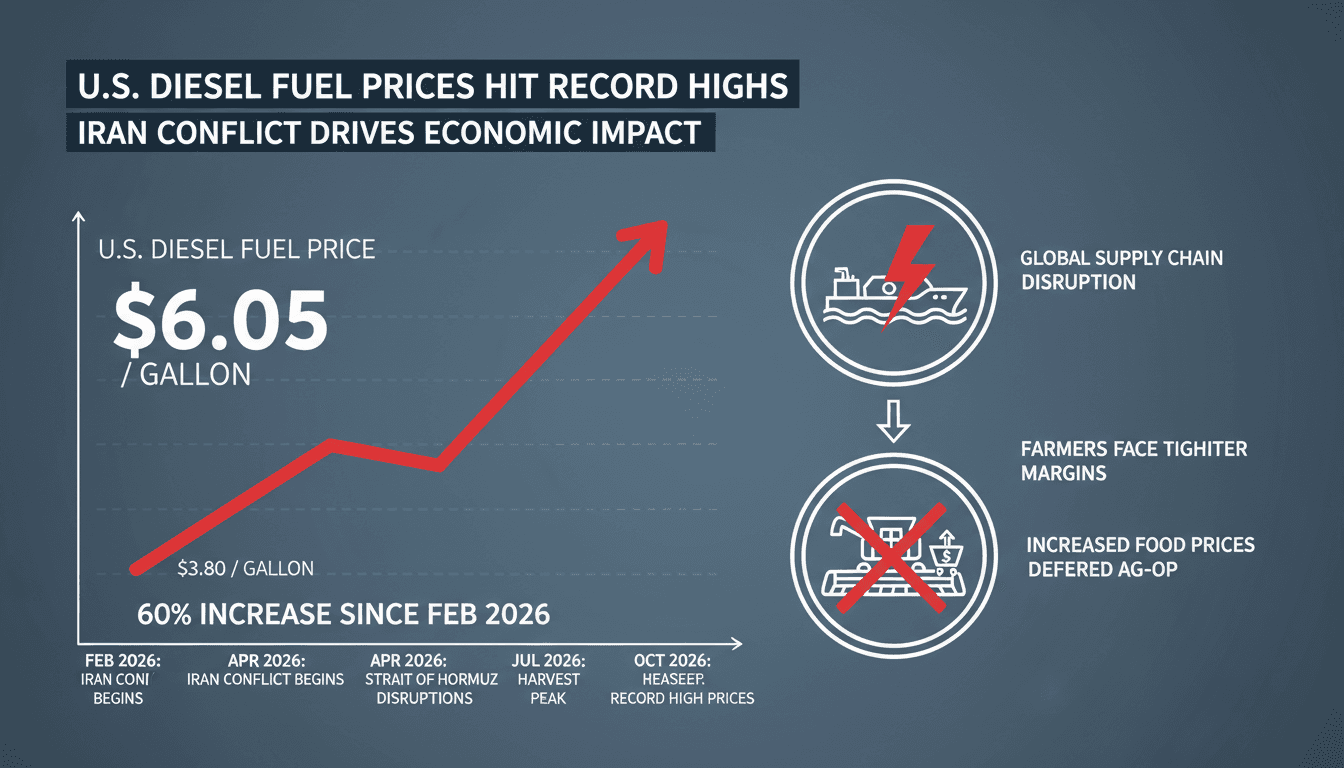
Here's what it means for you.
If you're involved in agriculture or transportation, rising diesel prices could significantly impact your operational costs and profitability.
Why it matters
This surge in diesel prices is straining agricultural operations and could lead to increased food prices nationwide.
What happened (in 30 seconds)
- U.S. diesel prices hit a record high of approximately $6.05 per gallon in September 2026, a 60% increase from pre-conflict levels.
- The price spike is driven by supply disruptions in the Strait of Hormuz due to the ongoing conflict with Iran, affecting global oil supplies.
- Farmers are facing doubled fuel expenses during critical harvest periods, compounding existing pressures from high fertilizer and chemical costs.
The context you actually need
- The conflict with Iran began in late February 2026, leading to military operations by the U.S. and Israel that disrupted tanker traffic through the Strait of Hormuz.
- Crude oil prices have risen above $100 per barrel, directly influencing the cost of refined products like diesel.
- Agricultural operators are adjusting their operations in response to soaring fuel costs, with some deferring non-essential activities as they await potential price stabilization.
What's really happening
The ongoing conflict with Iran has created a ripple effect in global fuel markets, particularly impacting diesel prices in the U.S. The Strait of Hormuz is a critical chokepoint for oil transportation, and any disruption there can lead to significant supply shortages. As military operations escalated in February 2026, crude oil prices surged, surpassing $100 per barrel. This increase in crude prices directly translates to higher costs for refined products, including diesel fuel.
By September 2026, the national average diesel price reached $6.05 per gallon, marking a 60% increase from the pre-conflict price of approximately $3.76 per gallon. This spike has immediate implications for U.S. farmers, especially during the corn and soybean harvest season, where equipment like combines can consume hundreds of gallons of diesel daily. Farmers in states like Missouri have reported that their fuel expenses have doubled, significantly impacting their operational budgets.
The agricultural sector is already grappling with elevated costs for fertilizers and chemicals, which have been exacerbated by the conflict. As diesel prices rise, the overall cost of farming operations increases, leading to tighter profit margins. Economists warn that these rising costs could lead to higher food prices for consumers, as farmers may pass on their increased expenses to the market.
In response to these challenges, some farmers are adjusting their harvest schedules and deferring non-essential operations, hoping for a stabilization in fuel prices. Meanwhile, governmental proposals for farm aid packages are being discussed to help offset these rising input costs. The situation remains fluid, with no immediate resolution in sight, and the potential for further disruptions in supply chains looms large.
Who feels it first (and how)
- Farmers and agricultural operators: Facing doubled fuel costs during harvest, impacting profitability.
- Transporters and logistics companies: Increased operational costs affecting delivery schedules and pricing.
- Consumers: Potentially higher food prices as farmers pass on increased costs.
- Rural communities: Heavily reliant on agriculture, facing economic strain from rising operational costs.
What to watch next
- Governmental responses: Look for proposals regarding farm aid packages to mitigate rising costs, which could influence market stability.
- Crude oil price fluctuations: Continued volatility in crude oil prices will directly affect diesel costs and agricultural operations.
- Supply chain adjustments: Monitor how agricultural operators adjust their harvest schedules and operations in response to ongoing price pressures.
Diesel prices have surged to $6.05 per gallon, a 60% increase from pre-conflict levels.
Further increases in food prices as farmers adjust to rising operational costs.
The duration of the conflict and its long-term impact on global fuel markets.
Frequently Asked Questions
- Why it matters?
- This surge in diesel prices is straining agricultural operations and could lead to increased food prices nationwide.
- What happened (in 30 seconds)?
- U.S. diesel prices hit a record high of approximately $6.05 per gallon in September 2026, a 60% increase from pre-conflict levels. The price spike is driven by supply disruptions in the Strait of Hormuz due to the ongoing conflict with Iran, affecting global oil supplies. Farmers are facing doubled fuel expenses during critical harvest periods, compounding existing pressures from high fertilizer and chemical costs.
- What's really happening?
- The ongoing conflict with Iran has created a ripple effect in global fuel markets, particularly impacting diesel prices in the U.S. The Strait of Hormuz is a critical chokepoint for oil transportation, and any disruption there can lead to significant supply shortages. As military operations escalated in February 2026, crude oil prices surged, surpassing $100 per barrel. This increase in crude prices directly translates to higher costs for refined products, including diesel fuel. By September 20
- Who feels it first (and how)?
- Farmers and agricultural operators: Facing doubled fuel costs during harvest, impacting profitability. Transporters and logistics companies: Increased operational costs affecting delivery schedules and pricing. Consumers: Potentially higher food prices as farmers pass on increased costs. Rural communities: Heavily reliant on agriculture, facing economic strain from rising operational costs.
- What to watch next?
- Governmental responses: Look for proposals regarding farm aid packages to mitigate rising costs, which could influence market stability. Crude oil price fluctuations: Continued volatility in crude oil prices will directly affect diesel costs and agricultural operations. Supply chain adjustments: Monitor how agricultural operators adjust their harvest schedules and operations in response to ongoing price pressures.
Corporate leadership, finance, technology, and market trends.
"Fortune covers financial trends, leadership, and innovation with a pragmatic editorial approach."
— A47 Editor
U.S. diesel prices are now 60% higher than they were before the Iran war, with one Trump voter paying twice as much to fuel his farm equipment
U.S. diesel prices have surged to 60% higher than pre-war levels due to the ongoing conflict in Iran, with farmers like Kurtz facing significant financial strain as they pay double for fuel to operate their equipment.
Editor-curated FT homepage stories spanning markets, business, world, and opinion.
"The Financial Times is a globally respected business publication with a centrist/center-left tone and strong markets focus."
— A47 Editor
US diesel hits record $6 a gallon on Iran supply shock
U.S. diesel prices have surged to a record high of $6 per gallon, driven by escalating geopolitical tensions, particularly the ongoing conflict in Iran. This unprecedented increase reflects a significant rise in fuel costs, which are critical for var...
European coverage of Middle East politics and security issues.
"France 24 offers international reporting with a European editorial perspective."
— A47 Editor
Iran raises fuel prices for heavy users
Iran has raised fuel prices for heavy users amid ongoing economic struggles exacerbated by months of conflict and U.S. sanctions. This increase reflects the government's response to financial pressures as the country grapples with rising costs and dw...
24/7 international news from a French perspective in multiple languages.
"France 24 is viewed as a globally focused outlet with balanced coverage and a European perspective."
— A47 Editor
Iran raises fuel prices for heavy users
Iran has raised fuel prices for heavy users amid ongoing economic struggles exacerbated by months of conflict and U.S. sanctions. This increase reflects the government's response to financial pressures as the country grapples with rising costs and dw...