
Brent Crude Oil Prices Reach 110 USD per Barrel Due to Middle East Supply Disruptions
Why it matters
The surge in oil prices signals potential inflationary pressures that could affect global economies.
What happened (in 30 seconds)
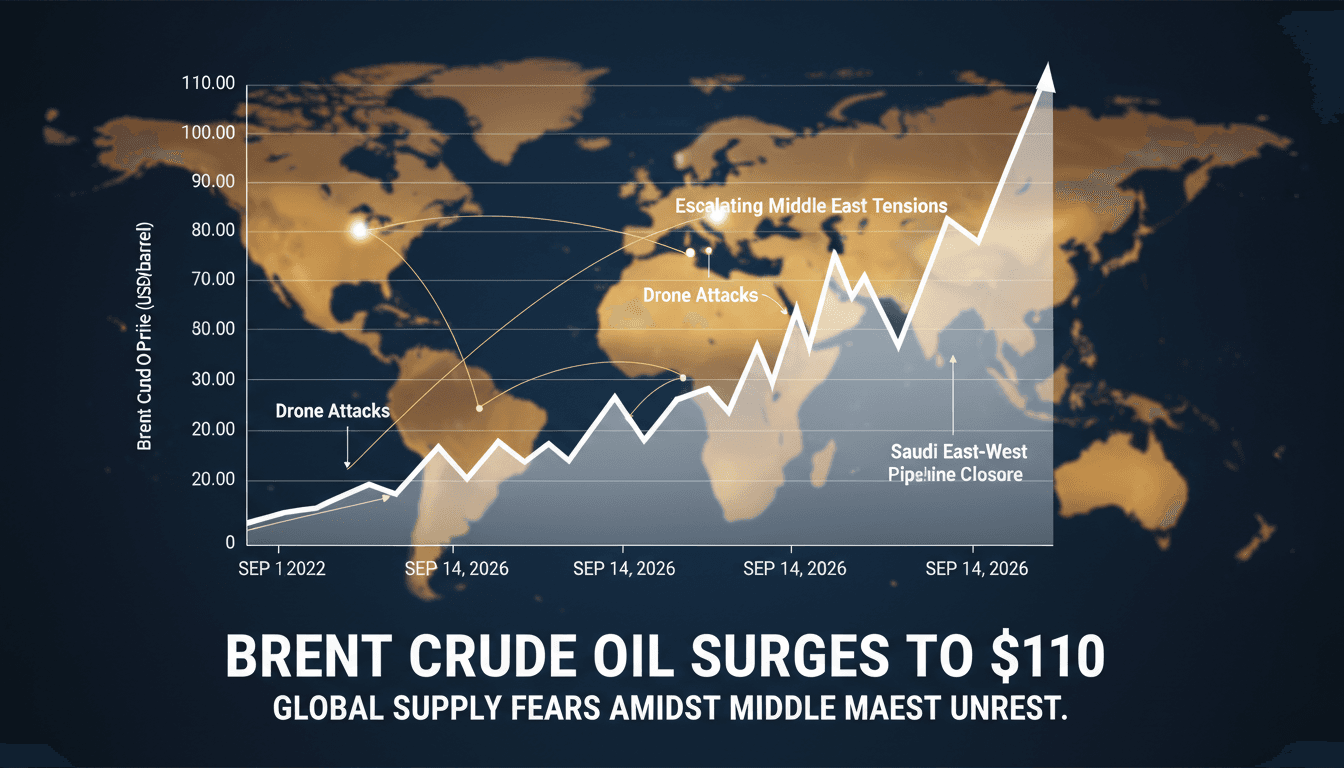
- Brent crude oil futures surged to approximately 110 USD per barrel on September 14, 2026, marking a 4.5% increase in one session.
- Geopolitical tensions in the Middle East, particularly involving Saudi Arabia and Iran, disrupted key supply routes, raising fears of significant supply shortages.
- Market volatility ensued, with prices settling between 106-109 USD as traders monitored ongoing diplomatic efforts and pipeline repairs.
The context you actually need
- Saudi Arabia's East-West pipeline was closed following drone attacks, impacting up to 4% of global oil supplies.
- Ongoing conflicts in the region, including Houthi operations and Iran-US tensions, have heightened risks for oil transportation.
- Global markets reacted with volatility, indicating that sustained high prices could lead to broader economic implications, including inflation.
What's really happening
On September 14, 2026, Brent crude oil prices experienced a significant spike, briefly touching 110 USD per barrel. This surge was primarily driven by escalating geopolitical tensions in the Middle East, particularly the closure of Saudi Arabia's East-West pipeline due to drone attacks. This pipeline is crucial as it facilitates the transport of oil from the eastern regions of Saudi Arabia to the Red Sea, bypassing the vulnerable Strait of Hormuz. The closure raised immediate concerns about supply disruptions, as it affects approximately 4% of global oil supplies.
The backdrop of this crisis is a prolonged conflict between Iran and the United States, which has intensified since early 2026. The situation has been further complicated by Houthi forces conducting operations within Saudi territory and targeting energy infrastructure. These developments have led to fears of blockades in strategic maritime routes, including the Strait of Hormuz and Bab al-Mandab, which are vital for global oil transportation.
As oil prices surged, analysts noted that without a swift restoration of the Saudi pipeline or productive diplomatic talks in Oman, prices could rise further, potentially reaching March highs of 119.48 USD per barrel. The market's reaction included gains in the Moscow Exchange, indicating a ripple effect across global trading platforms.
The implications of these price movements extend beyond immediate market reactions. Higher oil prices typically lead to increased transportation and production costs, which can translate into higher prices for consumers. This is particularly relevant for residents in Dubai, where elevated fuel costs may impact transportation and logistics sectors, potentially leading to inflationary pressures in the UAE.
As the situation develops, the focus remains on the restoration of the pipeline and diplomatic efforts to de-escalate tensions in the region. The volatility in oil prices serves as a reminder of the interconnectedness of global markets and the potential for geopolitical events to have far-reaching economic consequences.
Who feels it first (and how)
- Consumers: Higher fuel prices lead to increased costs for transportation and goods.
- Logistics companies: Rising oil prices can inflate operational costs, affecting pricing strategies.
- Energy sector workers: Job stability may be threatened if companies face reduced margins due to higher input costs.
- Governments: Increased inflation could lead to economic policy adjustments and potential public unrest.
What to watch next
- Pipeline repairs: Monitoring the timeline for the restoration of the Saudi East-West pipeline is crucial, as delays could prolong high prices.
- Diplomatic negotiations: Outcomes from talks in Oman could influence market stability and future price movements.
- Inflation indicators: Keep an eye on inflation rates in the UAE and globally, as rising oil prices typically correlate with increased consumer prices.
Brent crude oil prices surged to approximately 110 USD per barrel due to geopolitical tensions.
Continued volatility in oil prices as markets react to ongoing conflicts and supply chain disruptions.
The long-term impact on global inflation rates and consumer behavior in response to rising costs.
Frequently Asked Questions
- Why it matters?
- The surge in oil prices signals potential inflationary pressures that could affect global economies.
- What happened (in 30 seconds)?
- Brent crude oil futures surged to approximately 110 USD per barrel on September 14, 2026, marking a 4.5% increase in one session. Geopolitical tensions in the Middle East, particularly involving Saudi Arabia and Iran, disrupted key supply routes, raising fears of significant supply shortages. Market volatility ensued, with prices settling between 106-109 USD as traders monitored ongoing diplomatic efforts and pipeline repairs.
- What's really happening?
- On September 14, 2026, Brent crude oil prices experienced a significant spike, briefly touching 110 USD per barrel. This surge was primarily driven by escalating geopolitical tensions in the Middle East, particularly the closure of Saudi Arabia's East-West pipeline due to drone attacks. This pipeline is crucial as it facilitates the transport of oil from the eastern regions of Saudi Arabia to the Red Sea, bypassing the vulnerable Strait of Hormuz. The closure raised immediate concerns about supp
- Who feels it first (and how)?
- Consumers: Higher fuel prices lead to increased costs for transportation and goods. Logistics companies: Rising oil prices can inflate operational costs, affecting pricing strategies. Energy sector workers: Job stability may be threatened if companies face reduced margins due to higher input costs. Governments: Increased inflation could lead to economic policy adjustments and potential public unrest.
- What to watch next?
- Pipeline repairs: Monitoring the timeline for the restoration of the Saudi East-West pipeline is crucial, as delays could prolong high prices. Diplomatic negotiations: Outcomes from talks in Oman could influence market stability and future price movements. Inflation indicators: Keep an eye on inflation rates in the UAE and globally, as rising oil prices typically correlate with increased consumer prices.
Arabic-language coverage of international news and geopolitics.
"RT Arabic is a Russian state-funded outlet often criticized for promoting Kremlin-aligned narratives."
— A47 Editor
أسعار النفط خام برنت تلامس 110 دولارات للبرميل
Oil prices surged by over 4.5% to approach $110 per barrel on Monday, driven by concerns over potential disruptions in oil supplies through the Strait of Hormuz and the Bab el-Mandeb Strait.
Sports reporting with a focus on Saudi and regional competitions.
"Okaz sports coverage is broad and audience-friendly, with strong attention to Saudi teams and leagues."
— A47 Editor
8 % ارتفاع لأسعار النفط.. برنت صوب 108 دولارات
Oil prices surged today amid escalating tensions in the Middle East, raising concerns over potential disruptions in energy supply. Brent crude futures rose by $3.14 or 3% to $107.75 per barrel, while West Texas Intermediate futures increased by $3.01...
Arabic-language coverage of international news and geopolitics.
"RT Arabic is a Russian state-funded outlet often criticized for promoting Kremlin-aligned narratives."
— A47 Editor
قفزة في أسعار النفط مع افتتاح الأسواق.. برنت يتجاوز 108 دولارات
Oil prices surged sharply as global markets reopened on Monday, with Brent crude surpassing $108 per barrel, driven by the rapid developments in the Middle East over the weekend.
Jordanian news and regional updates.
"Roya News is a Jordanian outlet focused on breaking news and local affairs."
— A47 Editor
ارتفاع أسعار النفط بنحو 3% مع افتتاح التداولات وخام برنت يسجل 107 دولارات
Oil prices increased by approximately 3% at the start of the week's trading, with Brent crude reaching $107 per barrel. This rise reflects a positive trend in the oil market, indicating potential recovery and increased demand.