
St. Louis Fed President Musalem Signals Need for Further Interest Rate Hikes to Combat Inflation
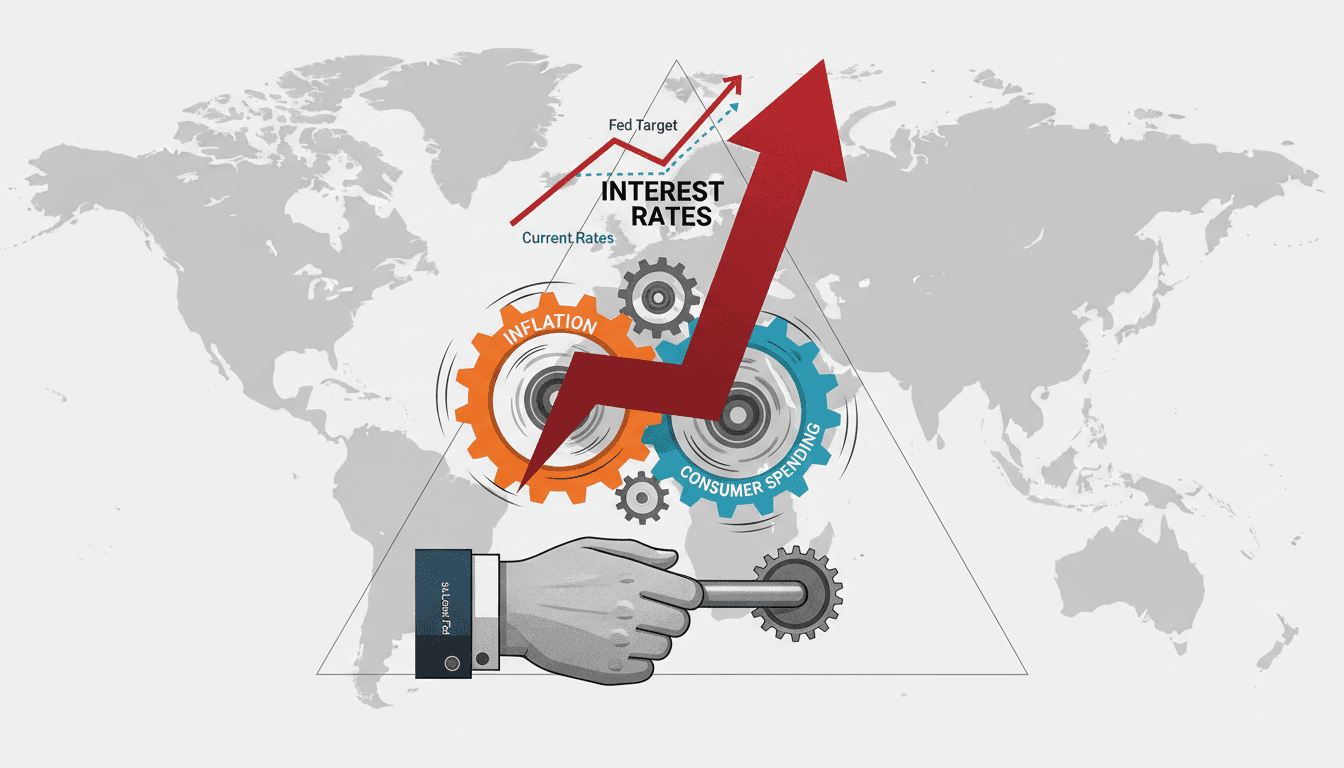
If you’re in the U.S. or rely on U.S. imports, expect higher costs as interest rates may rise further.
Why it matters
Persistent inflation pressures could lead to sustained higher interest rates, impacting borrowing costs and consumer spending.
What happened (in 30 seconds)
- Musalem warned that inflation remains elevated, necessitating further interest rate hikes.
- The Fed's recent rate increase was the first in over three years, responding to inflation data showing a PCE index at 3.7%.
- Commodity price shocks and strong demand are reversing earlier disinflation progress, complicating the economic landscape.
The context you actually need
- Inflation is currently running approximately one percentage point above the Fed's 2% target, indicating persistent economic pressures.
- The Fed's latest statement removed previous references to supply shocks, focusing solely on elevated inflation.
- Tariff policies under the Trump administration are contributing to ongoing demand pressures and commodity price volatility.
What's really happening
St. Louis Fed President Alberto Musalem's recent comments underscore a critical juncture in U.S. monetary policy. With inflation currently at 3.7% year-over-year, the Federal Reserve is grappling with the dual challenges of persistent demand pressures and recurring supply shocks. These factors are not only keeping inflation risks high but are also complicating the Fed's ability to stabilize prices.
Musalem's advocacy for incremental tightening rather than delayed, larger actions reflects a strategic approach to mitigate economic disruption. By raising interest rates gradually, the Fed aims to temper inflation without triggering a recession. This approach is particularly relevant given the recent quarter-point rate increase, which marked the first hike in over three years. The Fed's decision to remove language attributing inflation to supply shocks signals a shift in focus towards underlying demand dynamics.
The broader economic context reveals that commodity prices, influenced by both domestic and international factors, are contributing to inflationary pressures. The ongoing tariff policies from the previous administration have created a complex landscape where strong demand coexists with supply chain disruptions. This duality complicates the Fed's task of achieving its inflation target, as it must navigate the interplay between these forces.
As inflation remains entrenched, the implications for consumers and businesses are significant. Higher interest rates typically lead to increased borrowing costs, which can dampen consumer spending and investment. This, in turn, could slow economic growth, creating a feedback loop that further complicates the Fed's policy decisions. The challenge lies in balancing the need for tighter monetary policy with the risk of stifling economic activity.
In summary, Musalem's warning highlights the Fed's ongoing struggle with inflation and the potential for further rate hikes. The implications of these decisions will reverberate through the economy, affecting everything from mortgage rates to consumer prices.
Who feels it first (and how)
- Homebuyers: Higher mortgage rates could increase monthly payments, making homes less affordable.
- Businesses: Increased borrowing costs may lead to reduced investment and hiring.
- Consumers: Rising prices for goods and services will impact household budgets, especially for imported products.
What to watch next
- Future Fed meetings: Watch for announcements on interest rate changes, as they will signal the Fed's stance on inflation.
- Commodity price trends: Fluctuations in commodity prices will indicate ongoing supply chain pressures and their impact on inflation.
- Consumer spending data: Changes in consumer spending patterns will reveal how higher rates are affecting economic activity.
Inflation is currently above the Fed's target, necessitating further policy action.
Additional interest rate hikes are expected in response to persistent inflation pressures.
The long-term impact of these rate hikes on economic growth and consumer behavior remains uncertain.
Frequently Asked Questions
- Why it matters?
- Persistent inflation pressures could lead to sustained higher interest rates, impacting borrowing costs and consumer spending.
- What happened (in 30 seconds)?
- Musalem warned that inflation remains elevated, necessitating further interest rate hikes. The Fed's recent rate increase was the first in over three years, responding to inflation data showing a PCE index at 3.7%. Commodity price shocks and strong demand are reversing earlier disinflation progress, complicating the economic landscape.
- What's really happening?
- St. Louis Fed President Alberto Musalem's recent comments underscore a critical juncture in U.S. monetary policy. With inflation currently at 3.7% year-over-year, the Federal Reserve is grappling with the dual challenges of persistent demand pressures and recurring supply shocks. These factors are not only keeping inflation risks high but are also complicating the Fed's ability to stabilize prices. Musalem's advocacy for incremental tightening rather than delayed, larger actions reflects a stra
- Who feels it first (and how)?
- Homebuyers: Higher mortgage rates could increase monthly payments, making homes less affordable. Businesses: Increased borrowing costs may lead to reduced investment and hiring. Consumers: Rising prices for goods and services will impact household budgets, especially for imported products.
- What to watch next?
- Future Fed meetings: Watch for announcements on interest rate changes, as they will signal the Fed's stance on inflation. Commodity price trends: Fluctuations in commodity prices will indicate ongoing supply chain pressures and their impact on inflation. Consumer spending data: Changes in consumer spending patterns will reveal how higher rates are affecting economic activity.
Capitol Hill news, legislation, and policy insight.
"The Hill specializes in U.S. politics and policy, with a focus on Capitol Hill developments and a reputation for insider reporting."
— A47 Editor
Fed official warns inflation is still too high
Neel Kashkari, president of the Federal Reserve's Minneapolis branch, stated that inflation remains excessively high across all sectors of the economy, following a recent interest rate hike by the central bank. This warning underscores ongoing concer...
Macro commentary, policy analysis, growth/inflation themes, and global outlooks.
"Contextual macro coverage that complements day-to-day market headlines."
— A47 Editor
Fed’s Kashkari says inflation is still too high in ’all aspects’ of US economy, in Fox News interview
Neel Kashkari, a Federal Reserve official, stated in a Fox News interview that inflation remains excessively high across all sectors of the U.S. economy, highlighting ongoing economic challenges.
Macro commentary, policy analysis, growth/inflation themes, and global outlooks.
"Contextual macro coverage that complements day-to-day market headlines."
— A47 Editor
Minneapolis Fed’s Kashkari says inflation remains too high
Neel Kashkari, president of the Federal Reserve Bank of Minneapolis, has stated that inflation remains too high, indicating persistent economic pressures that could influence monetary policy decisions. This assessment underscores ongoing challenges i...