
Saudi Arabia's Construction Cost Index Rises 2.3 Percent Year-over-Year in August 2026
Why it matters
The increase in construction costs signals ongoing inflationary pressures that could impact project timelines and profitability.
What happened (in 30 seconds)
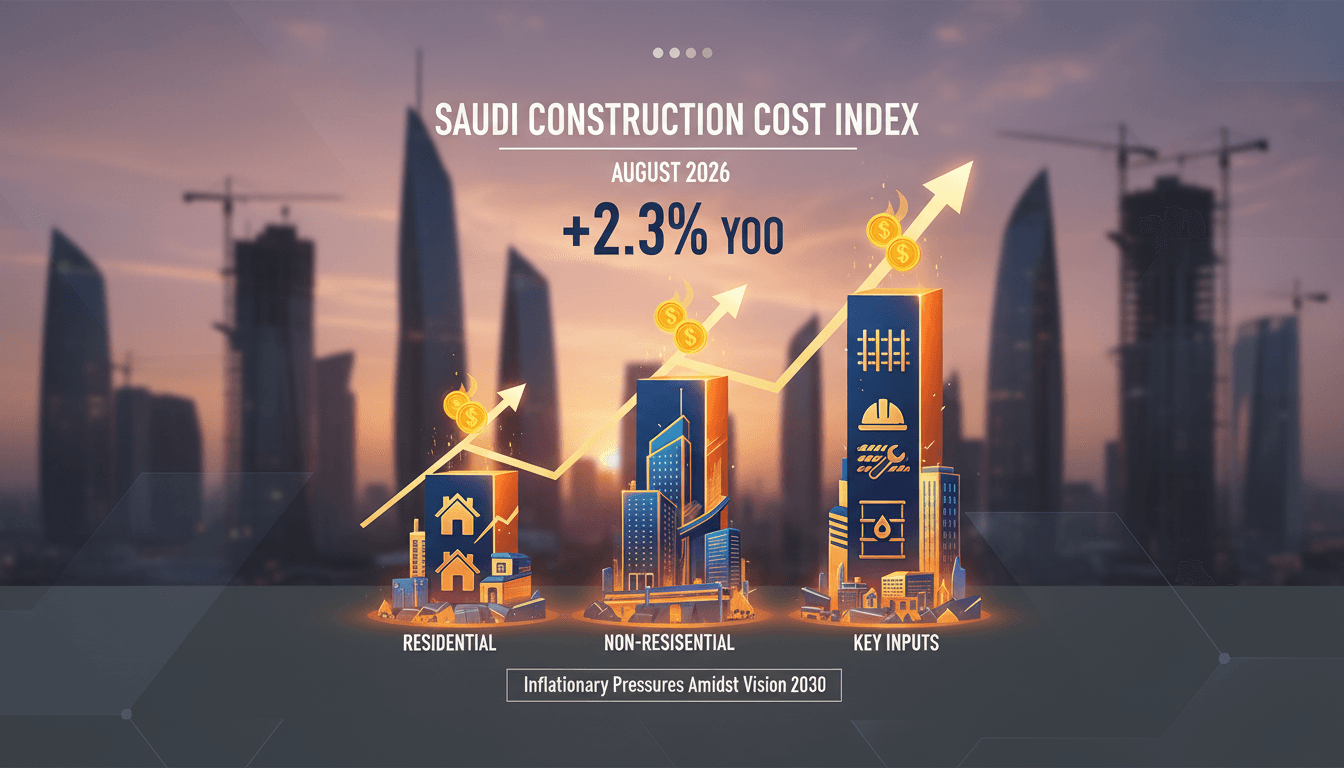
- The Saudi Construction Cost Index rose 2.3 percent year-over-year in August 2026, reflecting higher expenses across sectors.
- Residential costs increased by 2.1 percent, driven by rising prices for materials, labor, and energy.
- Non-residential costs saw a 2.6 percent rise, primarily due to increased equipment rental and labor costs.
The context you actually need
- Vision 2030 initiatives are driving extensive development in housing and infrastructure, sustaining demand for construction inputs.
- Material and labor costs have been on an upward trend, influenced by global supply chain issues and local project demands.
- The General Authority for Statistics (GASTAT) tracks these costs monthly, providing critical data for stakeholders in the construction industry.
What's really happening
The 2.3 percent year-over-year increase in the Saudi Construction Cost Index for August 2026 reflects a complex interplay of factors affecting the construction landscape in the Kingdom. The rise in costs is not merely a reflection of inflation but is deeply rooted in the ambitious Vision 2030 initiatives, which aim to diversify the economy and reduce dependence on oil revenues. These initiatives have led to a surge in large-scale housing, infrastructure, and commercial projects, thereby sustaining high demand for construction inputs.
In the residential sector, costs rose by 2.1 percent, driven by a 1.8 percent increase in basic materials, which includes a notable 2 percent rise in metal products. Equipment rental costs surged by 4.1 percent, while labor costs increased by 5.1 percent, and energy costs rose by 3 percent. This combination of rising input costs is indicative of a construction market under pressure, where the demand for skilled labor and materials outstrips supply.
The non-residential sector experienced a more pronounced increase of 2.6 percent, primarily due to a staggering 5.8 percent rise in equipment rental costs. Labor and energy costs also contributed to this increase, with labor rising by 2 percent and energy by 3 percent. The consistent upward trend in these costs suggests that construction firms are facing significant challenges in maintaining profitability while meeting project deadlines.
Moreover, the month-over-month increase of 0.1 percent indicates that the upward pressure on costs is not a temporary phenomenon but rather a sustained trend. This aligns with the ongoing project activity under Vision 2030, which has not only increased demand for construction inputs but has also led to a tightening labor market. As more projects are initiated, the competition for skilled labor intensifies, further driving up costs.
The implications of these rising costs extend beyond the construction sector. They can affect housing prices, rental rates, and ultimately the cost of living for residents. As construction firms pass on these costs to consumers, you may see higher prices for new homes and commercial spaces, impacting affordability and accessibility in the real estate market.
Who feels it first (and how)
- Construction companies: Facing tighter margins and potential project delays due to rising costs.
- Real estate developers: May need to adjust pricing strategies for new developments.
- Homebuyers and renters: Likely to experience increased prices for housing as costs are passed down.
- Labor market participants: Skilled workers may see wage increases, but job competition could intensify.
What to watch next
- Future GASTAT reports: Monitoring upcoming data releases will provide insights into whether this trend continues or stabilizes.
- Material supply chain developments: Changes in global supply chains could impact local costs and availability of construction inputs.
- Government policy responses: Any initiatives aimed at stabilizing construction costs or supporting the labor market could influence future trends.
Construction costs are rising due to increased demand and supply chain pressures.
Continued upward pressure on costs as Vision 2030 projects progress.
The potential impact of global economic conditions on local construction costs.
Frequently Asked Questions
- Why it matters?
- The increase in construction costs signals ongoing inflationary pressures that could impact project timelines and profitability.
- What happened (in 30 seconds)?
- The Saudi Construction Cost Index rose 2.3 percent year-over-year in August 2026, reflecting higher expenses across sectors. Residential costs increased by 2.1 percent, driven by rising prices for materials, labor, and energy. Non-residential costs saw a 2.6 percent rise, primarily due to increased equipment rental and labor costs.
- What's really happening?
- The 2.3 percent year-over-year increase in the Saudi Construction Cost Index for August 2026 reflects a complex interplay of factors affecting the construction landscape in the Kingdom. The rise in costs is not merely a reflection of inflation but is deeply rooted in the ambitious Vision 2030 initiatives, which aim to diversify the economy and reduce dependence on oil revenues. These initiatives have led to a surge in large-scale housing, infrastructure, and commercial projects, thereby sustaini
- Who feels it first (and how)?
- Construction companies: Facing tighter margins and potential project delays due to rising costs. Real estate developers: May need to adjust pricing strategies for new developments. Homebuyers and renters: Likely to experience increased prices for housing as costs are passed down. Labor market participants: Skilled workers may see wage increases, but job competition could intensify.
- What to watch next?
- Future GASTAT reports: Monitoring upcoming data releases will provide insights into whether this trend continues or stabilizes. Material supply chain developments: Changes in global supply chains could impact local costs and availability of construction inputs. Government policy responses: Any initiatives aimed at stabilizing construction costs or supporting the labor market could influence future trends.
Arabic-language coverage of Saudi, regional, and international affairs.
"Al Bilad offers mainstream Saudi newspaper coverage across domestic and broader Arab topics."
— A47 Editor
مدفوعاً بزيادة التكاليف في القطاعين السكني وغيرالسكني.. ارتفاع الرقم القياسي لتكاليف البناء في السعودية 2.3%
The construction cost index in Saudi Arabia increased by 2.3% in August 2026 compared to the same month in the previous year, August 2025, according to data released by the Saudi General Authority for Statistics. This rise was driven by a 2.6% increa...
Sports reporting with a focus on Saudi and regional competitions.
"Okaz sports coverage is broad and audience-friendly, with strong attention to Saudi teams and leagues."
— A47 Editor
16 % ارتفاع عدد رخص البناء بالسعودية خلال 30 يوماً
Recent data from the General Authority for Statistics indicates that the number of building permits issued in Saudi Arabia rose to 5,828 in July 2026, up from 5,582 in July 2025, marking a 4% annual increase. Month-over-month, permits increased by 16...
Sports reporting with a focus on Saudi and regional competitions.
"Okaz sports coverage is broad and audience-friendly, with strong attention to Saudi teams and leagues."
— A47 Editor
«الإحصاء»: ارتفاع الإيرادات التشغيلية 4.9% في يوليو 2026
The General Authority for Statistics in Saudi Arabia reported a 4.9% year-on-year increase in operational revenues for July 2026, compared to the same month in 2025, with a monthly rise of 1.2% from June 2026. This growth was primarily driven by a 13...