
Trump Initiates Potash Import Negotiations with Belarus to Lower Costs for US Agriculture
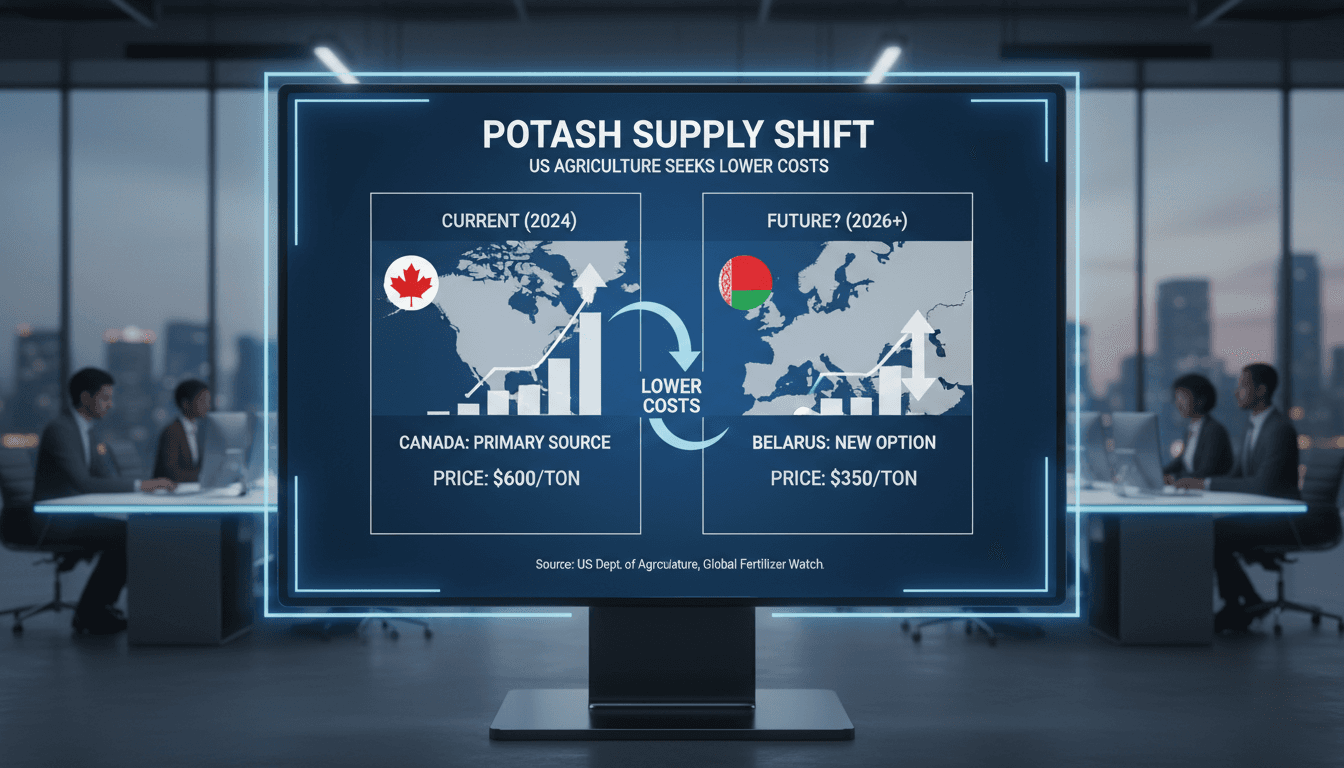
Why it matters
This negotiation could reshape the US fertilizer market, impacting agricultural production costs and food prices.
What happened (in 30 seconds)
- Trump announced negotiations for a potash import deal with Belarus, aiming for lower prices than Canadian supplies.
- Sanctions on Belarusian potash producers were lifted earlier this year, allowing for renewed trade relations.
- Market analysts expressed skepticism about the deal's potential impact on supply and pricing due to existing contracts and logistical challenges.
The context you actually need
- The US relies heavily on imports for potash, with Canada supplying about 80% of its needs, making this deal significant for US agriculture.
- Belarusian potash producers had been under US sanctions due to political issues, which were lifted following diplomatic negotiations involving prisoner releases.
- Current US-Canada trade tensions may be influencing this pivot towards Belarus, as the US seeks to diversify its supply sources.
What's really happening
On September 21, 2026, President Trump announced via Truth Social that the United States is negotiating a significant potash import agreement with Belarus. This announcement comes at a time when the US is heavily reliant on Canadian potash, which constitutes approximately 80% of its imports. The deal is framed as a way to secure potash at lower prices, potentially benefiting American farmers and ranchers by reducing fertilizer costs, a critical input for enhancing crop yields and disease resistance.
The backdrop to this negotiation is the recent lifting of US sanctions on Belarusian potash producers, which had been in place due to the country's political repression and support for Russia's actions in Ukraine. The sanctions were gradually lifted in late 2025 and March 2026, following diplomatic efforts that included the release of prisoners. Belarusian President Alexander Lukashenko had previously indicated a willingness to resume sales to the US, seeking to recover over $40 million in frozen funds.
Despite the optimistic framing of the deal, analysts are cautious. Josh Linville from StoneX noted that while Belarus may offer lower prices, the actual increase in supply or reduction in prices may be limited. This skepticism is rooted in the fact that North America currently has ample potash supplies, and logistical challenges could hinder Belarusian exports. Furthermore, Belarusian officials have indicated that their available volumes for export are constrained by existing contracts with Asian markets.
The implications of this deal extend beyond immediate pricing. If successful, it could signal a shift in US agricultural supply chains, reducing dependence on Canadian imports and potentially altering the dynamics of global fertilizer markets. However, the actual materialization of this deal remains uncertain, as negotiations are still in the early stages and no finalized agreement has been reported.
Who feels it first (and how)
- Farmers and ranchers: Potentially lower fertilizer costs could directly impact their operational expenses and profit margins.
- Agricultural suppliers: Companies involved in the distribution of fertilizers may see shifts in demand based on pricing changes.
- Canadian potash producers: They may face increased competition and pressure to adjust pricing strategies in response to the deal.
What to watch next
- Negotiation outcomes: Keep an eye on the progress of the negotiations and any finalized agreements, as they will directly affect market dynamics.
- Market reactions: Watch for shifts in potash prices and supply chain adjustments in response to the announcement.
- Political developments: Monitor any changes in US-Canada relations and how they may influence future agricultural trade policies.
The US is negotiating a potash import deal with Belarus.
The deal could lead to lower fertilizer costs for US farmers if successful.
The actual impact on global fertilizer prices and supply chains remains uncertain.
Frequently Asked Questions
- Why it matters?
- This negotiation could reshape the US fertilizer market, impacting agricultural production costs and food prices.
- What happened (in 30 seconds)?
- Trump announced negotiations for a potash import deal with Belarus, aiming for lower prices than Canadian supplies. Sanctions on Belarusian potash producers were lifted earlier this year, allowing for renewed trade relations. Market analysts expressed skepticism about the deal's potential impact on supply and pricing due to existing contracts and logistical challenges.
- What's really happening?
- On September 21, 2026, President Trump announced via Truth Social that the United States is negotiating a significant potash import agreement with Belarus. This announcement comes at a time when the US is heavily reliant on Canadian potash, which constitutes approximately 80% of its imports. The deal is framed as a way to secure potash at lower prices, potentially benefiting American farmers and ranchers by reducing fertilizer costs, a critical input for enhancing crop yields and disease resista
- Who feels it first (and how)?
- Farmers and ranchers: Potentially lower fertilizer costs could directly impact their operational expenses and profit margins. Agricultural suppliers: Companies involved in the distribution of fertilizers may see shifts in demand based on pricing changes. Canadian potash producers: They may face increased competition and pressure to adjust pricing strategies in response to the deal.
- What to watch next?
- Negotiation outcomes: Keep an eye on the progress of the negotiations and any finalized agreements, as they will directly affect market dynamics. Market reactions: Watch for shifts in potash prices and supply chain adjustments in response to the announcement. Political developments: Monitor any changes in US-Canada relations and how they may influence future agricultural trade policies.
Oil, metals, and agriculture: supply/demand headlines, OPEC chatter, inventories, and price action.
"Solid tape for energy and metals traders tracking macro and micro catalysts."
— A47 Editor
Trump says US is working on deal to purchase potash from Belarus
Former President Donald Trump announced that the United States is negotiating a deal to purchase potash from Belarus, a country aligned with Russia, which he claims will offer a more cost-effective alternative to Canadian sources. This development co...
Business, investment, entrepreneurship, leadership, and innovation.
"Forbes is known for its coverage of business leaders, market trends, and entrepreneurial ventures with a pro-business editorial stance."
— A47 Editor
Trump Says U.S. Is Working On ‘Massive’ Fertilizer Deal With Russian Ally Belarus
Former President Donald Trump announced that the United States is negotiating a significant fertilizer deal with Belarus, a Russian ally, which he claims will provide potash at a lower cost than that sourced from Canada. This move is positioned as a ...
Canadian and international political developments and policy debates.
"Global News is a mainstream Canadian outlet with a centrist editorial stance, focusing on factual reporting."
— A47 Editor
Trump says he wants potash from Belarus for ‘substantially less’ than Canada
Donald Trump has expressed interest in acquiring potash from Belarus at a significantly lower price than that offered by Canada, a move criticized by Saskatchewan Premier Scott Moe as 'blood potash' due to sanctions against Belarus for its support of...
Right-of-center views on political news.
"The Washington Times is a conservative-leaning newspaper known for its political coverage and advocacy of right-of-center viewpoints."
— A47 Editor
Trump strikes back at Canada with potential Belarus fertilizer deal
President Trump announced that the U.S. is pursuing a deal to purchase potash from Belarus, a strategic move in his ongoing trade conflict with Canada, the leading global fertilizer producer. This announcement comes as tensions escalate between the t...