
ECB Initiates Investment in Tokenized Public-Sector Securities via Pontes DLT
Why it matters
This initiative signals a significant shift in how central banks may integrate digital assets into traditional finance.
What happened (in 30 seconds)
- On September 21, 2026, the European Central Bank (ECB) announced preparatory work to invest in tokenized euro-denominated public-sector securities.
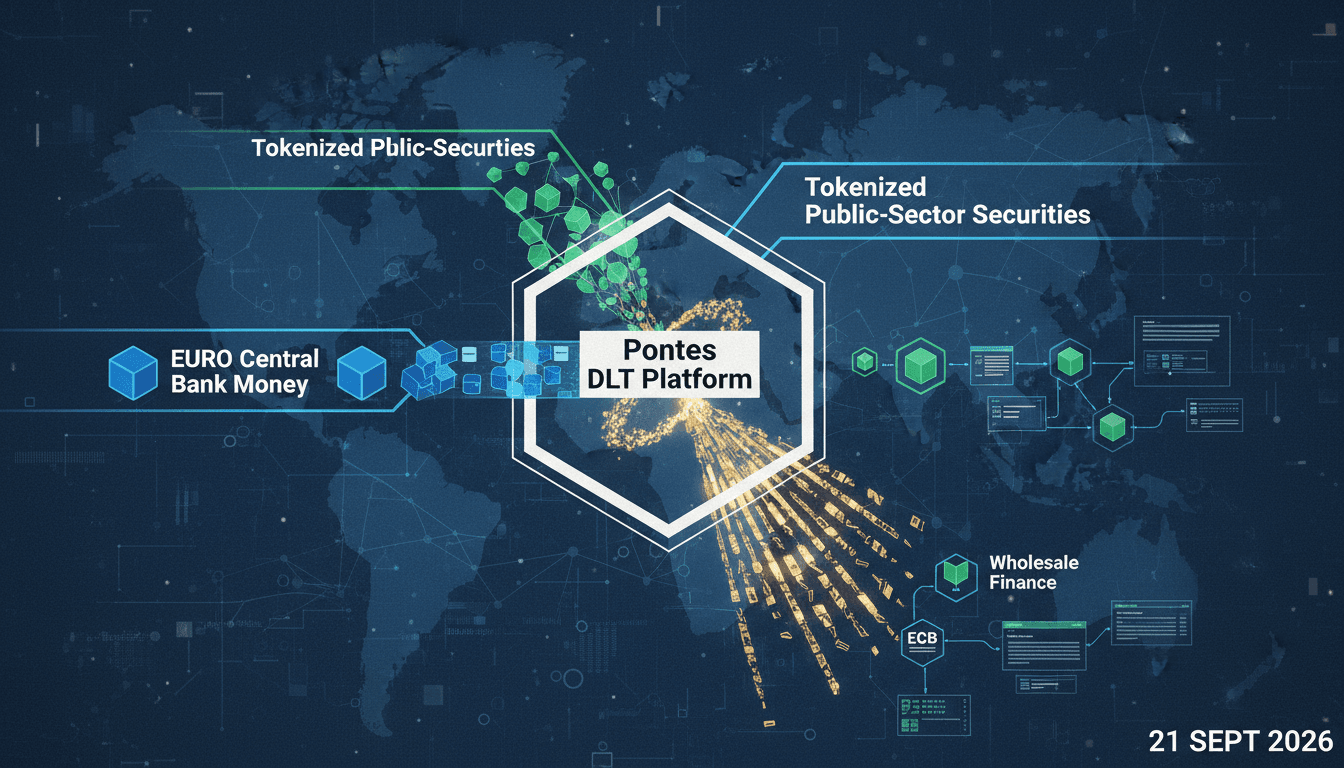
- The Pontes DLT platform was launched simultaneously, enabling settlements in central bank money and connecting market DLT platforms to TARGET Services.
- The European Stability Mechanism endorsed the initiative, emphasizing the importance of maintaining central bank money's role in settlements.
The context you actually need
- The ECB's previous tests in 2024 involved nearly €1.6 billion in transactions, demonstrating strong market demand for risk-free settlement assets.
- The dual-track strategy approved in 2025 includes Pontes for immediate interoperability and the Appia initiative for a long-term tokenized ecosystem.
- Pontes consolidates prior interoperability solutions, linking private DLT platforms with established TARGET infrastructure, enhancing efficiency in settlements.
What's really happening
On September 21, 2026, the European Central Bank (ECB) took a pivotal step in the evolution of digital finance by announcing its intent to invest a portion of its own funds in tokenized euro-denominated public-sector securities. This investment is part of a broader strategy to integrate central bank money into the realm of tokenized wholesale finance, a move that could redefine the landscape of financial transactions.
The newly launched Pontes DLT platform is central to this initiative. It facilitates the settlement of transactions in central bank money, thereby ensuring a level of security and trust that is crucial for market participants. By connecting various market DLT platforms to TARGET Services, Pontes aims to create a seamless environment for executing trades, managing portfolios, and settling transactions. This integration is not merely a technological upgrade; it represents a fundamental shift in how central banks can interact with digital assets.
The ECB's decision to invest in tokenized securities is driven by the need to gain direct operational experience across the entire investment lifecycle. This includes trade execution, settlement, systems integration, and portfolio management. By engaging directly with tokenized assets, the ECB can better understand the implications of these technologies and their potential to enhance financial stability and efficiency.
Moreover, the ECB's initiative is a response to the growing demand for risk-free settlement assets, as evidenced by the nearly €1.6 billion settled during the Eurosystem's exploratory tests in 2024. The strong market interest indicates that investors are increasingly looking for secure and efficient ways to engage with digital finance. The ECB's involvement not only legitimizes these assets but also positions the central bank as a key player in the evolving landscape of tokenized finance.
The European Stability Mechanism's endorsement of the Pontes initiative further underscores its significance. By emphasizing the preservation of central bank money's role in settlements, the ESM highlights the importance of maintaining trust and stability in the financial system. This initiative is expected to attract a range of market participants, including major banks like Deutsche Bank, Santander, and Société Générale, as well as DLT operators such as Clearstream and Cashlink.
As the ECB moves forward with this initiative, it plans to gradually onboard additional participants through 2028. This phased approach allows for careful monitoring and adjustment, ensuring that the system can adapt to the evolving needs of the market while maintaining the integrity of central bank money.
Who feels it first (and how)
- Financial institutions: Banks and investment firms will need to adapt to new settlement processes and potentially rethink their asset management strategies.
- Regulatory bodies: Increased scrutiny and new regulations may emerge as central banks engage more with digital assets.
- Investors: Those holding or considering tokenized assets will benefit from enhanced security and efficiency in transactions.
What to watch next
- Market adoption rates: Monitor how quickly financial institutions begin to utilize the Pontes platform for transactions, as this will indicate the initiative's success.
- Regulatory developments: Keep an eye on any new regulations or guidelines issued by the ECB or other regulatory bodies regarding tokenized assets.
- Expansion of participant onboarding: Watch for announcements regarding additional market participants joining the Pontes platform, which could signal growing confidence in the system.
The ECB has initiated preparatory work for investing in tokenized securities.
The gradual onboarding of additional market participants will occur through 2028.
The long-term impact on traditional financial systems and how quickly they will adapt to these changes remains uncertain.
Frequently Asked Questions
- Why it matters?
- This initiative signals a significant shift in how central banks may integrate digital assets into traditional finance.
- What happened (in 30 seconds)?
- On September 21, 2026, the European Central Bank (ECB) announced preparatory work to invest in tokenized euro-denominated public-sector securities. The Pontes DLT platform was launched simultaneously, enabling settlements in central bank money and connecting market DLT platforms to TARGET Services. The European Stability Mechanism endorsed the initiative, emphasizing the importance of maintaining central bank money's role in settlements.
- What's really happening?
- On September 21, 2026, the European Central Bank (ECB) took a pivotal step in the evolution of digital finance by announcing its intent to invest a portion of its own funds in tokenized euro-denominated public-sector securities. This investment is part of a broader strategy to integrate central bank money into the realm of tokenized wholesale finance, a move that could redefine the landscape of financial transactions. The newly launched Pontes DLT platform is central to this initiative. It faci
- Who feels it first (and how)?
- Financial institutions: Banks and investment firms will need to adapt to new settlement processes and potentially rethink their asset management strategies. Regulatory bodies: Increased scrutiny and new regulations may emerge as central banks engage more with digital assets. Investors: Those holding or considering tokenized assets will benefit from enhanced security and efficiency in transactions.
- What to watch next?
- Market adoption rates: Monitor how quickly financial institutions begin to utilize the Pontes platform for transactions, as this will indicate the initiative's success. Regulatory developments: Keep an eye on any new regulations or guidelines issued by the ECB or other regulatory bodies regarding tokenized assets. Expansion of participant onboarding: Watch for announcements regarding additional market participants joining the Pontes platform, which could signal growing confidence in the system.
Covers blockchain, cryptocurrency news, project analysis, and market insights.
"Cointelegraph is a leading crypto-focused media outlet known for timely news, analysis, and educational content related to blockchain and digital assets."
— A47 Editor
ECB to put its own money into tokenized securities via new Pontes DLT
The European Central Bank (ECB) has announced its intention to invest in tokenized public-sector securities through its new Pontes distributed ledger technology (DLT) platform, aiming to gain practical experience in the DLT market. This initiative re...
Covers Bitcoin plus altcoin news, market updates, and educational resources.
"Bitcoin.com provides news, market data, and guides focused on Bitcoin and the wider crypto industry."
— A47 Editor
European Central Bank Connects Tokenized Assets to Central Bank Money
The European Central Bank (ECB) has announced a significant initiative to connect tokenized assets with central bank money, marking a strategic shift towards integrating blockchain technology into its payment infrastructure. This move aims to enhance...
Covers blockchain, cryptocurrency news, project analysis, and market insights.
"CoinDesk is a well-established cryptocurrency and blockchain news provider, offering comprehensive insights, market data, and industry research."
— A47 Editor
ECB plans to buy tokenized bonds with its own funds
The European Central Bank (ECB) has initiated a new system aimed at integrating its payment infrastructure with blockchain-based financial markets, planning to purchase tokenized bonds using its own funds. This move signifies a strategic shift toward...
Covers blockchain, cryptocurrency news, project analysis, and market insights.
"CoinDesk is a well-established cryptocurrency and blockchain news provider, offering comprehensive insights, market data, and industry research."
— A47 Editor
ECB deploys Pontes platform to settle wholesale tokenized assets in central-bank money
The European Central Bank (ECB) has launched the Pontes platform, designed to facilitate the settlement of wholesale tokenized assets using central-bank money. This initiative connects distributed ledger technology (DLT) market infrastructure to the ...
Real-time updates, analysis, and reports on the blockchain and cryptocurrency sectors.
"Crypto News delivers real-time updates, analysis, and reports on the blockchain and cryptocurrency sectors."
— A47 Editor
ECB launches Pontes to settle blockchain transactions in central bank money
The European Central Bank (ECB) has launched Pontes, a new initiative designed to facilitate the settlement of blockchain-based wholesale transactions using central bank money. This move is part of a broader strategy to integrate blockchain technolog...