
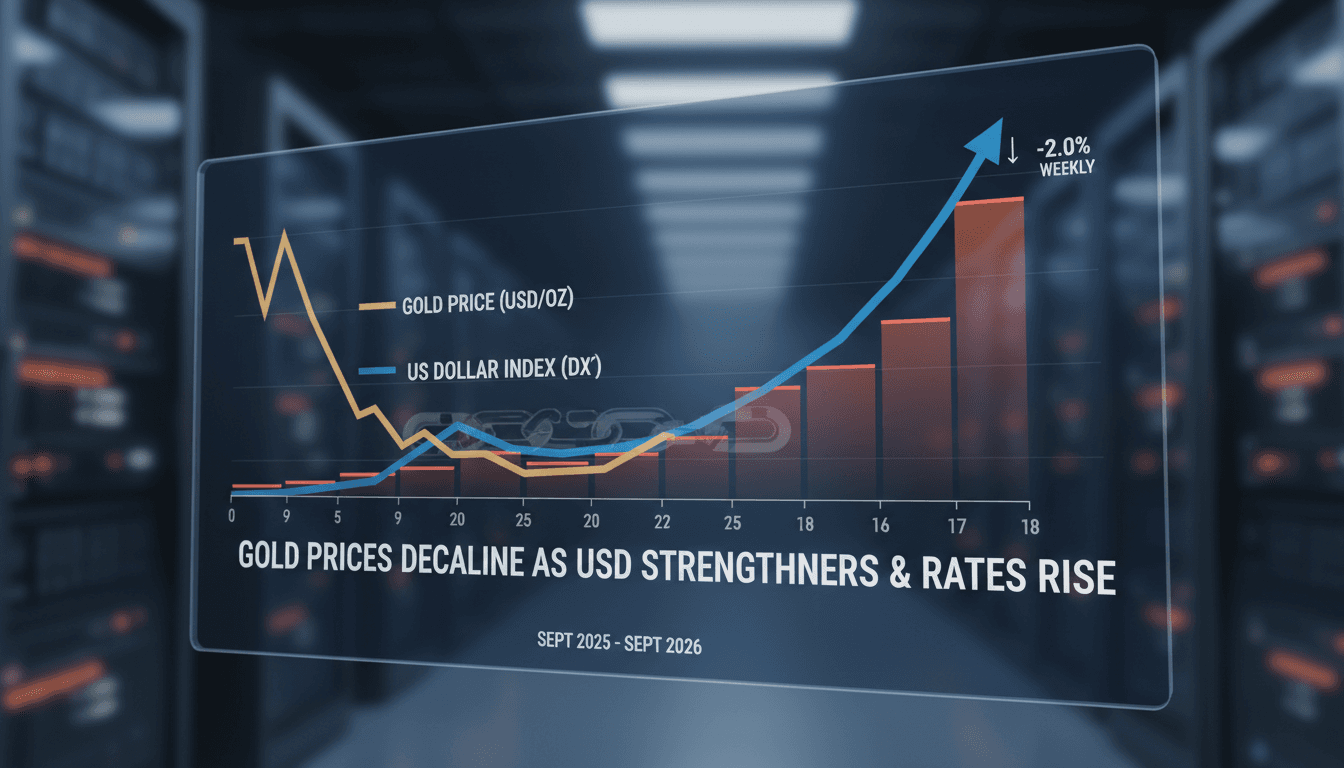
Gold Prices Decline Over 2% Due to Strong US Dollar and Fed Rate Hike Expectations
Why it matters
Gold prices are a key indicator of economic stability and investor sentiment, influencing various markets and sectors globally.
What happened (in 30 seconds)
- Gold prices fell on September 25, 2026, with spot gold down 0.2% to $4,270.40 per ounce, marking a weekly loss exceeding 2%.
- The US dollar strengthened, driven by expectations of sustained high interest rates from the Federal Reserve to combat inflation.
- Futures prices increased slightly, with gold futures rising 0.2% to $4,304.80 per ounce, reflecting broader market dynamics.
The context you actually need
- Federal Reserve actions: A recent quarter-point rate increase and hawkish commentary from Fed officials have heightened expectations for prolonged elevated interest rates.
- Opportunity cost: A resilient US labor market and rising Treasury yields increase the cost of holding non-yielding gold, making it less attractive to investors.
- Global commodity trends: Similar declines are observed across precious metals like silver, platinum, and palladium, indicating a broader market trend.
What's really happening
The decline in gold prices is primarily driven by a stronger US dollar and the Federal Reserve's commitment to controlling inflation. Following a recent quarter-point rate hike, Fed officials have signaled the need for further tightening, which has led to increased market speculation about sustained high interest rates. This environment creates a higher opportunity cost for holding gold, which does not yield interest or dividends, making it less appealing compared to yield-bearing assets.
As the dollar strengthens, gold becomes more expensive for foreign buyers, further dampening demand. The current spot price of gold reflects this dynamic, trading at $4,270.40 per ounce, while futures prices have shown slight resilience, indicating some investor interest in future contracts. However, the overall sentiment remains bearish, with a weekly decline of 2.27% noted in the Comex gold front-month contract.
The implications of these trends extend beyond just gold prices. Investors are increasingly shifting their focus toward yield-bearing assets, leading to volatility across commodities and equities. This shift is compounded by rising Treasury yields, which support the dollar's strength and further pressure gold prices. The broader market is responding with caution, as trading volumes reflect ongoing concerns about inflation and geopolitical energy price influences.
In Dubai, the decline in gold prices could stimulate local demand for jewelry and investment holdings, as lower acquisition costs may attract both residents and tourists. This could ease inventory pressures for dealers and boost sales at local souks and retailers. However, the overall sentiment in global markets remains cautious, with investors closely monitoring the Federal Reserve's next moves and their potential impact on inflation and economic stability.
Who feels it first (and how)
- Gold traders and investors: Directly impacted by price fluctuations, affecting their investment strategies and portfolio valuations.
- Jewelry retailers in Dubai: May see increased demand as lower prices make gold more accessible to consumers.
- US Treasury bond investors: Affected by rising yields, which could shift investment strategies away from non-yielding assets like gold.
What to watch next
- Federal Reserve announcements: Future statements regarding interest rates will be crucial in determining gold's trajectory and investor sentiment.
- US dollar index movements: Continued strength in the dollar could further pressure gold prices and influence global commodity markets.
- Inflation data releases: Upcoming reports on inflation will provide insights into the effectiveness of the Fed's policies and their impact on gold and other commodities.
Gold prices are currently in decline due to a stronger US dollar and Fed rate hike expectations.
Continued volatility in commodity markets as investors react to economic indicators and Fed policies.
The long-term impact of these trends on gold demand and pricing in emerging markets like Dubai.
Frequently Asked Questions
- Why it matters?
- Gold prices are a key indicator of economic stability and investor sentiment, influencing various markets and sectors globally.
- What happened (in 30 seconds)?
- Gold prices fell on September 25, 2026, with spot gold down 0.2% to $4,270.40 per ounce, marking a weekly loss exceeding 2%. The US dollar strengthened, driven by expectations of sustained high interest rates from the Federal Reserve to combat inflation. Futures prices increased slightly, with gold futures rising 0.2% to $4,304.80 per ounce, reflecting broader market dynamics.
- What's really happening?
- The decline in gold prices is primarily driven by a stronger US dollar and the Federal Reserve's commitment to controlling inflation. Following a recent quarter-point rate hike, Fed officials have signaled the need for further tightening, which has led to increased market speculation about sustained high interest rates. This environment creates a higher opportunity cost for holding gold, which does not yield interest or dividends, making it less appealing compared to yield-bearing assets. As th
- Who feels it first (and how)?
- Gold traders and investors: Directly impacted by price fluctuations, affecting their investment strategies and portfolio valuations. Jewelry retailers in Dubai: May see increased demand as lower prices make gold more accessible to consumers. US Treasury bond investors: Affected by rising yields, which could shift investment strategies away from non-yielding assets like gold.
- What to watch next?
- Federal Reserve announcements: Future statements regarding interest rates will be crucial in determining gold's trajectory and investor sentiment. US dollar index movements: Continued strength in the dollar could further pressure gold prices and influence global commodity markets. Inflation data releases: Upcoming reports on inflation will provide insights into the effectiveness of the Fed's policies and their impact on gold and other commodities.
Sports reporting with a focus on Saudi and regional competitions.
"Okaz sports coverage is broad and audience-friendly, with strong attention to Saudi teams and leagues."
— A47 Editor
الذهب يواصل التراجع.. خسائر تتجاوز 2% خلال أسبوع
Gold prices have continued to decline, with a drop of over 2% this week, influenced by a rising dollar and increasing expectations that the Federal Reserve will maintain high interest rates for an extended period to combat inflation. As of 0035 GMT, ...
Arabic-language economic and business reporting with strong UAE market relevance.
"Emarat Al Youm business coverage often centers UAE property, banking, consumer issues, and economic policy."
— A47 Editor
الذهب يتجه لانخفاض أسبوعي وسط صعود الدولار وتأثيرات الفائدة الأميركية الذهب يتجه لانخفاض أسبوعي وسط صعود الدولار وتأثيرات الفائدة الأميركية
Gold prices have declined today, heading towards a weekly decrease due to the strengthening dollar and increasing expectations regarding the U.S. Federal Reserve's interest rate policies.
Jordanian news and regional updates.
"Roya News is a Jordanian outlet focused on breaking news and local affairs."
— A47 Editor
تراجع أسعار الذهب عالمياً في ظل التوترات الإقليمية
Global gold prices have declined amid regional tensions, with futures contracts showing a notable drop on Friday, September 25. This decline reflects the ongoing instability in various regions, impacting investor confidence and market dynamics.
Arabic-language economic and business reporting with strong UAE market relevance.
"Emarat Al Youm business coverage often centers UAE property, banking, consumer issues, and economic policy."
— A47 Editor
الذهب ينخفض وسط توقعات برفع الفائدة الأميركية الذهب ينخفض وسط توقعات برفع الفائدة الأميركية
Gold prices have slightly decreased today amid expectations that the Federal Reserve (the U.S. central bank) will raise interest rates. This decline reflects market reactions to potential monetary policy changes that could impact investment strategie...
Arabic-language coverage of international news and geopolitics.
"RT Arabic is a Russian state-funded outlet often criticized for promoting Kremlin-aligned narratives."
— A47 Editor
بعد تراجعها 1%.. هل تواصل أسعار الذهب الهبوط أم تعود إلى الصعود؟
Gold prices fell by more than 1% during trading on Wednesday, influenced by the strength of the US dollar and increasing market expectations that the Federal Reserve will continue to raise interest rates.