
US Dollar Reaches Eight-Week High Amid Heightened Rate-Hike Expectations
Why it matters
The dollar's rise signals shifting monetary policy that could affect global trade dynamics and inflation rates.
What happened (in 30 seconds)
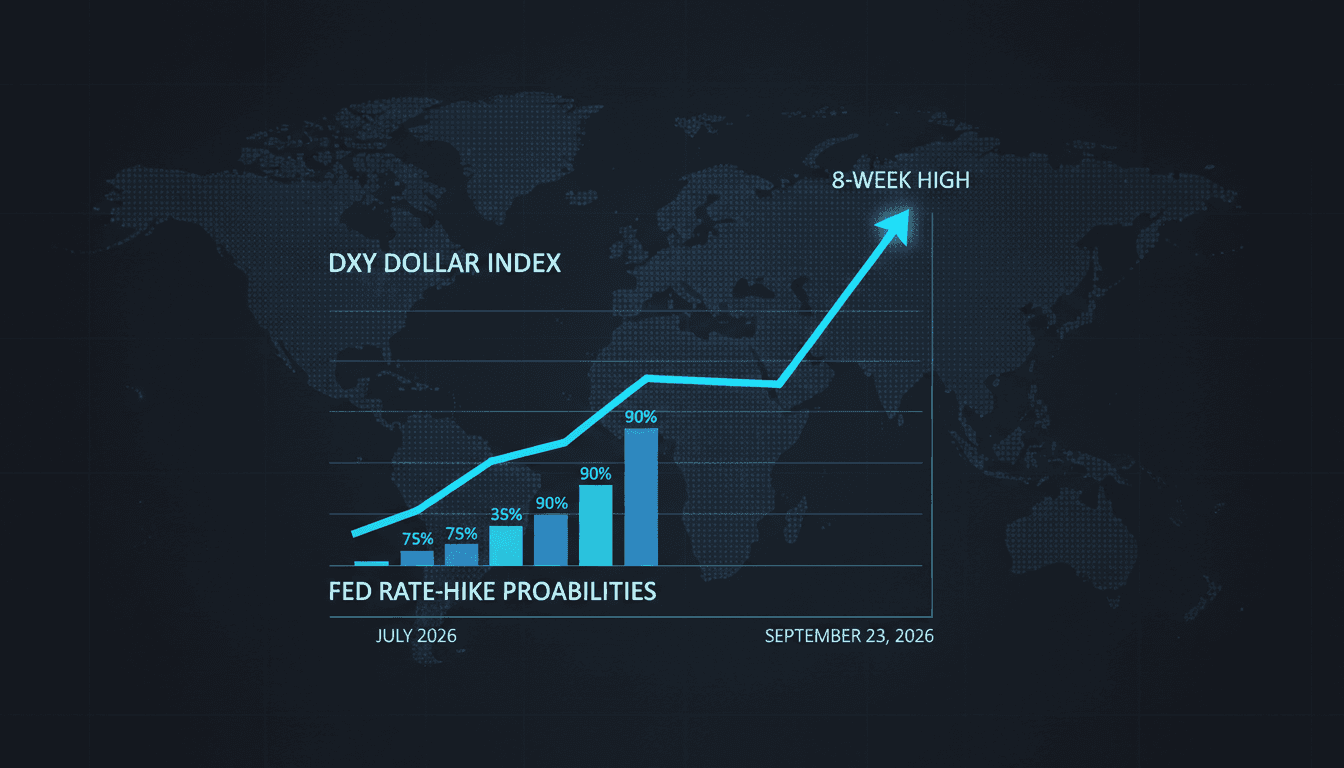
- The US dollar reached an eight-week high of 100.967 on September 23, 2026, driven by increased expectations for Federal Reserve rate hikes.
- Federal Reserve Chairman Kevin Warsh indicated further tightening in monetary policy following a recent 25-basis-point increase.
- Brent crude oil prices rebounded above $100 per barrel, providing additional support for the dollar's safe-haven status.
The context you actually need
- Federal Reserve policy: The Fed's recent rate hike and guidance for more increases reflect ongoing inflation concerns and a shift from earlier expectations of rate cuts.
- Market reactions: Futures markets are pricing in a 55% chance of another rate hike in October, with further increases anticipated through 2027.
- Global energy prices: Rising oil prices have historically bolstered the dollar, but current rate expectations are now the primary driver of its strength.
What's really happening
The US dollar's ascent to an eight-week high is a direct response to the Federal Reserve's recent monetary policy decisions. Following a 25-basis-point rate increase in mid-September 2026, the Fed signaled that further tightening is likely necessary to combat persistent inflation. This shift in policy has led market participants to reassess their expectations, moving from potential rate cuts to pricing in additional hikes.
As of September 23, the dollar index (DXY) climbed to 100.967, reflecting a robust demand for the currency amid heightened interest-rate expectations. The futures market indicates a 55% probability of another 25-basis-point increase in October, with a full hike priced in by December and additional increases projected through 2027. This trend underscores the Fed's commitment to maintaining a tight monetary stance in response to stronger-than-expected economic data and ongoing inflationary pressures.
Simultaneously, the rebound in Brent crude oil prices, which surpassed $100 per barrel, has provided a supportive backdrop for the dollar. The US's position as a net exporter of oil enhances the dollar's appeal as a safe-haven asset, particularly during periods of geopolitical uncertainty. However, the current market dynamics suggest that rate expectations are now the dominant factor influencing the dollar's strength, overshadowing the traditional correlation with oil prices.
The implications of a stronger dollar are multifaceted. For consumers and businesses, it can lead to lower import costs for dollar-denominated goods, but it may also pressure non-oil exports and tourism competitiveness. As the dollar strengthens, countries with weaker currencies may find it more challenging to compete in global markets, potentially leading to shifts in trade balances and economic strategies.
Who feels it first (and how)
- Importers: Businesses relying on imported goods may benefit from lower costs due to a stronger dollar.
- Tourism sector: Destinations that attract foreign tourists may see a decline in visitors from countries with weaker currencies.
- Exporters: Companies exporting goods may face challenges as their products become more expensive for foreign buyers.
- Consumers: Individuals traveling abroad may find their purchasing power increased, but imported goods may become cheaper.
What to watch next
- Federal Reserve announcements: Keep an eye on upcoming Fed meetings for signals on future rate hikes, as these will directly impact the dollar's strength.
- Global oil prices: Monitor Brent crude prices, as fluctuations could influence the dollar's safe-haven status and overall market sentiment.
- Economic data releases: Watch for key economic indicators, such as inflation and employment figures, which could sway Fed policy and market expectations.
The dollar has reached an eight-week high due to increased rate-hike expectations.
Further Federal Reserve rate hikes are anticipated through late 2026 and into 2027.
The long-term impact of a stronger dollar on global trade dynamics remains uncertain.
Frequently Asked Questions
- Why it matters?
- The dollar's rise signals shifting monetary policy that could affect global trade dynamics and inflation rates.
- What happened (in 30 seconds)?
- The US dollar reached an eight-week high of 100.967 on September 23, 2026, driven by increased expectations for Federal Reserve rate hikes. Federal Reserve Chairman Kevin Warsh indicated further tightening in monetary policy following a recent 25-basis-point increase. Brent crude oil prices rebounded above $100 per barrel, providing additional support for the dollar's safe-haven status.
- What's really happening?
- The US dollar's ascent to an eight-week high is a direct response to the Federal Reserve's recent monetary policy decisions. Following a 25-basis-point rate increase in mid-September 2026, the Fed signaled that further tightening is likely necessary to combat persistent inflation. This shift in policy has led market participants to reassess their expectations, moving from potential rate cuts to pricing in additional hikes. As of September 23, the dollar index (DXY) climbed to 100.967, reflecti
- Who feels it first (and how)?
- Importers: Businesses relying on imported goods may benefit from lower costs due to a stronger dollar. Tourism sector: Destinations that attract foreign tourists may see a decline in visitors from countries with weaker currencies. Exporters: Companies exporting goods may face challenges as their products become more expensive for foreign buyers. Consumers: Individuals traveling abroad may find their purchasing power increased, but imported goods may become cheaper.
- What to watch next?
- Federal Reserve announcements: Keep an eye on upcoming Fed meetings for signals on future rate hikes, as these will directly impact the dollar's strength. Global oil prices: Monitor Brent crude prices, as fluctuations could influence the dollar's safe-haven status and overall market sentiment. Economic data releases: Watch for key economic indicators, such as inflation and employment figures, which could sway Fed policy and market expectations.
Social/economic commentary and analysis relevant to business and markets.
"WSJ blends data-driven economic insight with commentary on policy and society."
— A47 Editor
Dollar Jumps to 8-Week High on Fed Rate-Hike Bets
The U.S. dollar surged to its highest level in eight weeks against a basket of currencies as markets reacted to expectations of further interest rate hikes by the Federal Reserve, driven by strong employment data.
Markets desk coverage, trading insights, and investor updates.
"WSJ’s markets reporting provides in-depth analysis and context for investors."
— A47 Editor
Dollar Jumps to 8-Week High on Fed Rate-Hike Bets
The U.S. dollar surged to its highest level in eight weeks against a basket of currencies as markets reacted to expectations of further interest rate hikes by the Federal Reserve. This rise follows strong employment data, which has fueled speculation...
Global markets, investing, and macroeconomics from a premier financial newsroom.
"Bloomberg is respected for in-depth financial reporting and data-driven analysis."
— A47 Editor
USD rallies after US data aided case for Federal Reserve increases
The U.S. dollar experienced a significant rally following the release of data indicating that business activity in the U.S. rose at its fastest pace in over five years, strengthening the case for the Federal Reserve to continue increasing interest ra...