
Oil Prices Surge as Iranian President Defies US at UN General Assembly
Why it matters
The fluctuation in oil prices directly impacts global markets, influencing everything from transportation costs to consumer prices.
What happened (in 30 seconds)
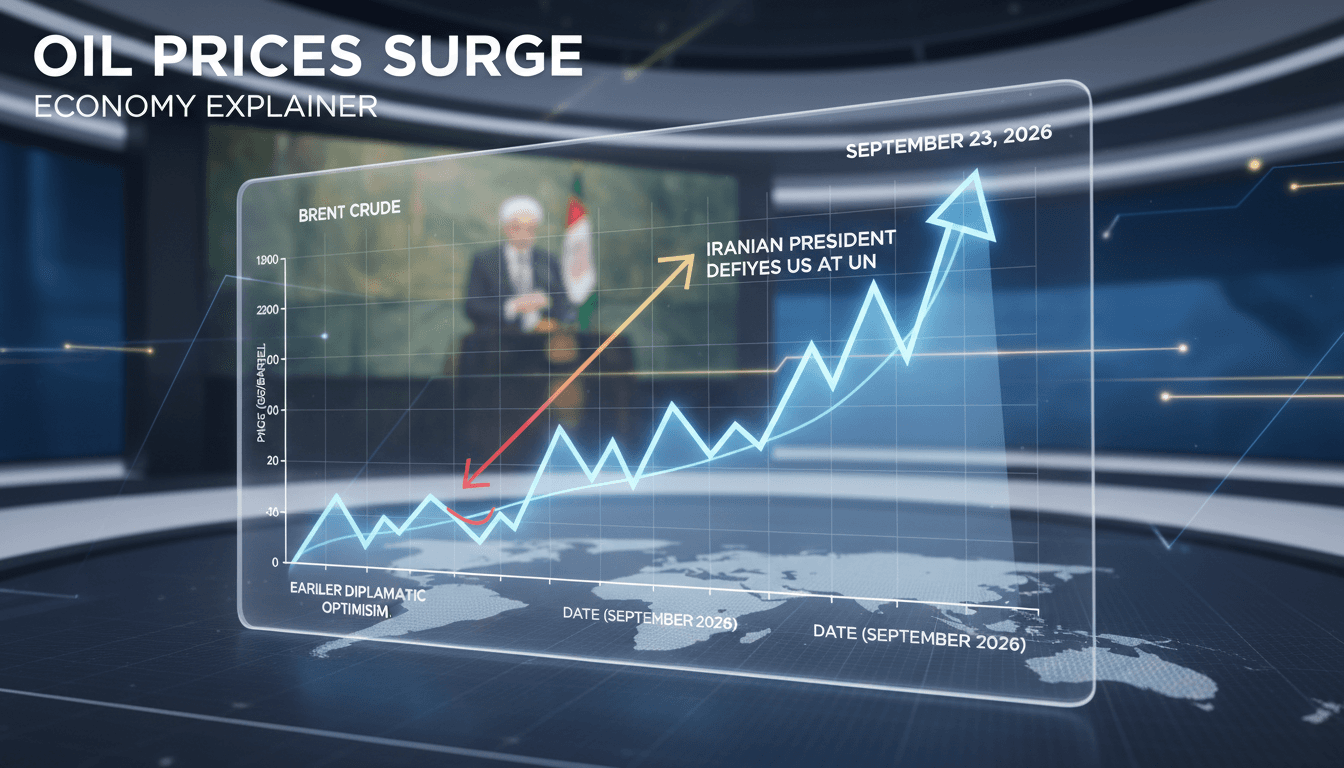
- Oil prices reversed a five-day decline on September 23, 2026, with Brent crude rising over 4% to $103.37 per barrel.
- Iranian President Masoud Pezeshkian's remarks at the UN countered previous diplomatic optimism, reigniting fears of supply disruptions.
- U.S. President Donald Trump's earlier comments had pressured prices lower, but Pezeshkian's defiance shifted market sentiment.
The context you actually need
- Prior to September 23, oil prices had been declining due to perceived progress in U.S.-Iran diplomatic talks, including potential easing of tensions in the Strait of Hormuz.
- The Strait of Hormuz is a critical chokepoint for global oil shipments, making any threats to its security a significant concern for traders and consumers alike.
- Market reactions often reflect not just current events but also the anticipated future state of geopolitical relations, making rhetoric from leaders crucial.
What's really happening
On September 22, 2026, U.S. President Donald Trump highlighted positive developments in U.S.-Iran diplomatic discussions, which led to a decline in oil prices for six consecutive sessions. Traders were optimistic about a potential easing of tensions, particularly regarding the Strait of Hormuz, a vital route for oil shipments. However, this optimism was abruptly challenged on September 23 when Iranian President Masoud Pezeshkian addressed the UN General Assembly. His remarks rejected the U.S. narrative that labeled Iran as a terrorist state and emphasized Iran's defensive posture and willingness to engage in diplomacy without coercion.
This verbal escalation from Pezeshkian triggered a significant market reaction, as traders reassessed the likelihood of de-escalation in the region. The immediate result was a sharp rebound in oil prices, with Brent crude futures gaining 4.2% intraday. This price surge reflects a renewed risk premium in the market, as traders began to factor in the potential for continued geopolitical instability.
The interplay between diplomatic rhetoric and market reactions underscores the sensitivity of oil prices to geopolitical events. Traders are not just reacting to current conditions but are also forecasting future scenarios based on the statements and actions of key political figures. The market's quick shift from optimism to caution illustrates how fragile the balance is in global oil markets, particularly when it comes to U.S.-Iran relations.
Moreover, the implications of this price rebound extend beyond immediate market reactions. For countries heavily reliant on oil imports, such as those in Europe and Asia, rising prices can lead to increased inflation and economic strain. Conversely, oil-exporting nations may benefit from higher revenues, potentially impacting global economic dynamics.
Who feels it first (and how)
- Oil traders: Immediate impact on trading strategies and risk assessments.
- Transportation sectors: Airlines and shipping companies may face increased fuel costs, affecting ticket prices and shipping rates.
- Consumers: Higher fuel prices could lead to increased costs for goods and services, impacting household budgets.
- Expatriates in Dubai: Potential for rising fuel and energy costs, affecting living expenses and consumption patterns.
What to watch next
- Iran's future diplomatic engagements: Continued rhetoric from Iranian leaders will be crucial in shaping market expectations and oil prices.
- U.S. responses to Iranian statements: Any further comments from the U.S. administration could either escalate tensions or signal a return to negotiations, impacting market stability.
- Global oil supply chain developments: Watch for any disruptions in the Strait of Hormuz or other key shipping routes, as these will directly affect oil prices and availability.
Oil prices are sensitive to geopolitical tensions, particularly in the Middle East.
Continued volatility in oil prices as markets react to diplomatic developments.
The long-term trajectory of U.S.-Iran relations and its impact on global oil supply.
Frequently Asked Questions
- Why it matters?
- The fluctuation in oil prices directly impacts global markets, influencing everything from transportation costs to consumer prices.
- What happened (in 30 seconds)?
- Oil prices reversed a five-day decline on September 23, 2026, with Brent crude rising over 4% to $103.37 per barrel. Iranian President Masoud Pezeshkian's remarks at the UN countered previous diplomatic optimism, reigniting fears of supply disruptions. U.S. President Donald Trump's earlier comments had pressured prices lower, but Pezeshkian's defiance shifted market sentiment.
- What's really happening?
- On September 22, 2026, U.S. President Donald Trump highlighted positive developments in U.S.-Iran diplomatic discussions, which led to a decline in oil prices for six consecutive sessions. Traders were optimistic about a potential easing of tensions, particularly regarding the Strait of Hormuz, a vital route for oil shipments. However, this optimism was abruptly challenged on September 23 when Iranian President Masoud Pezeshkian addressed the UN General Assembly. His remarks rejected the U.S. na
- Who feels it first (and how)?
- Oil traders: Immediate impact on trading strategies and risk assessments. Transportation sectors: Airlines and shipping companies may face increased fuel costs, affecting ticket prices and shipping rates. Consumers: Higher fuel prices could lead to increased costs for goods and services, impacting household budgets. Expatriates in Dubai: Potential for rising fuel and energy costs, affecting living expenses and consumption patterns.
- What to watch next?
- Iran's future diplomatic engagements: Continued rhetoric from Iranian leaders will be crucial in shaping market expectations and oil prices. U.S. responses to Iranian statements: Any further comments from the U.S. administration could either escalate tensions or signal a return to negotiations, impacting market stability. Global oil supply chain developments: Watch for any disruptions in the Strait of Hormuz or other key shipping routes, as these will directly affect oil prices and availability.
Oil, metals, and agriculture: supply/demand headlines, OPEC chatter, inventories, and price action.
"Solid tape for energy and metals traders tracking macro and micro catalysts."
— A47 Editor
Oil halts 5-day losing run, Brent rises 4% as Iran’s president expresses defiance
Oil prices have halted a five-day losing streak, with Brent crude rising by 4% following Iranian President Ebrahim Raisi's defiant remarks regarding U.S. sanctions and military threats. This increase comes amid ongoing geopolitical tensions that have...
Editor-curated FT homepage stories spanning markets, business, world, and opinion.
"The Financial Times is a globally respected business publication with a centrist/center-left tone and strong markets focus."
— A47 Editor
Meta leads tech rally as oil prices fall
Meta has emerged as a leader in the recent tech rally, coinciding with a notable decline in Brent crude oil prices, which have fallen amid speculation that former President Donald Trump may meet with Iran's president this week. This development refle...
Stock market news, investing ideas, and trading analysis.
"TheStreet provides market news and retail-investor-focused analysis."
— A47 Editor
Crude oil is falling, but when will pump relief arrive?
Crude oil prices have recently fallen, with stocks rising as President Trump hinted at a potential meeting with Iran's president, suggesting a possible easing of tensions. This development comes after a period of volatility in oil markets, influenced...