
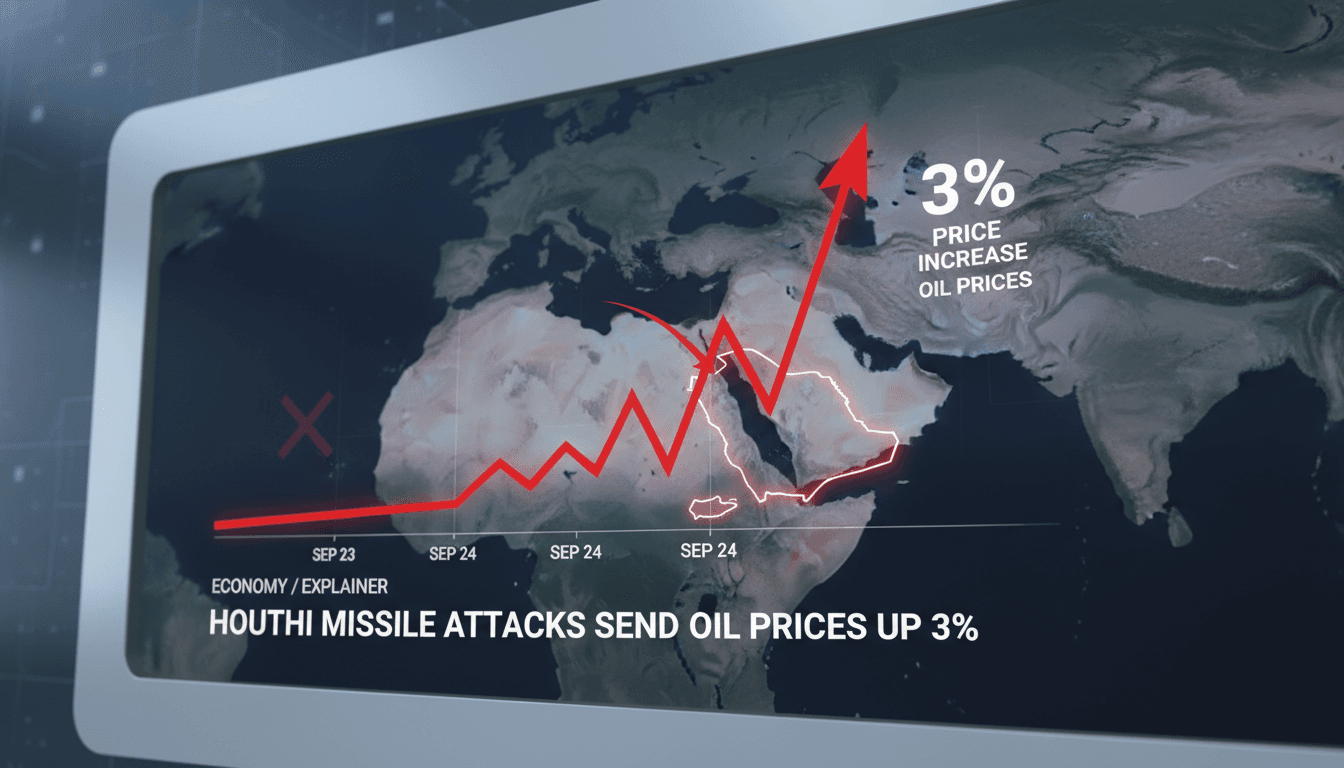
Houthi Missile Attacks on Saudi Arabia Cause Oil Prices to Rise by 3%
Why it matters
The incident underscores the fragility of global oil supply chains amid geopolitical tensions.
What happened (in 30 seconds)
- Houthi missile attacks on Saudi Arabia on September 24, 2026, led to a 3% increase in oil prices.
- Saudi-led coalition forces intercepted all missiles, preventing damage and casualties.
- Market reactions included a spike in Brent crude futures, which rose to $106.60 per barrel.
The context you actually need
- Ongoing US-Iran conflict has already disrupted global oil flows, particularly through the Strait of Hormuz.
- Saudi Arabia's oil operations were recovering from previous drone attacks, highlighting vulnerabilities in its infrastructure.
- Diplomatic talks between the US and Iran are underway, potentially impacting future oil supply stability.
What's really happening
On September 24, the Houthi movement, backed by Iran, launched missile strikes targeting key locations in Saudi Arabia, including the southern province of Taif and the Yanbu Red Sea area. Although Saudi Arabia's military successfully intercepted all six missiles, the mere act of aggression reignited fears of supply disruptions from the world's largest oil exporter. This incident is particularly significant given the backdrop of a nearly seven-month-long conflict between the US and Iran, which has already strained global oil supplies and heightened tensions in the region.
The immediate market response was swift. Brent crude futures surged by $3.52, or 3.4%, settling at $106.60 per barrel, marking its highest close since September 15. West Texas Intermediate (WTI) also saw gains, rising by $2.45, or 2.7%, breaking a seven-session decline. The volatility in oil prices reflects not only the immediate threat posed by the missile strikes but also the broader context of geopolitical instability.
As the situation unfolded, intraday gains in oil prices reached as high as 5% before moderating on news of ongoing US-Iran diplomatic discussions aimed at de-escalation and potentially reopening the Strait of Hormuz. This strait is a critical chokepoint for global oil shipments, and any disruption could have far-reaching implications for oil prices and supply chains worldwide.
Moreover, the incident has broader implications for regional stability. Iran's threats of retaliation against neighboring countries complying with US sanctions add another layer of complexity to the situation. The cancellation of Iranian airline flights to the UAE, including Dubai, marks the first significant local impact of these sanctions, indicating that the repercussions of this conflict extend beyond oil markets.
In summary, the missile strikes not only highlight the immediate risks to oil supply but also reflect the intricate web of geopolitical tensions that can influence global markets. As the situation develops, stakeholders in the oil industry and consumers alike will need to stay vigilant.
Who feels it first (and how)
- Oil consumers: Increased prices at the pump and for heating.
- Transport sector: Higher operational costs affecting logistics and freight.
- Energy companies: Fluctuating stock prices and potential supply chain disruptions.
- Investors: Volatility in oil futures markets impacting portfolios.
What to watch next
- US-Iran diplomatic talks: Progress or setbacks could significantly influence oil supply stability.
- Saudi oil production levels: Any changes in output could affect global oil prices.
- Market reactions to sanctions: How secondary sanctions on Iranian entities impact regional trade and oil flows.
Oil prices are currently volatile due to geopolitical tensions.
Continued fluctuations in oil prices as diplomatic efforts unfold.
The long-term impact of the US-Iran conflict on global oil supply chains.
Frequently Asked Questions
- Why it matters?
- The incident underscores the fragility of global oil supply chains amid geopolitical tensions.
- What happened (in 30 seconds)?
- Houthi missile attacks on Saudi Arabia on September 24, 2026, led to a 3% increase in oil prices. Saudi-led coalition forces intercepted all missiles, preventing damage and casualties. Market reactions included a spike in Brent crude futures, which rose to $106.60 per barrel.
- What's really happening?
- On September 24, the Houthi movement, backed by Iran, launched missile strikes targeting key locations in Saudi Arabia, including the southern province of Taif and the Yanbu Red Sea area. Although Saudi Arabia's military successfully intercepted all six missiles, the mere act of aggression reignited fears of supply disruptions from the world's largest oil exporter. This incident is particularly significant given the backdrop of a nearly seven-month-long conflict between the US and Iran, which ha
- Who feels it first (and how)?
- Oil consumers: Increased prices at the pump and for heating. Transport sector: Higher operational costs affecting logistics and freight. Energy companies: Fluctuating stock prices and potential supply chain disruptions. Investors: Volatility in oil futures markets impacting portfolios.
- What to watch next?
- US-Iran diplomatic talks: Progress or setbacks could significantly influence oil supply stability. Saudi oil production levels: Any changes in output could affect global oil prices. Market reactions to sanctions: How secondary sanctions on Iranian entities impact regional trade and oil flows.
Oil, metals, and agriculture: supply/demand headlines, OPEC chatter, inventories, and price action.
"Solid tape for energy and metals traders tracking macro and micro catalysts."
— A47 Editor
Oil prices settle up about 3% as Houthi attack on Saudi Arabia lifts supply fears
Oil prices have increased by approximately 3% following a recent Houthi attack on Saudi Arabia, which has raised concerns about potential disruptions in oil supply. This escalation in hostilities has intensified fears regarding the stability of oil e...
Markets desk coverage, trading insights, and investor updates.
"WSJ’s markets reporting provides in-depth analysis and context for investors."
— A47 Editor
Oil Futures Post Back-to-Back Gains on Escalation Concerns
Oil futures have experienced back-to-back gains as concerns escalate over Houthi attacks on Saudi targets, which have raised fears of further conflict in the Middle East. The market remains skeptical about the prospects of a U.S.-Iran agreement, cont...
U.S. business news, corporate developments, and economy.
"The Wall Street Journal is respected for deep financial and economic reporting with a center-right editorial perspective."
— A47 Editor
Oil Prices Rebound Amid Persistent Middle East Supply Risks
Oil prices have rebounded as investors consider the potential for improved export flows from Saudi Arabia and ongoing diplomatic efforts between the U.S. and Iran, despite persistent supply risks in the Middle East.