
Gold Prices Stabilize Following Recent Selloff Amid Economic Pressures
What happened
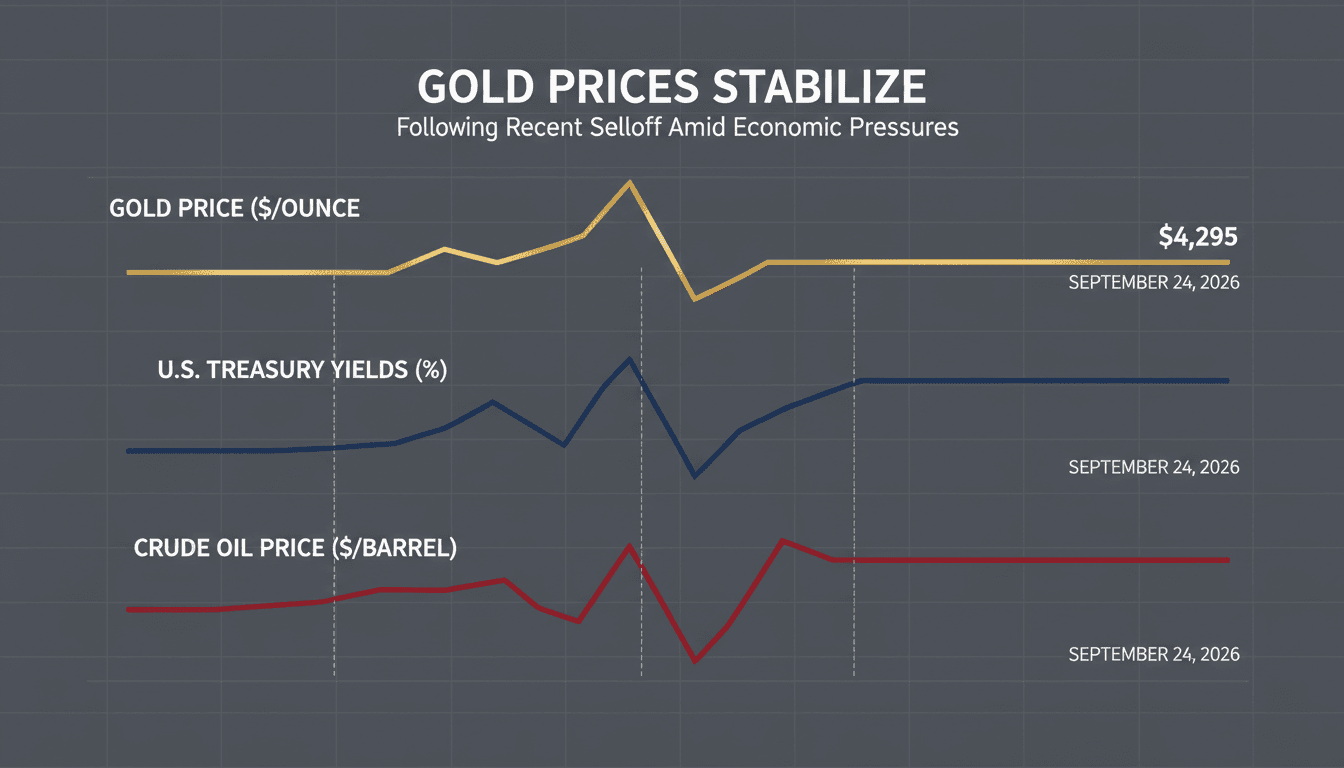
Gold prices steadied after a sharp selloff on September 24, 2026, amid a firmer U.S. dollar and rising Treasury yields.
The Context
- U.S.-Iran tensions: Ongoing conflict has driven oil prices above $100 per barrel, impacting global markets.
- Federal Reserve signals: Expectations for additional rate hikes are rising, shifting focus from gold as a safe haven to higher-yielding assets.
- Market reactions: Sustained pressure on non-yielding assets like gold, equities, and Bitcoin reflects investor sentiment amid economic uncertainty.
The Number
— This is the U.S. 10-year Treasury yield closing level, the highest since July 2007, indicating a shift in investment strategies towards higher yields.
Takeaway
As the Federal Reserve continues to tighten monetary policy, anticipate ongoing volatility in gold prices and related markets.
Oil, metals, and agriculture: supply/demand headlines, OPEC chatter, inventories, and price action.
"Solid tape for energy and metals traders tracking macro and micro catalysts."
— A47 Editor
Gold dips slightly, weighed down by firmer dollar amid oil spike, soaring yields
Gold prices have dipped slightly, influenced by a firmer U.S. dollar, rising oil prices, and soaring Treasury yields. This decline reflects ongoing volatility in the markets as investors react to economic indicators and expectations surrounding Feder...
Markets desk coverage, trading insights, and investor updates.
"WSJ’s markets reporting provides in-depth analysis and context for investors."
— A47 Editor
Gold Muted as Oil, Treasury Yields Resume Climb
Gold prices remained stable in early Asian trading, holding below $4,300 per troy ounce, as a rebound in oil prices and rising Treasury yields exerted pressure on the precious metal. This trend reflects ongoing market volatility and economic uncertai...
Markets desk coverage, trading insights, and investor updates.
"WSJ’s markets reporting provides in-depth analysis and context for investors."
— A47 Editor
Gold Settles Lower As U.S. Dollar, Yields Rise
Gold futures have settled lower for a third consecutive session, driven by a strengthening U.S. dollar and rising Treasury yields. This decline reflects ongoing market pressures as investors react to economic indicators and inflation concerns.