
US 10-Year Treasury Yields Hit 24-Year High Amid Global Bond Sell-Off
Why it matters
The spike in US Treasury yields signals broader economic pressures that could affect global financial stability and personal finance.
What happened (in 30 seconds)
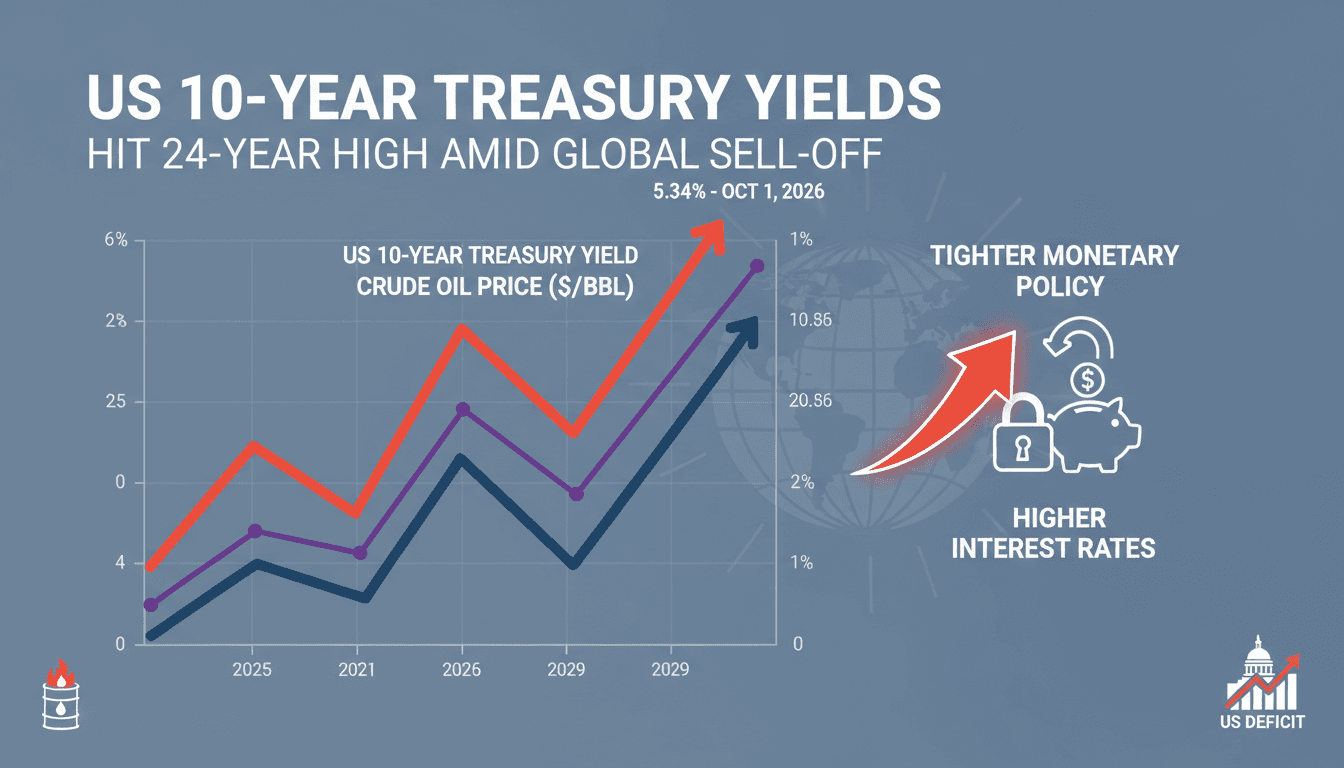
- US 10-year Treasury yields reached 5.34% on October 1, 2026, the highest since 2002.
- Global bond markets experienced a sell-off, driven by inflation fears linked to rising oil prices amid geopolitical tensions.
- Equity markets declined sharply, with major indices reflecting investor anxiety over increased borrowing costs.
The context you actually need
- Oil prices surged above $100 per barrel due to the US-Iran conflict, exacerbating inflation concerns.
- Government debt in the US exceeded $40 trillion, raising fears about fiscal sustainability and future borrowing costs.
- Economic growth expectations remain strong, particularly in sectors tied to AI infrastructure, complicating the inflation narrative.
What's really happening
On October 1, 2026, the global financial landscape shifted dramatically as US 10-year Treasury yields peaked at 5.34%. This marked a significant moment in financial history, as it was the highest yield recorded since 2002. The surge was not an isolated incident but rather a culmination of various factors that have been brewing over the past months.
The primary catalyst for this spike was the ongoing geopolitical tensions in the Middle East, particularly the US-Iran conflict that began in late February 2026. This conflict disrupted oil supplies, pushing Brent crude prices above $100 per barrel. As oil prices rose, so did inflation fears, leading investors to reassess their positions in the bond market. The sell-off was not limited to US Treasuries; it rippled through global bond markets, affecting yields in the UK, Eurozone, and Japan. For instance, UK 30-year gilts briefly exceeded 6%, a level not seen since 1998, while French 10-year yields approached 5%.
The implications of rising yields extend beyond mere numbers. Higher borrowing costs mean that governments, corporations, and consumers will face increased expenses. For governments, this could lead to tighter fiscal policies as they grapple with servicing existing debt. For corporations, higher yields could translate into increased costs of capital, potentially stifling investment and growth. Consumers, particularly those looking to secure mortgages or loans, will also feel the pinch as interest rates rise.
Additionally, the backdrop of a $40 trillion US deficit raises concerns about fiscal sustainability. Investors are wary of the government's ability to manage its debt, especially in an environment where economic growth is expected to be strong, driven by advancements in technology and infrastructure. This paradox creates a complex scenario where growth expectations clash with inflationary pressures, leading to volatility in financial markets.
As the day progressed, US yields eased slightly to around 5.26%, but the volatility remained a concern. Analysts noted that the market's reaction was indicative of deeper issues, including persistent inflation and the potential for further government debt issuance. The late-day bargain hunting provided some relief, but the underlying risks remained, suggesting that this spike in yields could be just the beginning of a more prolonged period of financial instability.
Who feels it first (and how)
- Homebuyers: Higher mortgage rates will increase monthly payments, making homeownership less affordable.
- Corporations: Increased borrowing costs could lead to reduced capital investment and slower growth.
- Governments: Higher yields will strain budgets, forcing potential cuts in public spending or tax increases.
- Investors: Equity markets may face downward pressure as higher yields make bonds more attractive compared to stocks.
- Consumers: Rising interest rates will affect personal loans and credit card rates, increasing overall debt costs.
What to watch next
- Inflation data: Upcoming reports on inflation will be critical in determining whether the current yield levels are sustainable or if further increases are on the horizon.
- Central bank announcements: Watch for signals from the Federal Reserve and other central banks regarding interest rate policies, as they will influence market expectations.
- Oil price trends: Continued fluctuations in oil prices will impact inflation and, consequently, bond yields, making this a key area to monitor.
US Treasury yields have reached their highest levels in 24 years.
Central banks will maintain or raise interest rates to combat inflation.
The long-term impact of geopolitical tensions on oil prices and inflation remains uncertain.
Frequently Asked Questions
- Why it matters?
- The spike in US Treasury yields signals broader economic pressures that could affect global financial stability and personal finance.
- What happened (in 30 seconds)?
- US 10-year Treasury yields reached 5.34% on October 1, 2026, the highest since 2002. Global bond markets experienced a sell-off, driven by inflation fears linked to rising oil prices amid geopolitical tensions. Equity markets declined sharply, with major indices reflecting investor anxiety over increased borrowing costs.
- What's really happening?
- On October 1, 2026, the global financial landscape shifted dramatically as US 10-year Treasury yields peaked at 5.34%. This marked a significant moment in financial history, as it was the highest yield recorded since 2002. The surge was not an isolated incident but rather a culmination of various factors that have been brewing over the past months. The primary catalyst for this spike was the ongoing geopolitical tensions in the Middle East, particularly the US-Iran conflict that began in late
- Who feels it first (and how)?
- Homebuyers: Higher mortgage rates will increase monthly payments, making homeownership less affordable. Corporations: Increased borrowing costs could lead to reduced capital investment and slower growth. Governments: Higher yields will strain budgets, forcing potential cuts in public spending or tax increases. Investors: Equity markets may face downward pressure as higher yields make bonds more attractive compared to stocks. Consumers: Rising interest rates will affect personal loans and
- What to watch next?
- Inflation data: Upcoming reports on inflation will be critical in determining whether the current yield levels are sustainable or if further increases are on the horizon. Central bank announcements: Watch for signals from the Federal Reserve and other central banks regarding interest rate policies, as they will influence market expectations. Oil price trends: Continued fluctuations in oil prices will impact inflation and, consequently, bond yields, making this a key area to monitor.
UK and international business news, economics, and corporate coverage.
"The Guardian’s business section covers finance and markets with a progressive editorial tone."
— A47 Editor
US borrowing costs hit 24-year high as global bond sell-off intensifies
The global bond sell-off has escalated, pushing US government borrowing costs to their highest level in 24 years, with 10-year yields reaching alarming rates. This surge is attributed to fears surrounding the sustainability of the US deficit and risi...
News from the United States including domestic politics, society, and culture.
"The Guardian is known for its progressive editorial stance and in-depth analysis, often advocating for social justice, environmental issues, and liberal values."
— A47 Editor
US borrowing costs hit 24-year high as global bond sell-off intensifies
The global bond sell-off has escalated, pushing US government borrowing costs to their highest level in 24 years, with 10-year yields reaching alarming rates. This surge is attributed to fears surrounding the sustainability of the US deficit and risi...
Global coverage of politics, crises, and international affairs.
"HuffPost provides progressive-oriented reporting on international developments, often focusing on humanitarian and social justice issues."
— A47 Editor
Global Bonds Gripped By Fresh Selling, U.S. 10-Year Yield Hits 24-Year High
Global bonds experienced significant selling pressure on Thursday, with the U.S. 10-Year Yield reaching a 24-year high. This surge in yields indicates a broader trend of declining bond prices, reflecting investor concerns about economic conditions an...
Global business headlines with AI angles.
"General business outlet that frequently covers AI."
— A47 Editor
The Global Bond Sell-Off Continues. The U.S.'s Benchmark Note Hit Its Highest Level in Decades.
The U.S. 10-year Treasury yield has surged to its highest level since April 2022, reflecting ongoing sell-offs in the bond market as investors react to rising inflation and economic uncertainties.